
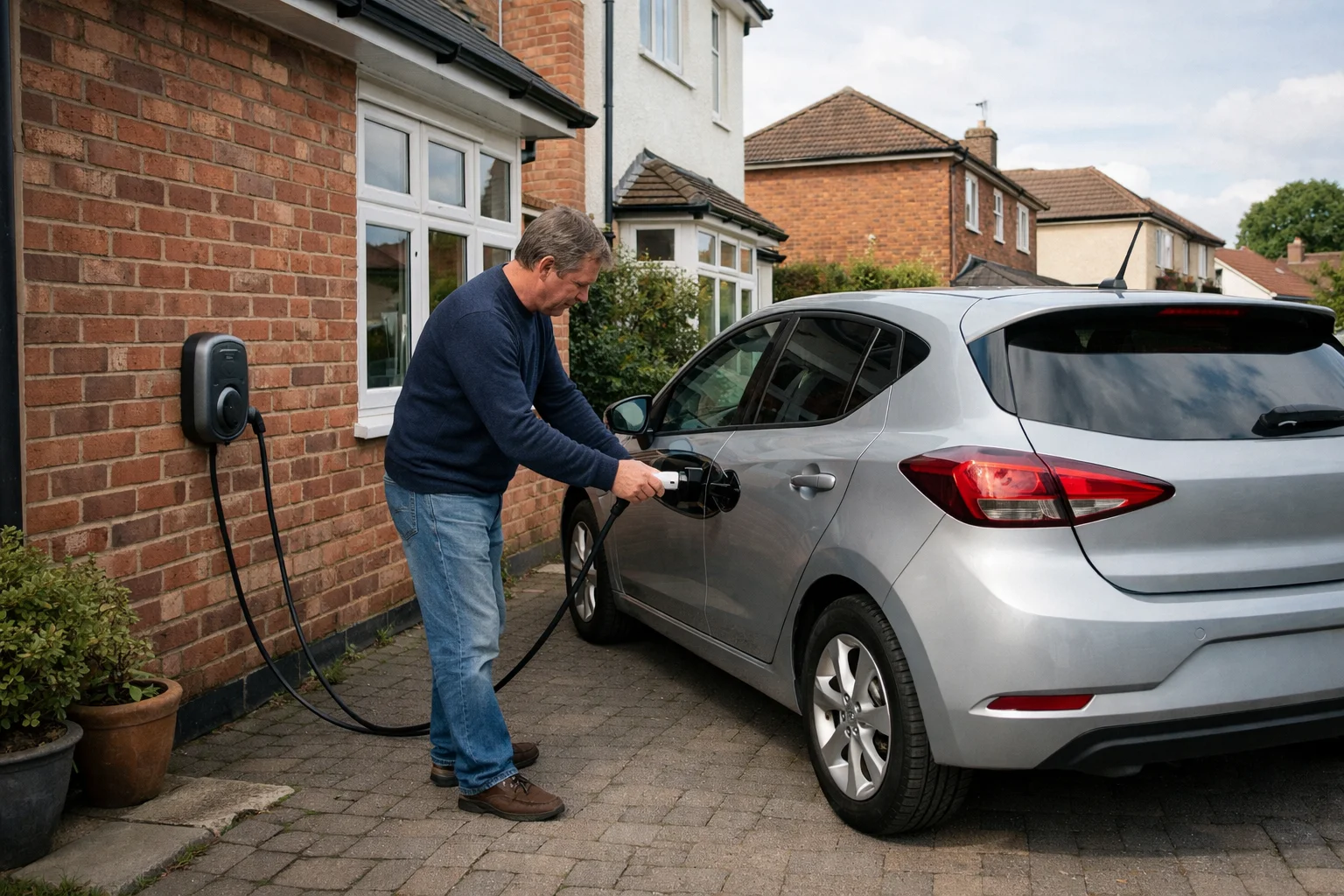
A new driveway rule change now allows homeowners across England to install an electric vehicle (EV) charger without needing planning permission, provided specific conditions are met. This policy, introduced in 2024, is part of the UK government’s push to accelerate EV adoption by simplifying infrastructure access.
Key Points Covered in This Article:
- Planning permission is no longer required for a single wall-mounted or pedestal EV charger.
- Chargers must be under 0.2 cubic metres and at least 2 metres from public roads.
- Homeowners can save over £1,000 annually by charging at home.
- Some leaseholds and shared driveways may still require additional permissions.
- The rule supports faster EV rollout and reduces legal barriers.
- Industry professionals and homeowners view the change as positive and impactful.
What Is the New Driveway Rule Change in England?
The new driveway rule change in England revolves around a major update to planning regulations that affect the installation of EV chargers on residential properties.
Specifically, the government has scrapped the requirement for “householder planning permission” when it comes to installing a single electric vehicle (EV) charging point on your private driveway.
This policy, introduced in 2024, has been designed to fast-track the UK’s transition to electric vehicles by making it easier and cheaper for people to install chargers at home.
According to the updated planning guidelines, if you install one wall-mounted or pedestal EV charger, you no longer need to apply for planning permission, as long as certain conditions are met.
Removal of Householder Planning Permission
Before the change, the process of installing an EV charger was often complex and time-consuming. Homeowners had to deal with their local planning authority, submit formal applications, and wait several weeks for approval. In some cases, permission was denied, especially in conservation areas or for leasehold properties.
But now, under the revised policy, planning permission is automatically granted (under permitted development rights) if:
- The unit is no more than 0.2 cubic metres in size
- It is installed at least 2 metres away from a public road or highway
- It is located on the curtilage of a dwellinghouse (essentially, your private land)
These criteria have streamlined the process significantly and eliminated a layer of red tape that previously slowed down EV adoption.
Focus on EV Charging Units and Environmental Impact
The environmental case for these changes is clear. The UK government’s goal to reach net zero by 2050 depends heavily on electrifying transport. Increasing the accessibility of home charging is a major step toward that.
By removing obstacles like planning permission, the government encourages more people to make the switch from petrol and diesel to electric.
From my perspective, this shift finally makes the installation feel less like a legal project and more like a standard home improvement. The environmental motivations align closely with my own, and I appreciate that the policy now supports, rather than hinders, that direction.
How Does the Driveway Rule Change Affect Homeowners?
This rule change directly impacts millions of homeowners across England, especially those considering the switch to an EV. It allows us to take more control over our energy usage and transport decisions without being bogged down in bureaucracy.
Simplified Process for Installing EV Chargers
Previously, the time taken from planning to installation could stretch up to two months or more. Homeowners had to:
- Submit formal applications
- Wait for council review
- Respond to conditions or restrictions
Now, you can contact a certified installer and get the job done in days, sometimes in just 48 hours.
Here’s a breakdown comparing the process before and after the rule change:
| Submit Planning Application | Required | Not required |
|---|---|---|
| Wait Time for Approval | 4 to 8 weeks | Immediate |
| Risk of Rejection | Possible, especially in leasehold or conservation areas | Eliminated for compliant properties |
| Cost of Application | £200–£500 | £0 |
This change has made things smoother not just legally, but practically. As a homeowner myself, the decision to install a charger now feels far less daunting.
Reduced Legal and Bureaucratic Barriers
The simplification also reduces legal uncertainty. Previously, many homeowners weren’t sure whether their property qualified for a charger and hesitated to proceed. Now, the default assumption is approval, provided the key conditions are met.
This also minimises the cost of hiring planning consultants or legal advice. It empowers individuals to take green steps without institutional roadblocks.
Can You Save Money by Installing a Home EV Charger?
One of the most compelling aspects of the new driveway rule change is the cost savings it unlocks. Charging your EV at home is significantly cheaper than using public charging stations, particularly rapid chargers, which often add profit margins.
According to estimates from energy experts and transport analysts, EV owners who charge at home can save over £1,100 annually compared to those who rely entirely on public infrastructure.
Here’s a useful comparison of charging costs:
| Charging Method | Average Cost Per Year | Notes |
|---|---|---|
| Public Rapid Chargers | £1,500–£1,800 | Higher cost per kWh + convenience fees |
| Home Charging (Standard Tariff) | £700–£900 | Lower unit cost but standard times |
| Home Charging (Economy 7 or Off-Peak Tariff) | £350–£500 | Lowest cost with smart meter |
This is a real motivator. I recently switched to an Economy 7 plan, and the cost of charging overnight is a fraction of what I used to pay for petrol. The convenience of having the charger right outside also means I’m not losing time queuing or searching for available chargers in town.
Are There Any Restrictions Under the New Driveway Rules?
While the new policy grants a lot more freedom, it doesn’t mean it’s a free-for-all. There are still technical and legal limitations that every homeowner needs to consider before moving ahead with installation.
Physical Limitations (Size, Placement, Safety)
The unit must be under 0.2 cubic metres. That generally includes most consumer chargers, but some commercial-grade units may exceed this. It must also be set two metres away from any road, which ensures safety for pedestrians and maintains roadside visibility.
Here’s a table showing key physical requirements:
| Requirement | Description |
|---|---|
| Maximum Volume | 0.2 cubic metres |
| Minimum Distance from Road | 2 metres |
| Number of Chargers Allowed | One per dwellinghouse (without planning) |
| Type of Charger | Wall-mounted or pedestal-mounted only |
As I planned my installation, I found these requirements easy to meet, but it was worth double-checking with the installer to ensure compliance.
Shared Driveways, Leaseholder Issues, and Title Deeds
One complication I ran into was understanding how property rights affect installation. For instance, if you’re in a leasehold property, the freeholder still has the final say. You might be legally entitled to install the charger under planning rules, but the lease may restrict external alterations.
Also, some new-build estates include title deeds that specifically prohibit certain changes to the exterior of the house, including charging points.
If you share a driveway with a neighbour, you could face additional barriers. It’s best to consult with legal professionals before proceeding in those situations.
Here’s how these complications play out:
| Scenario | Do You Need Additional Permission? |
|---|---|
| Freehold Property | No |
| Leasehold Property | Yes – from freeholder |
| Shared Driveway | Yes – agreement from co-owner |
| Property in Conservation Area | Possibly – check with local council |
When I read my title deed, I was relieved to find no restrictions, but a neighbour of mine discovered a clause that required written approval from the estate developer. That’s why a proper review of your documents is critical before starting installation.
What Are the Benefits of Switching to Home EV Charging?
Beyond the cost savings, there are multiple lifestyle and environmental benefits to installing your own EV charger.
- Convenience: You can charge your vehicle overnight and wake up to a full battery.
- Environmental Contribution: Charging from home often allows you to choose greener tariffs or even power your car from solar panels.
- Property Value: Homes with chargers installed are often seen as more attractive to potential buyers.
As someone who’s been in the process of reducing my carbon footprint, I found that installing the charger gave me a real sense of progress. It’s one thing to talk about going green; it’s another to take a physical, lasting action like this.
Interestingly, when I recently had my property valued, the agent specifically mentioned that having an EV charger added a level of future-proofing that buyers are increasingly looking for.
How Is the UK Government Supporting the EV Infrastructure Growth?
According to industry voices like Lewis Gardiner, Director at Osprey Charging Network, the change is a result of close collaboration between the private and public sectors.
In his words:
“This is a hugely welcome and practical change that will make a real difference on the ground. Removing the need for planning permission for essential electrical infrastructure like substations across the majority of sites will save months of delays, reduce costs and accelerate the delivery of the rapid charging hubs drivers need.”
Hearing this gave me added confidence that the infrastructure is growing with the right intentions. It’s not just about policy but about practical impact for regular drivers.
The government is also funding other initiatives:
| Initiative | Purpose |
|---|---|
| Rapid Charging Fund | To install public rapid chargers across motorways |
| OZEV Grant (Office for Zero Emission Vehicles) | Support for home EV installations |
| Local Authority Support Schemes | Helping councils build EV-ready infrastructure |
Together, these changes show a clear national push toward building an EV-ready society, which is encouraging for both current and prospective electric vehicle owners.
Will the Rule Change Encourage More People to Switch to Electric Vehicles?
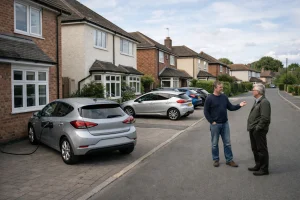
Based on the latest data from SMMT, around 47,000 new EVs were registered in 2025, marking an 8% increase over the previous year. The figures indicate a steady upward trend in adoption.
It’s clear that reduced infrastructure friction, like this driveway rule change, is playing a role. More accessible home charging lowers both perceived and real barriers to EV ownership.
In conversations with friends and neighbours, I’ve noticed a shift. A year ago, most people still viewed EVs as a premium option. Today, many of them are either planning a switch or already in the process. Several cited the policy change as a key factor that made them seriously consider it.
What Should You Know Before Installing a Driveway EV Charger?
Choosing the Right Charger
There are various models available, and picking the right one involves balancing budget, speed, and smart features.
| Feature | Standard Charger | Fast Charger | Smart Charger |
|---|---|---|---|
| Power Output | 3.6 kW | 7.4 kW | 7.4–22 kW |
| Time to Full Charge | 10–12 hours | 6–8 hours | 4–6 hours |
| Cost Estimate | £400–£600 | £700–£1,000 | £1,000+ |
Make sure the charger you choose is OZEV-approved so you’re eligible for government grants, if applicable.
Checking Legal and Property Rights
Before booking installation, double-check your:
- Title deeds for exterior modification restrictions
- Lease terms, if applicable
- Local conservation area rules
I reviewed all of these with my solicitor to avoid surprises down the line. It’s a simple but important step.
Installation Tips and Safety Standards
Only use a certified installer. They’ll make sure your system complies with BS7671 wiring regulations and has necessary safety features, such as surge protection, weatherproof housing, and auto shut-off.
Conclusion
The new driveway rule change is a welcome step toward a more accessible and affordable EV future in the UK. By removing planning permission barriers, the government has made it easier for homeowners to install EV chargers and embrace cleaner transport.
With financial savings, simplified regulations, and growing infrastructure, there’s never been a better time to switch to electric. From my experience, the process is now straightforward and empowering, making sustainable driving a practical choice for households across England.
FAQs About the New Driveway Rule Change in the UK
Do I still need permission to install a charger in a shared driveway?
Yes, if the driveway is co-owned, you may need written consent from your neighbour or co-owner.
What happens if my property is leasehold?
Leaseholders may require approval from the freeholder, and lease agreements might include restrictions on external modifications.
Are there fines for not following driveway installation rules?
Yes, installing a charger that violates planning regulations (e.g., too close to the road or too large) could lead to enforcement action or fines.
Can I install more than one EV charger on my property?
Generally, the exemption applies to a single charging unit. Multiple installations may still require planning permission.
Is planning permission needed for EV chargers in flats or apartments?
Yes, especially in communal areas. Permission is often needed due to shared ownership and building regulations.
Are resin-bound driveways compliant with new drainage regulations?
Resin-bound surfaces are typically permeable, which makes them compliant under SuDS (Sustainable Drainage Systems) guidelines important if paving over grass.
Do EV chargers add value to your home?
Yes, especially in areas with high EV ownership. Buyers increasingly see home charging as a must-have feature.

Leave a Reply