
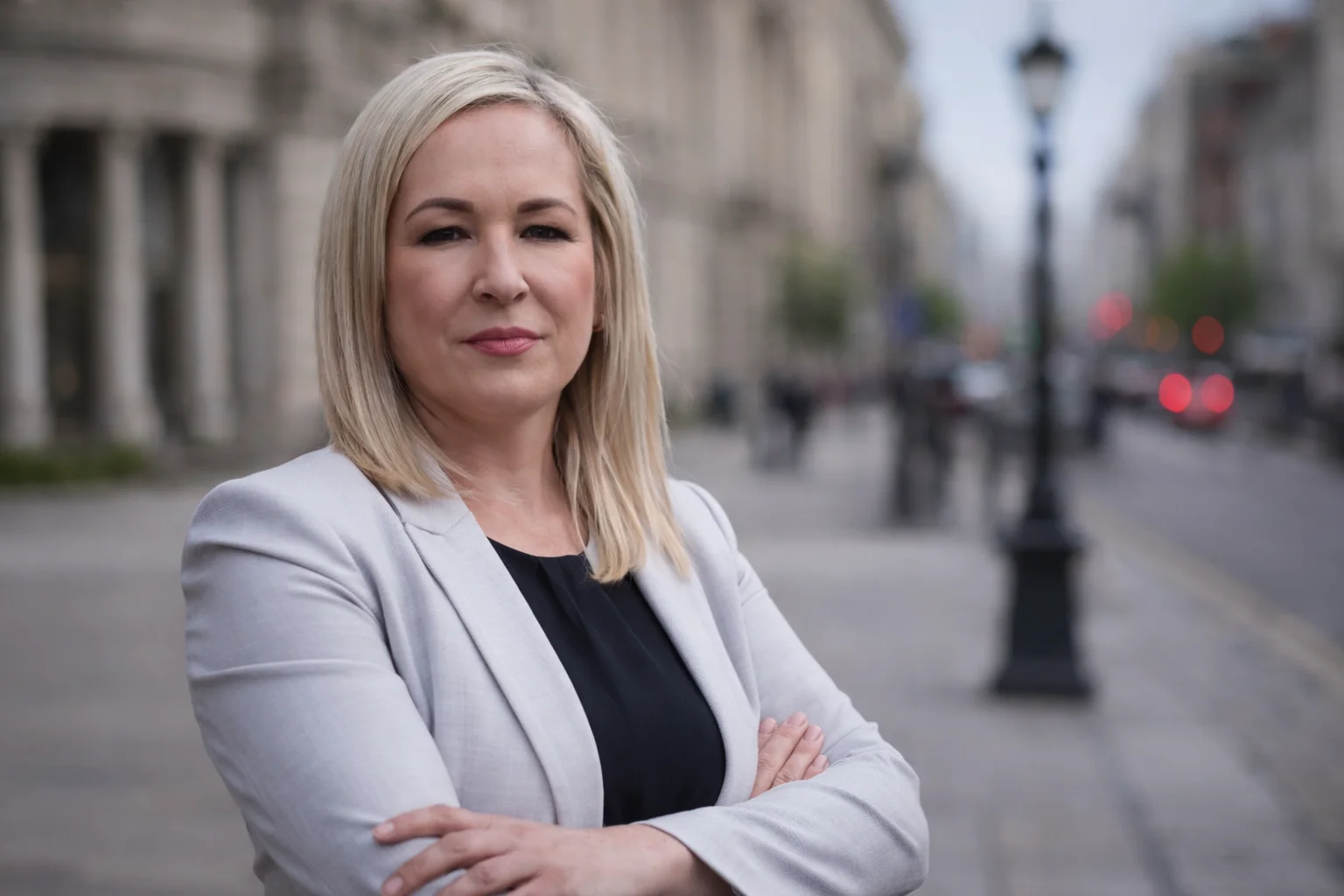
The proposed MLA pay rise of £14,000 has sparked significant political and public debate in Northern Ireland, with unions calling the anger “understandable” amid ongoing cost-of-living pressures. The independent remuneration board has recommended a 27 percent increase, potentially raising MLA salaries from £53,000 to around £67,000.
While the decision is not yet final, it has already triggered strong reactions from healthcare leaders, the Police Federation, and sections of the public who question the timing and fairness of the proposal.
Key Answer Points:
- The proposed increase represents a 27 percent uplift
- MLA salaries would rise to approximately £67,000
- Unions argue the timing is inappropriate
- The decision was made by an independent review panel
- Parity with Scotland and Wales is cited as justification
- Public concern centres on fairness during economic strain
What Is Behind the £14,000 MLA Pay Rise Proposal in Northern Ireland?
The proposed MLA pay rise of £14,000 represents an increase of almost 27 percent on the current base salary of £53,000. If implemented, Members of the Legislative Assembly in Northern Ireland would see their annual earnings rise to approximately £67,000 from April.
The recommendation was made by the Independent Financial Review Panel, a statutory body responsible for determining MLA remuneration independently of political influence.
The panel’s review forms part of a broader reassessment of pay structures following legislative changes that reinstated an updated remuneration framework.
The intention, according to governance experts, is to ensure that elected representatives are compensated fairly relative to workload, responsibility, and parity with similar roles across the United Kingdom.
To understand the scale of the increase, the following table outlines the current and proposed salary structure:
Category Current Salary Proposed Salary Percentage Increase
Northern Ireland MLA £53,000 £67,000 approx. 27 percent
The panel’s rationale is grounded in comparative benchmarking and economic indexing. Salary benchmarking reviews typically consider inflation trends, comparative public sector roles, legislative workload, and parity with devolved institutions.
In recent years, inflation has significantly eroded real wages across the UK, which forms part of the technical basis for reassessment.
However, while the financial reasoning may follow established frameworks, the optics of a near 27 percent uplift during economic pressure have intensified public scrutiny.
A senior public sector remuneration adviser explained the process to me in direct terms. He stated, “When we assess political salaries, we are not rewarding performance or popularity. We are aligning the role with equivalent constitutional responsibilities across jurisdictions.”
He continued, “If parity is not maintained, it can create long term distortions in recruitment and governance standards.”
Despite this administrative logic, the timing of the MLA pay rise has amplified controversy.
Why Has the MLA Pay Rise Sparked Union Backlash?
The union backlash stems primarily from perceived inequality between political salary growth and public sector wage settlements. Trade unions argue that many essential workers have faced prolonged negotiations, delayed pay awards, and industrial action before receiving comparatively modest increases.
What Concerns Have the Royal College of Nursing and Other Unions Raised?

The Royal College of Nursing in Northern Ireland publicly questioned the fairness of the proposed uplift.
Rita Devlin, director of the RCN in Northern Ireland, emphasised that while parity with other UK political institutions may be reasonable in principle, performance and public delivery must justify such increases.
She asked pointedly, “Will MLAs have to wait a year and threaten to go on strike to get the money or will it slide into their pay packet very quickly?” Her remarks reflected frustration among healthcare professionals who have experienced delayed pay progression despite workforce pressures.
Union concerns can be summarised in three key areas:
- Disparity between MLA increases and public sector settlements
- Timing during ongoing cost-of-living pressures
- Perceived lack of measurable improvement in public services
Healthcare workers, teachers, and civil servants have repeatedly raised concerns about inflation eroding wages. When a political salary uplift exceeds typical public sector increases by a substantial margin, the contrast becomes politically sensitive.
How Has the Police Federation Responded?
The Police Federation of Northern Ireland also expressed reservations. Policing in Northern Ireland carries unique operational pressures, including security responsibilities and recruitment challenges.
Representatives argue that frontline workers managing public safety deserve equal recognition when discussions of remuneration arise.
A comparative overview of recent public sector pay settlements in Northern Ireland highlights the contrast:
Sector Recent Average Pay Increase Method of Settlement
Nursing 5 percent to 8 percent Negotiation and threat of strike action
Teaching 4 percent to 6 percent Negotiated settlement
Civil Service 4 percent to 5 percent Structured negotiation
Proposed MLA Increase 27 percent Independent panel recommendation
The disparity in percentage terms has intensified debate about fairness and proportionality.
How Does the Proposed MLA Pay Rise Compare to Salaries Across the UK?
A core argument supporting the MLA pay rise centres on parity with devolved administrations. MLAs currently earn less than their counterparts in Scotland and Wales. This has been cited as justification for realignment.
The following table compares legislative salaries across jurisdictions:
Position Annual Salary
Northern Ireland MLA current £53,000
Northern Ireland MLA proposed £67,000 approx.
Member of Scottish Parliament £74,507
Member of Senedd Cymru £76,380
UK Member of Parliament £93,904
Irish Dáil TD €118,284 approximately £103,416
The data demonstrates that even after the proposed increase, Northern Ireland MLAs would still earn less than Members of the Scottish Parliament and Welsh Parliament.
From a structural perspective, governance specialists argue that compensation must reflect legislative responsibility, constituency engagement, committee work, and policy oversight.
One government finance professional told me, “We cannot ignore the workload differential between devolved institutions and other public offices. If the salary remains significantly lower, it risks narrowing the pool of candidates willing to serve.”
However, parity arguments do not operate in isolation. Public perception often weighs local economic conditions more heavily than intergovernmental comparisons.
Is the MLA Pay Rise Justified During the Cost of Living Crisis?
The cost-of-living crisis remains a defining context for the debate. Rising household energy costs, food inflation, mortgage pressures, and rent increases have strained disposable income across Northern Ireland.
Economic data from the Office for National Statistics indicates that real wage growth has struggled to keep pace with inflation over recent years. In such an environment, any substantial salary uplift for elected officials is subject to intense public evaluation.
The following table illustrates broader economic indicators relevant to the debate:
Indicator Recent Trend
UK Inflation Rate Elevated compared to pre 2020 levels
Energy Costs Significant increases over recent years
Average Public Sector Pay Growth Moderate growth below inflation in certain periods
Household Disposable Income Under pressure in real terms
First Minister Michelle O’Neill acknowledged the sensitivity of the situation, stating that public anger is “understandable” given the economic climate. Her remarks signal recognition that even technically justified decisions can face resistance when economic hardship persists.
From my own perspective, the issue hinges on trust. I believe fair compensation for elected representatives is important to protect governance standards. At the same time, I cannot ignore the symbolic weight of a 27 percent increase while many households are adjusting spending habits and managing rising bills.
As I see it, leadership is not solely about administrative accuracy. It is also about demonstrating empathy and timing decisions in a way that maintains credibility.
Public reaction often reflects lived experience rather than comparative spreadsheets. When voters evaluate the MLA pay rise, they measure it against their own wage growth and financial pressures.
What Role Does the Independent Financial Review Panel Play in Setting MLA Pay?
The Independent Financial Review Panel was established to remove direct political control over MLA remuneration. Its independence is designed to enhance transparency and prevent conflicts of interest.
Why Was a New Panel Established?
The original panel’s mandate concluded in 2016, and a gap followed before new legislation reinstated the framework. The updated panel commenced operations after legislative reform, allowing structured review mechanisms to resume.
The establishment of an independent body aligns Northern Ireland with governance standards across the UK, where external panels commonly determine political pay.
How Does the Review Process Work?
The review process generally involves:
- Comparative salary analysis across devolved legislatures
- Economic assessment, including inflation trends
- Evaluation of MLA workload and institutional complexity
- Consultation with MLAs before final determination
The panel is currently inviting feedback until early March. After reviewing responses, it will publish a final determination.
A former member of the previous remuneration body expressed strong support for the calculation. He said publicly that he was “in no doubt at all” that the board had reached the correct figure.
Such confidence from experienced reviewers reinforces the argument that the proposal is grounded in established methodology rather than arbitrary adjustment.
The structure of the panel’s decision-making process can be summarised below:
Stage Description
Data Collection Benchmarking and economic analysis
Draft Recommendation Proposed salary determination issued
Consultation Feedback invited from MLAs
Final Determination Binding salary decision published
The existence of an independent process does not eliminate political consequences. It does, however, separate technical salary calculation from partisan decision-making.
How Have Political Leaders Responded to the MLA Pay Rise Proposal?
Political leaders have adopted cautious language in response to the proposal. Michelle O’Neill emphasised that MLAs had “no part to play” in setting the recommended figure.
This distinction is important, as it seeks to insulate elected representatives from accusations of self-awarding pay increases.
Deputy First Minister Emma Little Pengelly noted that similar salary determinations have occurred elsewhere in the UK. Her remarks frame the proposal within a broader context of parity rather than exceptional treatment.
Political caution reflects awareness of public sensitivity. No major party appears eager to actively campaign for the increase, yet none has openly rejected the panel’s authority.
This balancing act highlights a central dilemma. Politicians must respect independent governance mechanisms while remaining responsive to public concern.
Overriding an independent panel could undermine institutional integrity. Accepting the recommendation without commentary could risk reputational damage.
What Is the Wider Public Reaction to the MLA Pay Rise?
Public reaction has been varied but largely critical across media commentary and social discussion. Many citizens question whether legislative performance justifies a significant uplift.
Common public concerns include:
- Delivery of healthcare and waiting list reductions
- Economic growth and investment outcomes
- Infrastructure improvements
- Responsiveness to cost-of-living pressures
Trust in political institutions has fluctuated in recent years, and salary debates often become proxies for wider dissatisfaction.
At the same time, some commentators argue that underpaying elected representatives can deter qualified professionals from entering politics. If salaries remain comparatively low relative to responsibility, governance quality may suffer over time.
This tension between public perception and institutional design defines the MLA pay rise debate. It is not solely a question of arithmetic. It is a question of legitimacy.
What Happens Next With the MLA Pay Rise Decision?
The consultation process remains ongoing. Feedback from MLAs will inform the final determination, expected in early March. If confirmed, the increase would take effect from April.
While the panel’s decision is formally independent, sustained public criticism could influence implementation strategy or future review cycles.
The final outcome will likely shape broader discussions about:
- Public sector wage frameworks
- Political accountability mechanisms
- Transparency in remuneration decisions
- Benchmarking standards across devolved administrations
The MLA pay rise debate illustrates the complex intersection of governance, economics, and public trust. Even where professional assessment supports adjustment, democratic accountability ensures that financial decisions remain subject to public evaluation.
Conclusion: What Does the MLA Pay Rise Debate Ultimately Reveal?
The proposed MLA pay rise of £14,000 has exposed a deeper tension between technical governance processes and public perception.
On paper, benchmarking salaries with other devolved administrations may justify the increase. In practice, introducing a 27% uplift during a cost-of-living crisis invites understandable anger.
For me, the key issue is not simply whether MLAs deserve fair pay. It is whether the timing and communication reflect sensitivity to the economic pressures facing ordinary households.
Political leadership requires more than administrative accuracy; it demands public trust.
Whatever the final outcome, the MLA pay rise debate highlights the importance of transparency, fairness, and accountability in public office.
Frequently Asked Questions
Why do MLAs in Northern Ireland earn less than other UK politicians?
Historically, MLA salaries have been lower than those in Scotland and Wales due to earlier determinations and political considerations. Benchmarking reviews periodically assess parity with other devolved administrations.
Who decides MLA salaries in Northern Ireland?
Salaries are set by the Independent Financial Review Panel, an external body established to prevent conflicts of interest and ensure independent oversight.
When would the £14,000 MLA pay rise take effect?
If approved following consultation, the increase is expected to take effect from April.
How much would MLAs earn after the proposed increase?
The current salary of £53,000 would rise to approximately £67,000 annually.
Are public sector workers receiving similar pay rises?
Most public sector workers in Northern Ireland have received significantly smaller increases, often after negotiations or industrial action, which has contributed to union criticism.
Has there been a previous MLA pay review?
Yes, previous panels have reviewed MLA pay structures. However, there was a gap between 2016 and the re-establishment of the panel under new legislation.
Could the proposed MLA pay rise be rejected?
While the panel is independent, feedback from MLAs and political pressure could influence the final determination or its implementation.

Leave a Reply