
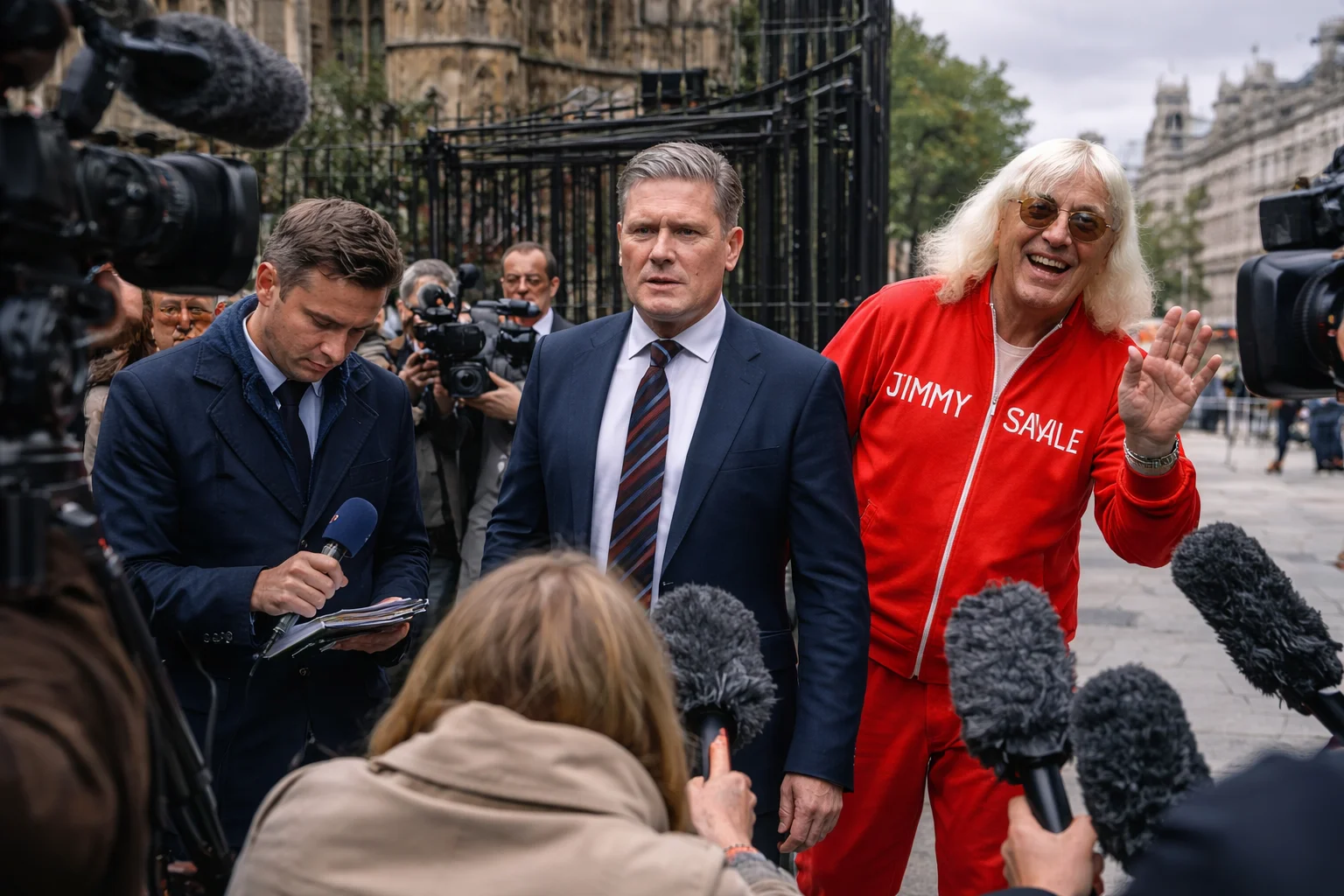
The Keir Starmer Jimmy Savile case controversy relates to claims that Keir Starmer failed to prosecute Jimmy Savile while serving as Director of Public Prosecutions (DPP). The direct answer is that Starmer did not personally make the decision not to prosecute Savile in 2009.
The decision was taken by a CPS reviewing lawyer who concluded that the available evidence did not meet the legal threshold required for prosecution at that time. An independent review in 2013 later confirmed that mistakes were made in handling the case but found no evidence of improper motives.
Key Takeaways
- Keir Starmer was Director of Public Prosecutions when the 2009 decision occurred
- The prosecution decision was made by a CPS reviewing lawyer, not Starmer personally
- Police investigated Savile between 2007 and 2009
- Prosecutors concluded there was insufficient evidence for a conviction
- The 2013 Levitt Review identified procedural mistakes in the case
- The review found no evidence of improper influence on prosecutors
- The issue later became a political controversy in the UK
What Is the Keir Starmer Jimmy Savile Case Controversy?

The Keir Starmer Jimmy Savile case controversy refers to claims circulated in political debate and on social media suggesting that Keir Starmer failed to prosecute Jimmy Savile while serving as Director of Public Prosecutions at the Crown Prosecution Service.
The controversy centres on a 2009 decision by prosecutors not to charge Savile following a police investigation into allegations of sexual assault.
Jimmy Savile was a well-known British television personality who later became the subject of one of the most significant abuse scandals in UK history.
After his death in 2011, hundreds of victims came forward describing decades of abuse across hospitals, schools and broadcasting institutions. These revelations led to national outrage and raised questions about how Savile had avoided prosecution during his lifetime.
The controversy surrounding Keir Starmer emerged because he served as the head of the Crown Prosecution Service during the time when the decision not to prosecute Savile was made. Some political critics claimed that this meant he was responsible for the failure to prosecute the entertainer.
However, legal experts and official reviews have clarified that prosecution decisions are typically handled by individual CPS lawyers rather than by the Director of Public Prosecutions personally. The Savile case was reviewed by a CPS lawyer who assessed the evidence presented by police and determined that it did not meet the legal standard required to bring charges at the time.
Understanding the controversy requires looking at how prosecution decisions are made in the UK criminal justice system. The Director of Public Prosecutions oversees the CPS and sets policies but does not personally examine every case handled by the organisation.
The issue gained renewed attention during political debate in the UK years later when statements about the case were made in Parliament.
Those statements sparked criticism from legal professionals, politicians and victims’ advocates who argued that the comments misrepresented the findings of official investigations.
Several key facts shape the discussion around the Keir Starmer Jimmy Savile case controversy:
- The decision not to prosecute Savile was made in 2009 by a CPS lawyer
- Starmer was Director of Public Prosecutions at the time but did not personally review the case
- An independent review later examined the decision and identified mistakes in how the case was handled
- The review did not find evidence of improper motives behind the prosecution decision
These facts provide an essential foundation for understanding how the case unfolded and why it later became a subject of political debate.
What Was Keir Starmer’s Role in the Jimmy Savile Case?
Keir Starmer served as Director of Public Prosecutions from 2008 until 2013. In this role he led the Crown Prosecution Service, which is responsible for prosecuting criminal cases investigated by police forces across England and Wales.
The CPS is a large national organisation that deals with a vast number of cases every year. These cases range from minor offences such as theft to complex investigations involving serious crimes.
Starmer as Director of Public Prosecutions
The responsibilities of the Director of Public Prosecutions are primarily managerial and strategic. The role involves overseeing legal policies, setting standards for prosecutors and ensuring that cases are handled fairly and according to the law.
At the time Starmer served as DPP, the CPS handled approximately 900,000 cases annually. Because of this volume, individual prosecution decisions are usually made by trained prosecutors working within regional CPS offices.
The following table explains how responsibilities are typically structured within the Crown Prosecution Service.
| Role | Main Responsibility |
|---|---|
| Director of Public Prosecutions | Leads the CPS and sets prosecution policy |
| Chief Crown Prosecutors | Manage regional prosecution teams |
| CPS Reviewing Lawyers | Assess evidence and decide whether to prosecute |
| Police Investigators | Collect evidence and submit case files |
This structure ensures that prosecutors who specialise in criminal law review the evidence provided by investigators and apply legal standards before a case proceeds to court.
Was Starmer Directly Involved in the Savile Decision?
According to official reports and statements from legal professionals involved in the CPS at the time, Keir Starmer did not personally review the Savile case.
The decision not to prosecute was made by a CPS lawyer who analysed the evidence provided by police investigators. That lawyer determined that the evidence did not provide a realistic prospect of conviction under the legal standards required for prosecution.
Nazir Afzal, who served as Chief Crown Prosecutor for the North West during that period, later explained that cases like this would not normally be escalated to the Director of Public Prosecutions.
From a professional perspective I believe this detail is crucial when examining the controversy. I have studied how large legal institutions operate, and it is clear that senior leaders rarely make individual case decisions unless the matter involves exceptional legal or constitutional significance.
In large prosecution systems responsibility is distributed among specialised prosecutors who review evidence, evaluate witness statements and determine whether the evidential threshold for prosecution has been met.
The following table highlights how decisions are typically handled in complex criminal investigations.
| Stage | Responsible Authority | Description |
|---|---|---|
| Investigation | Police | Collect evidence and interview witnesses |
| Evidence Review | CPS Prosecutor | Evaluates evidence and legal viability |
| Charging Decision | CPS | Determines whether charges should be filed |
| Court Proceedings | Criminal Courts | Trial and judgement |
This process demonstrates why the Director of Public Prosecutions rarely becomes directly involved in routine prosecution decisions.
What Happened During the 2007 to 2009 Police Investigation Into Jimmy Savile?

The investigation into Jimmy Savile began after several individuals reported allegations of sexual abuse. Police opened an inquiry to determine whether there was sufficient evidence to bring criminal charges.
The investigation included interviews with alleged victims who described incidents that had occurred years or even decades earlier.
Historical abuse cases can be especially challenging for investigators because evidence may be limited and witnesses may have difficulty recalling events with precision.
During the investigation police gathered statements from individuals who said they had been abused by Savile. However, some witnesses were hesitant to pursue formal complaints or appear in court.
In criminal law, witness testimony often plays a central role in prosecution. If witnesses are unwilling to provide evidence during a trial, prosecutors may conclude that the chances of securing a conviction are low.
The police investigation involved several key steps:
- Interviewing individuals who reported abuse
- Assessing whether physical or documentary evidence existed
- Evaluating the credibility and consistency of witness accounts
- Submitting case files to the Crown Prosecution Service
The CPS then reviewed the materials provided by investigators to determine whether charges should be brought against Savile.
The following table summarises the investigative process.
| Investigation Step | Description |
|---|---|
| Allegation reports | Individuals contacted police with claims of abuse |
| Witness interviews | Police recorded detailed statements |
| Evidence evaluation | Investigators assessed supporting evidence |
| Case referral | Police submitted findings to the CPS |
At the conclusion of the investigation the case was passed to prosecutors who were responsible for applying legal tests to determine whether the case should proceed to court.
Why Was Jimmy Savile Not Prosecuted in 2009?
In October 2009, the Crown Prosecution Service concluded that there was insufficient evidence to prosecute Jimmy Savile. This decision was based on the legal standards that prosecutors must follow when deciding whether to bring criminal charges.
The CPS uses what is known as the Full Code Test when making prosecution decisions. This test includes two major components.
| Legal Test | Explanation |
|---|---|
| Evidential Test | Determines whether there is a realistic prospect of conviction |
| Public Interest Test | Determines whether prosecution serves the public interest |
In the Savile case the evidential test was considered the primary barrier to prosecution.
Several factors contributed to this assessment.
| Issue | Impact on Prosecution |
|---|---|
| Limited supporting evidence | Reduced ability to confirm allegations |
| Historical nature of accusations | Events occurred many years earlier |
| Witness reluctance | Some individuals were not prepared to testify |
| Lack of corroboration | Few independent sources confirmed allegations |
These factors led prosecutors to conclude that a jury would be unlikely to convict Savile based on the available evidence.
As someone who has followed legal reporting on this issue, I find it important to recognise that prosecutors must follow strict legal thresholds. Bringing a case to court without sufficient evidence could result in acquittal and potentially undermine future investigations.
However, the decision not to prosecute later became controversial after additional victims came forward following Savile’s death.
Why Did Keir Starmer Commission the Independent Review?
Following widespread revelations about Savile’s abuse after his death in 2011, there was significant public concern about why he had not been prosecuted earlier.
In response, Keir Starmer commissioned an independent review in 2013 to examine the CPS handling of the Savile case. The review was conducted by Alison Levitt QC, a senior legal figure with extensive experience in criminal prosecution.
The review aimed to determine whether the CPS had correctly applied legal standards and whether mistakes had been made during the decision-making process.
Key Findings of the Alison Levitt QC Report
The Levitt Review analysed police files, witness statements and CPS decision-making procedures related to the case.
The report identified several shortcomings in how the investigation had been handled. In particular, it found that communication between police and prosecutors could have been stronger and that greater support might have encouraged victims to pursue formal complaints.
The review summarised several key findings.
| Finding | Explanation |
|---|---|
| Procedural mistakes occurred | Some investigative opportunities were missed |
| Victim support could have been stronger | Witnesses might have been encouraged to continue complaints |
| Evidence assessment issues | Some allegations were not fully explored |
| No evidence of improper motive | Decision was not influenced by Savile’s public profile |
Importantly, the review concluded that there was no indication that prosecutors intentionally avoided prosecuting Savile because of his celebrity status or influence.
Starmer publicly apologised for the shortcomings identified in the review and acknowledged that the case should have been handled more effectively.
The review also contributed to changes in how the CPS approaches allegations of historical sexual abuse. Prosecutors began placing greater emphasis on supporting victims and recognising patterns of behaviour that may indicate serial offending.
How Did the Savile Case Become a Political Controversy?
Although the legal aspects of the Savile case were examined through independent reviews, the issue later became a subject of political debate.
Several years after the Levitt Review was published, the case resurfaced in political discussions about responsibility within public institutions. Some commentators argued that leaders of organisations should be held accountable for decisions made during their tenure.
Others pointed out that prosecution decisions are made independently by professional prosecutors rather than by the head of the CPS.
The debate intensified during political exchanges in Parliament and through media coverage. Statements made by politicians were widely discussed online and in news outlets, leading to renewed public attention on the case.
The controversy illustrates how legal issues can become intertwined with political narratives. Complex procedural details are often simplified during political arguments, which can lead to misunderstandings about how decisions were actually made.
What Happened After Boris Johnson’s 2022 Comments About the Case?
In February 2022 the Savile case returned to the centre of political debate after comments made in the House of Commons by then Prime Minister Boris Johnson.
Johnson suggested that Keir Starmer had failed to prosecute Jimmy Savile during his tenure as Director of Public Prosecutions. The comment was immediately criticised by politicians from multiple parties as well as by legal professionals.
Critics argued that the statement misrepresented the facts because the prosecution decision had been made by a CPS lawyer rather than by Starmer personally.
The controversy escalated further when Munira Mirza, Johnson’s head of policy, resigned from her position. She stated that the claim was not accurate and should not have been made.
The following table outlines the sequence of events.
| Event | Description |
|---|---|
| Parliamentary comment | Boris Johnson referenced the Savile prosecution decision |
| Political reaction | MPs and legal experts criticised the statement |
| Policy adviser resignation | Munira Mirza resigned over the issue |
| Clarification | Johnson later stated he referred to organisational responsibility |
The incident received significant media attention and reignited discussions about the original prosecution decision.
How Did the Allegations Affect Keir Starmer Personally and Politically?
Following the renewed controversy, the allegations began to circulate widely on social media and in public discussions.
In February 2022 Keir Starmer was approached by protesters near the UK Parliament who repeated claims linking him to the Savile case. Some protesters used inflammatory language that referenced the allegations directly.
Starmer later stated that he received death threats after the claims spread online. Security concerns increased as political tensions surrounding the issue intensified.
The incident highlighted the potential consequences of misinformation or oversimplified claims about complex legal matters.
It also demonstrated how narratives surrounding historical legal decisions can have real world consequences for individuals involved in political life.
Understanding the full legal and historical context of the Keir Starmer Jimmy Savile case is therefore essential for separating verified facts from claims that emerged during later political debate.
Conclusion
The Keir Starmer Jimmy Savile case controversy highlights how complex legal decisions can later become subjects of political debate and public misunderstanding. While the Crown Prosecution Service decided not to prosecute Savile in 2009 due to insufficient evidence, independent reviews later confirmed that Keir Starmer was not directly involved in that decision.
The Levitt Review identified procedural shortcomings but found no improper motives. Understanding the timeline, investigation process and legal responsibilities helps clarify the facts behind the controversy and separate verified information from political narratives.
FAQ
Did Keir Starmer personally decide not to prosecute Jimmy Savile?
No. The decision was made by a CPS reviewing lawyer. Starmer was Director of Public Prosecutions at the time but did not personally handle the case.
Why did prosecutors say there was not enough evidence in 2009?
Prosecutors believed the available evidence did not meet the legal threshold for a realistic prospect of conviction, partly because some complainants were unwilling to support prosecution.
What was the Alison Levitt review?
It was an independent review commissioned in 2013 to examine how the CPS handled the Savile case and whether the decision-making process was appropriate.
Did the review find wrongdoing by Keir Starmer?
The review found mistakes by police and prosecutors but stated there was no evidence of improper motive behind the decision.
When did the Savile abuse scandal become widely known?
The scale of Savile’s abuse became widely known in 2012 after investigations and media reports revealed allegations from many victims.
Why did the case become a political issue in 2022?
Comments made in Parliament about Starmer’s role in the CPS led to renewed debate and criticism, bringing the issue back into public discussion.
What changes occurred after the Savile investigations?
Authorities introduced improved procedures for investigating historical abuse cases and increased support for victims within the criminal justice system.

Leave a Reply