
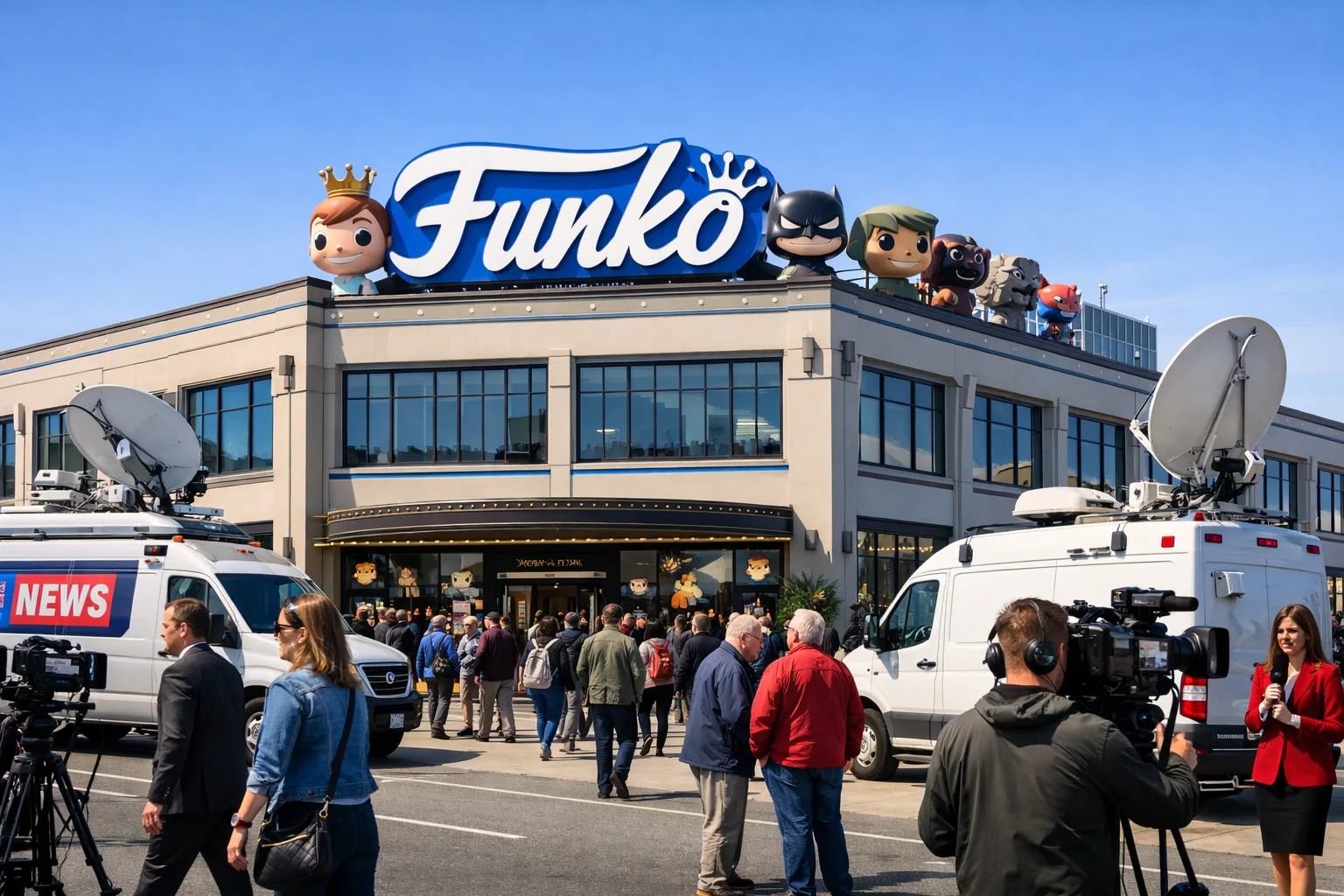
The direct answer is no. Funko has not filed for bankruptcy, has not shut down operations, and continues to release products worldwide, including in the UK.
However, the company has issued a formal going concern warning due to rising debt, slowing sales, and financial pressure.
This has created uncertainty among investors and collectors. While the situation is serious, it reflects restructuring risk rather than confirmed collapse. Below is a quick overview of the key points discussed in this article.
Key Area Summary Insight
Business Status Funko is still operating
Bankruptcy Filing No Chapter 11 filed
Financial Warning Substantial doubt disclosed
Main Risks Debt, inventory, slowing sales
Stock Performance Volatile but active
Future Outlook Dependent on restructuring success
Why Are People Asking If Funko Is Going Out of Business in 2026?
The reason so many people are asking whether Funko is going out of business in 2026 is largely tied to investor disclosures and financial headlines that have circulated over the past year.
When a publicly traded company uses formal language such as “substantial doubt” about its ability to continue as a going concern, it naturally attracts attention.
In the UK, where collectors closely follow entertainment merchandise trends, this kind of corporate warning can quickly spread across forums, reseller platforms, and social media groups.
The phrase sounds dramatic. For the average reader, it can easily be interpreted as a sign of collapse.
However, the reality is more nuanced.
Funko’s situation developed over several quarters of financial pressure. Slowing demand in certain product lines, high operational costs, and an accumulation of debt created strain.
The collectibles boom during the pandemic led to aggressive production and expansion. When consumer spending patterns shifted back toward travel, hospitality, and services, demand for physical collectibles softened.
This created an imbalance between supply and demand.
From my own perspective, analysing business cycles, I see this as a classic expansion and correction pattern. Companies often scale up during peak demand and later struggle to recalibrate when conditions change.
As I reflected on this situation, I thought, “This feels less like collapse and more like a company adjusting to a harsher economic environment.”
The concern is real, but the interpretation often lacks context.
What Did Funko Mean by “Substantial Doubt” About Continuing as a Going Concern?
What Does “Going Concern” Actually Mean in Business Terms?
In accounting and corporate finance, a going concern refers to a company’s ability to continue operating for at least the next twelve months. It assumes the business will not be forced into liquidation or insolvency during that period.
When management or auditors state there is “substantial doubt,” it means financial projections show potential difficulty in meeting obligations such as loan repayments, supplier payments, or operational costs without corrective action.
This language is formal and required under regulatory standards when risk thresholds are met. It does not mean the company is bankrupt. It signals that management must implement solutions.
To clarify the concept, here is a comparison table:
Term Definition Implication for Operations
Going Concern Business expected to operate normally No immediate threat
Substantial Doubt Risk to continued operations within 12 months Corrective action required
Insolvency Unable to meet financial obligations Legal and financial crisis
Liquidation Business assets sold to repay creditors Operations cease
As a finance professional once explained to me, “When a company issues a going concern warning, it is telling the market it needs breathing room and strategic correction, not that it is shutting its doors tomorrow.”
This distinction is critical.
How Serious Is This Type of Financial Warning?
A going concern warning is serious because it can:
- Reduce investor confidence
- Increase borrowing costs
- Trigger stricter scrutiny from lenders
- Affect supplier relationships
At the same time, it creates urgency. Companies in this position often accelerate cost reduction, renegotiate debt terms, and explore new revenue opportunities.
The seriousness depends on execution. If management responds decisively, recovery is possible. If corrective measures fail, the situation can escalate.
Is Funko Bankrupt or Preparing to File for Chapter 11?
Funko has not filed for Chapter 11 bankruptcy protection. There has been no formal declaration of insolvency.
Understanding the difference between financial distress and bankruptcy is essential.
Scenario Legal Status Operational Status
Financial Distress No court involvement The company continues trading
Debt Restructuring Negotiated with lenders Business continues
Chapter 11 Court-supervised reorganisation Operations usually continue
Chapter 7 Liquidation Court-supervised asset sale Operations stop
Funko currently falls into the category of financial distress with potential restructuring.
Chapter 11 is a structured legal process that allows companies to reorganise debts while continuing operations. Many well-known brands have used Chapter 11 strategically and later recovered. However, there has been no filing by Funko.
Collectors in the UK can still purchase products. Retail partnerships remain active. The brand continues to release new figures tied to major franchises.
The absence of bankruptcy filings indicates that while pressure exists, operations remain intact.
What Financial Challenges Is Funko Facing Right Now?
Funko’s financial challenges stem from several interconnected factors.
First, revenue growth slowed after a period of rapid expansion. During peak demand years, production increased significantly. When consumer behaviour shifted, excess inventory accumulated.
Second, managing inventory in a collectibles business is complex. Predicting demand for specific franchises requires precise forecasting. Overproduction can lead to discounting, which reduces profit margins.
Third, rising debt increased vulnerability. As liabilities grew, interest obligations consumed more cash flow.
Below is a simplified financial pressure overview:
Financial Factor Impact on Funko
Slower Sales Growth Reduced revenue stability
Excess Inventory Lower margins and write downs
Rising Debt Increased interest expense
Covenant Risk Potential renegotiation with lenders
Funko also previously destroyed excess inventory to clear warehouse space. While that decision improved logistics efficiency, it signalled overestimation of demand in earlier forecasts.
From analysing these developments, I concluded, “The issue appears rooted in operational scaling rather than brand irrelevance.” Licensing partnerships with major entertainment franchises remain valuable assets.
How Is Funko’s Stock Performing Despite These Financial Concerns?
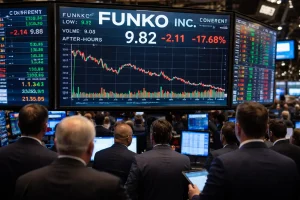
Stock performance often reflects expectations rather than current reality. Funko’s share price has experienced volatility, rising after stronger quarterly results and falling when uncertainty increases.
Investors evaluate several indicators:
- Cash flow improvements
- Cost-cutting measures
- Revenue stabilisation
- Debt renegotiation progress
Here is a simplified performance pattern overview:
Period Market Reaction Investor Sentiment
Initial Warning Share price decline Concern and uncertainty
Improved Quarter Share price rebound Cautious optimism
Ongoing Debt Risk Volatility Mixed outlook
Markets still recognise the strength of Funko’s brand portfolio. Volatility indicates that investors believe recovery is possible but not guaranteed.
As one market analyst remarked in conversation, “Volatility means the market sees both risk and opportunity. If collapse were inevitable, pricing would reflect that immediately.”
This dual perception defines Funko’s stock performance in 2026.
What Strategic Moves Is Funko Making to Strengthen Its Future?
To address financial strain, Funko has implemented several strategic initiatives.
Key operational adjustments include:
- Tightening inventory forecasting
- Reducing operational costs
- Streamlining product lines
- Enhancing direct-to-consumer sales
One notable strategy is expansion into media and entertainment content. By exploring original television or film projects, Funko aims to build proprietary intellectual property rather than relying solely on licensed characters.
Diversification reduces dependency on third-party franchises. It also creates opportunities for cross-promotion between media and merchandise.
The strategic shift can be viewed through this table:
Strategy Objective Potential Outcome
Inventory Control Reduce surplus stock Improve margins
Cost Reduction Lower expenses Strengthen cash flow
Media Expansion Diversify revenue Build long term brand equity
Direct Sales Focus Increase margins Reduce retailer dependency
From my own evaluation, I believe diversification is critical. I reflected, “If Funko remains only a collectibles manufacturer, it remains exposed to retail cycles. Expanding into content could provide stability.”
Execution remains the determining factor.
Are Funko Pops Losing Value in the Collectibles Market?
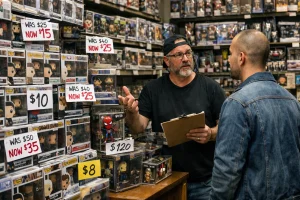
The collectibles market is influenced by scarcity, demand, and cultural relevance. Not all Funko Pops behave the same way in secondary markets.
Limited edition releases tied to strong franchises often retain value. Mass-produced figures tied to declining trends may depreciate.
Factors affecting resale value include:
- Production volume
- Franchise popularity
- Condition and packaging
- Market timing
Here is a simplified value influence table:
Factor Effect on Value
Limited Production Higher potential resale value
High Demand Franchise Increased price stability
Damaged Packaging Reduced value
Oversupply Downward price pressure
In the UK market, collector communities remain active. Exclusive convention releases and retailer-specific editions still generate enthusiasm.
However, speculative buying has decreased compared to previous peak years. Many buyers are now more selective, focusing on personal enjoyment rather than resale potential.
This shift reflects broader consumer caution rather than brand collapse.
Should UK Collectors and Investors Be Concerned?
Concern should be measured rather than emotional.
For collectors, product availability continues. If the company successfully restructures, brand continuity is maintained. If conditions worsen, limited releases could gain rarity value, though this is speculative.
For investors, monitoring financial indicators is essential:
- Debt renegotiation updates
- Quarterly earnings results
- Cash flow trends
- Licensing renewals
Risk remains present due to the going concern warning. At the same time, potential recovery offers upside.
In my own assessment, I considered the balance and concluded, “This is a high risk, high uncertainty scenario rather than a confirmed collapse.” Investors with lower risk tolerance may prefer caution, while speculative investors may see opportunity.
The situation demands ongoing observation rather than definitive judgement.
Funko is navigating financial strain, adjusting operational strategies, and attempting to reposition itself within a changing retail and entertainment landscape.
Whether it ultimately thrives depends on execution, market recovery, and financial discipline in the months ahead.
Conclusion
So, is Funko going out of business in 2026? Based on the available financial disclosures and market performance, the company is not bankrupt or shut down, but it is operating under clear financial pressure.
The going concern warning signals risk, not closure. Funko’s future will depend on debt management, improved profitability, and strategic expansion. For now, it remains an active business facing restructuring challenges rather than an imminent collapse.
Frequently Asked Questions
Could Funko recover fully in 2026?
Yes, recovery is possible if the company successfully refinances debt, improves cash flow, and restores profitability. Many companies rebound after issuing going concern warnings.
What happens if Funko breaches its debt covenants?
If covenants are breached, lenders could demand renegotiation, higher interest rates, or immediate repayment. However, lenders often prefer restructuring agreements over forcing bankruptcy.
Is Funko still profitable?
Profitability has fluctuated. Some quarters have shown improvement, but overall financial pressure remains due to debt and operational costs.
Are Funko stores closing in the UK?
There has been no announcement of a complete shutdown in the UK. Products remain available through retailers and online platforms.
Could Funko file for bankruptcy in the future?
It is possible if financial conditions worsen and restructuring fails. However, no filing has occurred at the time of writing.
Do financial warnings always lead to company collapse?
No. Many businesses issue going concern warnings and later stabilise after restructuring or securing new funding.
Are limited edition Funko Pops still valuable?
Certain rare or exclusive figures retain value, particularly if tied to strong franchises and kept in excellent condition.

Leave a Reply