
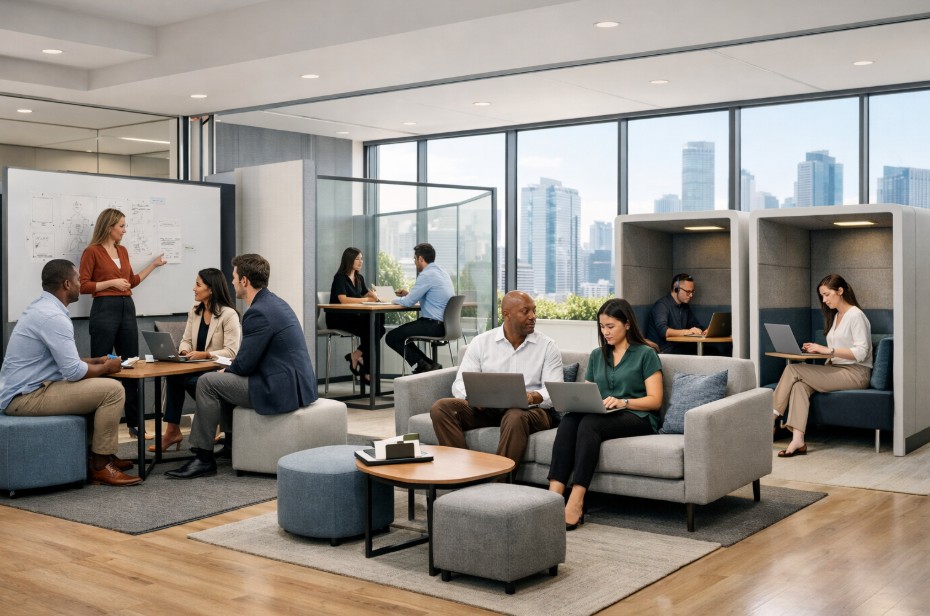
Hybrid working is now a permanent feature in businesses of all sizes, demanding smarter approaches to office design and management.
Flexible workspaces have emerged as a practical solution for organisations navigating changing patterns of attendance and teamwork.
With adaptability at the centre, businesses are rethinking the relationship between space, productivity, and cost efficiency.
As offices move beyond fixed layouts to accommodate unpredictable occupancy, businesses may find themselves confronting new challenges in productivity, cost control, and employee well-being, including how physical elements such as partitions are specified and maintained through providers such as Avant Movable Walls.
Workspace design is no longer just about aesthetics or branding. It plays a crucial role in managing resources and reducing risks.
Addressing both collaborative and private work requirements has become central to supporting staff and ensuring consistent performance.
By considering flexibility as more than a trend, businesses can address the ongoing realities of modern working practices.
How Can Flexible Workspaces Improve Hybrid Work Efficiency?
Balancing Occupancy and Daily Operational Pressures

Hybrid work strategies rarely mean predictable office attendance throughout the week, causing peaks and troughs in workspace demand that are difficult to anticipate.
On certain days, meeting rooms and breakout areas can be crowded, while on others they remain underused.
This variability challenges the idea of fixed desk assignments and static layouts, leading organisations to seek alternatives that provide more agile options.
Variable occupancy rates put pressure on facilities to remain both cost-effective and responsive to employee needs.
Reconciling the requirements for collaborative zones, confidential meetings, and heads-down focus areas within the same footprint pushes companies towards multi-purpose design solutions.
The need to address different types of work activities concurrently can strain traditional office designs.
Employees often need to move from group sessions to private calls or focused project work, and static layouts can create bottlenecks.
Space-sharing arrangements also demand clarity over how spaces are scheduled and used. Unpredictable demands drive the need for workspaces that can adapt quickly, without extensive refurbishment or recurring investment.
This evolution places emphasis on integrating systems and furniture that support rapid transformation and effective utilisation of every square metre.
Practical Forms of Workspace Flexibility Today
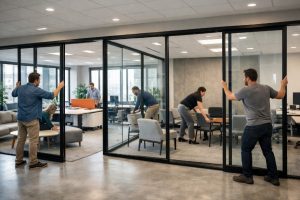
Workspace flexibility refers to both physical infrastructure and operational planning that allows for rapid reconfiguration.
Reconfigurable layouts, such as movable walls, modular furniture, and adaptable lighting, can make it possible to switch a meeting area into a training space or quiet zone with minimal disruption.
By prioritising zoning and multi-use rooms, businesses can enable different activities to take place in the same location across the week, supporting dynamic project teams as well as those who need privacy.
These solutions suit the unpredictable flow of hybrid work, helping ensure spaces are neither underused nor overbooked.
For facilities teams, flexible infrastructure can simplify daily management and allow for quicker response to feedback or changes in working practices.
Zoning techniques are evolving to mark out areas for quiet work, informal collaboration, and confidential discussions, sometimes within a single open-plan environment.
Transparency about available space types and their intended use helps employees plan their office days effectively.
Multi-use spaces demand clear guidance on etiquette and reset protocols so that quick transitions do not lead to friction.
Flexible solutions must also factor in accessibility and safety standards to protect employee well-being as rooms transform function.
A shift to more adaptable office environments can address a significant share of the workplace demands brought about by hybrid schedules, making flexibility a lasting part of operational planning.
Tangible Benefits and Employee Experience Improvements

For business leaders, the clearest advantage of workspace flexibility is the ability to respond immediately to changes in team size, project cycles, or company growth.
Rather than locking capital into permanent layouts, businesses can scale resources up or down as needs shift, which can result in improved space utilisation and a reduction in the opportunity cost of unused areas.
Faster adaptation can also mean less downtime between phases of growth or reorganisation, supporting commercial agility. The ability to avoid frequent, costly refurbishments can provide financial and environmental benefits over time.
This responsiveness can minimise disruption to staff and help maintain productivity regardless of the pace of change.
For employees, a well-designed flexible environment can support both collaboration and solo tasks by offering zones for different activities.
In hybrid workplaces, privacy concerns and poor acoustics are common sources of dissatisfaction.
By using adjustable partitions or multi-mode rooms, businesses can foster better focus while supporting teamwork when needed.
Clearly defined areas and usage rules help staff navigate the office confidently and reduce conflict over space. When each trip to the office matches expectations and work styles, it can support morale and performance.
Smart Planning Aligns Flexibility With Policy and Cost

Aligning workspace flexibility with hybrid policy often involves technology integration and clear communication. Aligning booking systems, desk management, and room availability with physical layouts can help employees know what to expect before they arrive.
It is also essential that workspaces evolve in line with safety, accessibility, and compliance standards whenever their functions change.
Facility managers may consider proportional investment in flexible infrastructure instead of routine expansions or relocations.
With careful operational oversight, businesses can reduce capital expenditure and ongoing fit-out costs, while risk and disruption are kept to a minimum.
Ultimately, flexible solutions allow organisations to focus on core objectives while maintaining spaces that can adjust to day-to-day needs.
Transparent rules about space usage, noise levels, and reconfiguration responsibilities can support a positive workplace culture and promote accountability.
As hybrid working continues as an operational reality, investing in workspace flexibility can deliver ongoing returns in productivity, well-being, and overall cost management.
Striking the right balance is less about seeking perfection than about building resilience into every square metre the business occupies.

Leave a Reply