
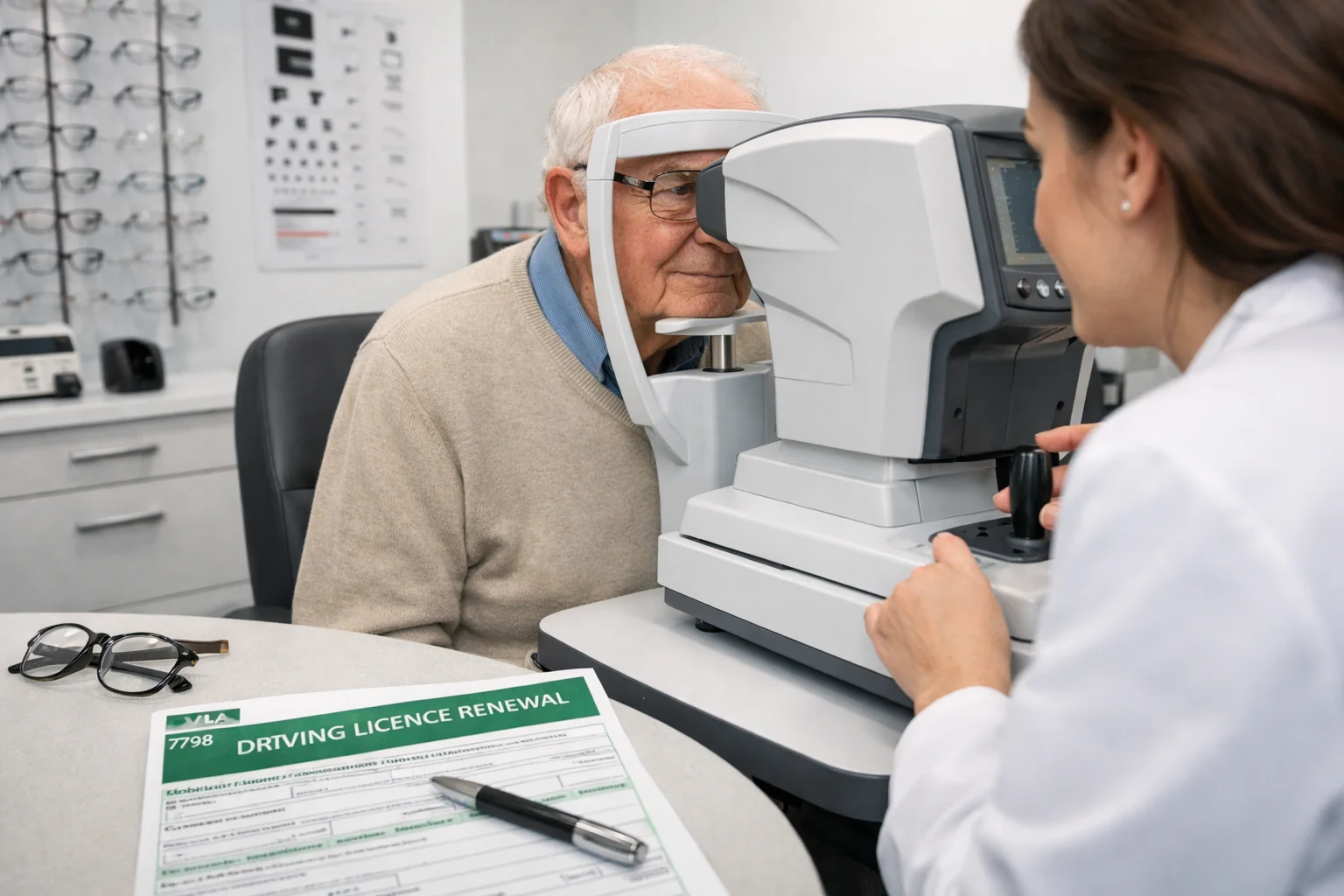
Drivers over the age of 70 in the UK will soon be required to take mandatory eye tests every three years as part of a government initiative to improve road safety. The change comes amid rising concerns about unmonitored age-related vision decline, which can increase the risk of serious road incidents.
Key points covered in this article:
- Mandatory vision checks will be linked to licence renewal for drivers over 70
- Current laws rely on self-reporting, which has proven ineffective
- Experts and organisations support regular testing to catch gradual eyesight loss
- Additional road safety reforms are being introduced alongside eye test requirements
- The new rules raise questions about independence, mobility, and fairness for older drivers
- NHS eye tests are free for over-60s, making compliance more accessible
Why Are New Eye Test Rules Being Introdued for Drivers Over 70?
The proposal to introduce mandatory eye tests for drivers over the age of 70 has emerged from a growing concern about road safety in Britain.
As the UK population ages, a larger proportion of drivers remain on the road well into their seventies and beyond.
While many of these drivers are experienced and cautious, evidence suggests that age-related decline in eyesight can significantly affect reaction times, hazard perception, and overall driving ability.
Government data shows that almost one in four drivers killed in car accidents during 2024 were aged 70 or older. This statistic has played a central role in shaping policy discussions.
The issue is not framed as older drivers being inherently unsafe, but rather that vision deterioration often occurs gradually and may go unnoticed without professional testing.
The new measures form part of the government’s first comprehensive road safety strategy in more than a decade. Alongside eye tests, the strategy is expected to include:
- Tighter enforcement of health and safety rules for drivers
- Revisions to drink driving limits in England
- Penalties for failing to wear seatbelts
Policy makers argue that eyesight checks are a preventative step rather than a punitive one. The intention is to identify potential risks early, allowing drivers to take corrective action such as wearing updated prescription glasses rather than removing their ability to drive altogether.
What Are the Current DVLA Eyesight Rules and How Will They Change?
At present, the Driver and Vehicle Licensing Agency requires all drivers to meet a basic eyesight standard.
This includes being able to read a standard number plate from a distance of 20 metres. Drivers may use glasses or contact lenses to meet this requirement.
However, once a licence is issued, there is no automatic system to reassess eyesight at any age. Instead, the UK relies heavily on self-reporting.
Drivers are expected to notify the DVLA if their vision worsens or if they develop a medical condition that affects driving.
This system has been widely criticised for several reasons:
- Drivers may not realise their eyesight has declined
- Some may underestimate the seriousness of vision loss
- There is no routine verification of compliance
Dr Peter Hampson from the Association of Optometrists has highlighted that sight loss often occurs incrementally, meaning drivers may compensate unconsciously until their vision is already below legal standards.
Current Rules vs Proposed Changes
| Aspect | Current System | Proposed System |
|---|---|---|
| Eye tests | Not mandatory for licence renewal | Mandatory every three years after 70 |
| Reporting | Self-reporting only | Verified through professional testing |
| Enforcement | Limited roadside checks | Linked to licence renewal |
| Alignment with Europe | One of few self-reporting countries | Similar to European standards |
The proposed changes would introduce structured checks at regular intervals, significantly reducing reliance on self-declaration.
How Will the New Rules Affect Older Drivers in the UK?

For drivers over 70, licence renewal already occurs every three years. The key difference under the new system is that renewal would be conditional on passing an eyesight test.
From a practical standpoint, this change may be less disruptive than it initially appears. Eye tests are already widely accessible, and NHS-funded eye examinations are free for everyone over the age of 60 in the UK.
From an author’s perspective, having observed policy responses to transport safety for many years, it is clear that this measure addresses a long-standing gap.
I have seen repeated cases where road collisions involving older drivers were later linked to undiagnosed vision issues.
In my view, formalising eyesight checks brings clarity and consistency to a system that currently relies too heavily on individual judgement.
Older drivers would be affected in several ways:
- They would need to attend an eye test before renewing their licence
- Any corrective measures could be addressed early
- Licence loss would only occur if minimum standards cannot be met
Importantly, passing the test does not require perfect vision. It requires vision that meets legal safety standards, often achievable with corrective lenses.
Could Mandatory Eye Tests Save Lives or Discriminate Against Older Drivers?
One of the most debated aspects of this policy is whether it unfairly targets older drivers. Critics argue that age alone should not determine driving fitness, while supporters counter that the policy addresses statistically higher risks.
Public opinion among older drivers themselves appears divided but pragmatic. Many drivers in their seventies already undergo regular eye tests voluntarily.
Moira Hutchings, aged 71, has stated that she would never consider driving without ensuring her eyesight was adequate, even if the law technically allowed it.
Robert Owens, also 71, has argued that the issue should not be limited to older age groups. His view is that health checks should apply to all drivers, as risk is not exclusive to age.
Risk Factors Considered in Policy Decisions
| Factor | Impact on Driving |
|---|---|
| Reduced visual acuity | Difficulty reading signs |
| Slower reaction times | Delayed braking |
| Peripheral vision loss | Missed hazards |
| Poor night vision | Increased collision risk |
The policy debate continues to focus on balancing safety with fairness. Supporters argue that the policy is evidence-based rather than ageist, while critics urge the government to consider broader testing across all age groups.
What Other Road Safety Reforms Are Being Considered Alongside Eye Test Laws?
The eyesight proposal does not stand alone. It forms part of a wider framework aimed at reducing road fatalities across all demographics.
Among the other measures under discussion are changes to drink driving laws.
England currently has a higher legal alcohol limit than Scotland, and aligning these limits is seen as a way to reduce alcohol-related accidents.
Additionally, enforcement around seatbelt use is expected to be strengthened. Failure to wear a seatbelt could result in penalty points, reflecting its proven role in reducing fatalities.
Proposed Road Safety Measures Overview
| Measure | Purpose |
|---|---|
| Lower drink drive limit | Reduce alcohol-related collisions |
| Mandatory eye tests | Identify vision-related risks |
| Seatbelt penalties | Increase compliance |
| Health fitness reviews | Improve long-term safety |
A coroner’s inquest into multiple fatal collisions involving drivers with failing eyesight concluded that the UK’s reliance on self-reporting was ineffective and unsafe. This finding has added legal and moral pressure on the government to act.
Are There Concerns About the Effect on Social Isolation and Mobility?
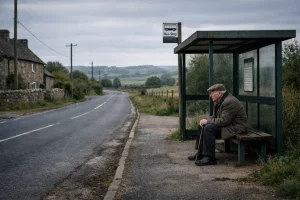
One of the most sensitive aspects of the proposed reforms is their potential impact on independence. Driving plays a crucial role in maintaining social contact, particularly for older people living in rural or suburban areas.
Professor Andrew Steptoe has warned that losing access to a vehicle can increase isolation, loneliness, and reduced engagement with community life. These effects can, in turn, negatively affect mental and physical health.
Age UK supports the introduction of eye tests but stresses that safety measures must be paired with adequate transport alternatives.
Their position is that eye tests alone will not significantly reduce accidents without broader infrastructure support.
Social Impact Considerations
| Issue | Potential Outcome |
|---|---|
| Licence loss | Reduced independence |
| Limited transport | Increased isolation |
| Rural living | Higher reliance on cars |
| Community access | Reduced participation |
Policy experts suggest that mitigation strategies such as improved public transport, community ride schemes, and mobility support services should accompany any new regulations.
How Can Older Drivers Prepare for the New Driving Licence Eye Test Rules?
Preparation is straightforward and largely involves maintaining regular eye care. Optometrists already recommend eye tests every two years for adults, and annually for those with existing conditions.
From a professional insight perspective, Dr Peter Hampson has emphasised that early detection is key. In his clinical experience, small adjustments in prescriptions often restore legal driving vision, preventing unnecessary licence loss.
Older drivers are encouraged to:
- Book routine eye examinations
- Follow optician advice regarding corrective lenses
- Avoid driving if vision feels impaired
- Keep informed about DVLA updates
Preparation Checklist for Drivers Over 70
| Action | Benefit |
|---|---|
| Regular eye tests | Early detection of issues |
| Updated prescriptions | Maintains legal vision |
| Honest self-assessment | Safer driving decisions |
| DVLA awareness | Compliance with law |
By treating eyesight checks as part of normal health maintenance, drivers can adapt smoothly to the new requirements without disruption.
What Is the Public and Professional Response to the Proposed Vision Checks?
The response from road safety organisations has been largely supportive. The Royal Society for the Prevention of Accidents views regular vision checks as a sensible and proportionate approach to risk reduction.
Healthcare professionals broadly agree that the current system leaves too much room for error. Gradual sight loss can remain undetected for years, particularly when individuals adjust their behaviour unconsciously.
At the same time, advocacy groups stress the importance of dignity and autonomy. The emphasis, they argue, should be on supporting safe driving for as long as possible rather than imposing blanket restrictions.
Stakeholder Perspectives
| Group | Position |
|---|---|
| Road safety bodies | Strongly supportive |
| Optometrists | Support early detection |
| Older drivers | Mixed but pragmatic |
| Advocacy groups | Support with safeguards |
Overall, the debate reflects a shared goal of reducing harm while preserving independence. The introduction of mandatory eye tests for drivers over 70 is increasingly seen as a measured step towards safer roads rather than a radical overhaul.
Final Thoughts: Are These Changes a Step Forward for UK Road Safety?
Ensuring that older drivers continue to meet eyesight standards is a rational and necessary step for UK road safety.
It’s not about punishing older drivers it’s about recognising the role vision plays in road awareness and reaction time.
As the UK prepares to implement these changes, drivers and policymakers alike should embrace the opportunity to create a safer, more accountable system for everyone on the road.
Frequently Asked Questions About Eye Tests for Drivers Over 70
Do all drivers over 70 in the UK need an eye test every three years now?
Not yet. The law is currently under review, but the proposal would make eye tests mandatory every three years starting at age 70.
What is the DVLA’s vision requirement for legal driving?
Drivers must be able to read a car number plate from 20 metres away, with or without corrective lenses.
Are eye tests free for people over 70 in the UK?
Yes. NHS eye tests are free for everyone aged 60 and above across the UK.
Can a driver lose their licence due to poor eyesight?
Yes. If a driver fails to meet legal vision standards and cannot improve with corrective lenses, the DVLA may revoke their licence.
How do I know if I meet the legal eyesight standard to drive?
Visit an optician for a professional eye test. They can confirm whether your vision meets the required standard.
What happens if I fail the eye test as a driver over 70?
If you fail, your licence renewal may be denied, and you will not be legally permitted to drive until the issue is resolved.
Are there any exceptions to mandatory vision checks for elderly drivers?
Under the proposed rules, the vision check would be standard for all drivers over 70, with no exceptions currently planned.

Leave a Reply