

Yes, people in the UK do work on New Year’s Eve, as 31 December is not a bank holiday and is legally classed as a normal working day.
While many businesses adjust their schedules, there is no automatic entitlement to time off.
Working patterns vary significantly depending on sector, location, and individual employment contracts.
Key points covered in this guide include:
- New Year’s Eve is a working day under UK law, not a bank holiday
- Office workers often experience early finishes or reduced hours
- Retail, hospitality, transport, and NHS staff commonly work full or extended shifts
- London sees higher demand for workers due to large-scale public events
- Time off, early closures, or enhanced pay depend on employer policy, not statutory rights
Understanding these differences helps employees and employers plan effectively for New Year’s Eve in the UK workplace.
Is New Year’s Eve A Working Day Or A Bank Holiday In The UK?

New Year’s Eve, or 31 December, is not classed as a bank holiday in the United Kingdom.
According to the official UK government bank holiday schedule published on GOV.UK, the designated public holidays for the winter season are Christmas Day, Boxing Day, and New Year’s Day.
Therefore, 31 December is considered a standard working day unless stated otherwise in an employee’s contract or agreed by the employer.
While some businesses choose to close or reduce hours, this is not mandated by law. This creates variability across sectors and even between employers within the same industry.
It’s important to make a distinction between a “bank holiday” and a “working day.” A bank holiday is a statutory public holiday, during which most businesses and institutions close.
A working day, on the other hand, is any weekday that is not recognised as a public holiday and where regular work expectations apply.
Employers may choose to close early or grant a full day off, but this is typically deducted from annual leave or part of a flexible holiday policy. Where employers adopt this approach, they often communicate it in advance as part of end-of-year planning.
Do Most UK Office Workers Work On New Year’s Eve?
In the UK, office workers are typically expected to work on New Year’s Eve unless they have booked annual leave or their employer grants an early finish.
In sectors such as finance, insurance, consultancy, legal services, and accountancy, it is common for businesses to operate on a reduced-hours basis. However, there is no uniform standard across all employers.
Many companies offer what is known informally as a “half-day,” closing offices by early afternoon to allow employees to prepare for New Year’s celebrations.
This is particularly prevalent when New Year’s Eve falls midweek, as it does in 2025 (Wednesday) and 2026 (Thursday).
This flexible arrangement often reflects the slower pace of business during the final days of December, when fewer meetings are scheduled and many clients are on leave.
Common office arrangements include:
- Early closure with normal pay
- Optional annual leave
- Team rota systems with minimal staff coverage
- Remote working with flexible end times
In London, a large number of corporate offices in Canary Wharf, the City, and Westminster operate with skeleton staff or close after midday, especially in finance and media sectors. However, this is not universally applicable and varies depending on workload, client demand, and internal policy.
Do Retail, Hospitality, And Transport Staff Work On New Year’s Eve In The UK?
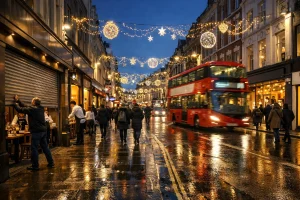
Retail, hospitality, and transport sectors remain fully operational on New Year’s Eve, as demand for their services typically increases on this day.
Employees in these industries are often required to work full shifts or extended hours, depending on their employer’s operating schedule and the nature of the business.
Retail Sector
Large retailers such as supermarkets, department stores, and high-street chains usually remain open on 31 December, albeit often with reduced hours.
Store closing times may vary, but it is common for non-essential shops to close between 4 PM and 6 PM. Essential retailers and convenience stores may operate later to serve last-minute shoppers.
Some employees may be required to work longer hours in the days leading up to New Year’s Eve due to sales events such as post-Christmas discounts.
However, on the day itself, staffing levels may be reduced, particularly in the late evening.
Hospitality Sector
Pubs, clubs, restaurants, and hotels often experience some of their busiest trading hours on New Year’s Eve.
As a result, hospitality workers such as waiters, bar staff, chefs, and hotel receptionists are usually scheduled to work late shifts.
Many of these roles involve serving partygoers, managing events, or supporting large-scale celebrations.
In larger venues and cities like London, Birmingham, and Manchester, staff may work well past midnight, often until 2 AM or 3 AM, depending on licensing hours and clean-up operations.
Transport Sector
The transport industry plays a critical role on New Year’s Eve, particularly in major cities. Services are adjusted to accommodate late-night travel and high passenger volume.
In London, Transport for London (TfL) typically operates an extended service schedule on the Underground, Overground, and bus networks.
Transport staff including drivers, ticket inspectors, station supervisors, and security teams are required to work shifts that may cover the entire evening and into New Year’s Day.
These employees are often compensated with shift allowances or alternative days off, although this is determined by their contractual terms.
Are Public Sector And NHS Employees Required To Work On New Year’s Eve?
Public sector workers and NHS employees may be expected to work on 31 December depending on their department, role, and employment terms.
As New Year’s Eve is not a bank holiday, most public institutions remain operational with regular hours unless an internal policy states otherwise.
NHS Employees
Within the NHS, essential services such as A&E departments, inpatient wards, ambulance services, and on-call specialists continue as normal.
These roles are scheduled as part of routine shift work and are not affected by the festive calendar.
Non-essential services such as elective surgeries or outpatient clinics may be reduced or cancelled around this period, allowing some staff to take leave.
It is standard practice for NHS Trusts to publish holiday rotas in advance, ensuring appropriate staffing and coverage across all departments.
Local Councils and Civil Service
Local councils and government departments may operate with reduced staff on New Year’s Eve, particularly for non-urgent services. Offices may close earlier than usual, although this depends on regional and departmental policies.
Frontline services such as social care, community support, and public safety typically remain available on a limited basis.
Employees in these sectors are usually informed of amended working hours by early December and may be offered options such as remote working, time off in lieu, or using annual leave.
What Does UK Employment Law Say About Working On New Year’s Eve?
Under UK employment law, employers are not legally required to offer New Year’s Eve as a day off unless it is part of an employee’s contractual holiday entitlement.
The Employment Rights Act 1996 outlines statutory leave entitlements, but these apply to annual leave in general and not to specific dates unless designated as bank holidays.
Employers are only obligated to provide 5.6 weeks of paid holiday per year (inclusive of bank holidays), and how this is allocated is usually defined in the employment contract.
Since New Year’s Eve is not a bank holiday, any time off on this date must be:
- Taken as annual leave
- Agreed between employer and employee
- Offered at the employer’s discretion
Differences by Role Type
| Employment Type | New Year’s Eve Obligation | Time Off Options |
| Full-time salaried staff | Usually work unless given leave | Annual leave or flexible time |
| Shift-based workers | May be scheduled to work | Time off in lieu or shift swaps |
| Zero-hours contracts | Work depends on schedule | Decline shift if contract allows |
| Public sector employees | Work unless notified | Depends on department policy |
It’s also important to note that employees cannot assume they will receive extra pay or time off for working New Year’s Eve unless this is outlined in their contract or negotiated through collective agreements.
How Do Work Shifts And Hours Change On New Year’s Eve In Different Sectors?

Work patterns on 31 December vary depending on the nature of the role and the operating hours of the business. The shift structure is often altered to accommodate reduced foot traffic, extended evening operations, or holiday staffing strategies.
Office-Based Roles
Many office-based employers reduce hours on New Year’s Eve, often closing by mid-afternoon. Workloads tend to be lower during the final week of December, making it easier to facilitate early finishes.
In some cases, businesses implement a rotational staffing model where only essential employees are required to be present.
Retail And Sales
Retailers often operate shorter shifts on New Year’s Eve to allow staff to finish earlier. Some common practices include:
- Rotating shift cover between 8 AM and 6 PM
- Assigning senior staff for closing duties
- Offering flexible scheduling to accommodate celebrations
Hospitality And Event Services
In hospitality, shift schedules are typically extended. Staff may begin work in the late afternoon and continue through midnight or later, depending on the event. This often includes:
- Setup and preparation shifts from 3 PM onwards
- Peak service from 7 PM to midnight
- Cleanup and close-down shifts until 2 AM or later
Transport And Public Safety
Transport and emergency services operate on full or extended shifts on New Year’s Eve. This includes staggered start times and overlapping cover to handle passenger demand and public events.
Is Holiday Pay Or Time Off In Lieu Common For New Year’s Eve Work?
There is no statutory entitlement to enhanced pay or compensatory leave for working on New Year’s Eve in the UK.
Whether an employee receives extra pay or time off in lieu depends entirely on the employer’s policy or the terms of a collective agreement.
In industries such as retail, hospitality, and logistics, some employers may offer:
- Higher hourly pay for evening or late-night shifts
- Flat-rate holiday bonuses for working key festive dates
- The option to swap shifts or take alternative time off
However, in office roles or non-unionised environments, New Year’s Eve is treated as a standard working day with no additional pay.
Example Pay Practices by Sector
| Sector | Extra Pay Offered? | Time Off in Lieu? |
| Retail Chains | Sometimes | Rarely |
| Hospitality | Frequently | Yes |
| NHS | Yes (per policy) | Yes (by rota) |
| Public Transport | Yes | Yes |
| Office Workers | Uncommon | Depends on policy |
Employees should review their contracts or consult their HR departments for clarity on pay entitlements during the festive period.
How Does New Year’s Eve 2026 Impact UK Work Schedules?

In 2026, New Year’s Eve will fall on a Thursday, which typically means standard working conditions will apply.
Since the date does not fall on a weekend or adjacent to a bank holiday, most businesses are expected to operate as normal, albeit with possible early closures in some sectors.
Companies may provide discretionary early finishes or allow employees to work from home, particularly in roles where output slows at year-end.
However, shift-based sectors such as healthcare, hospitality, retail, and transportation will likely run full or extended schedules due to continued demand and public events.
How Is New Year’s Eve In London Different For Workers?
London experiences a unique set of working patterns on New Year’s Eve due to the scale of events and the city’s status as a major destination for celebrations.
Large gatherings around the Thames, Trafalgar Square, and the South Bank significantly increase the demand for hospitality, public safety, and transport services.
Key Factors That Affect Workers
- Hospitality staff in central London often work past midnight for New Year’s parties
- Public transport staff cover night services and manage passenger safety
- Security and crowd control staff are deployed at major event sites
- Emergency responders are on standby for crowd-related incidents
Many London employers in the corporate sector offer early closures or allow staff to work remotely on 31 December to reduce travel congestion and accommodate citywide celebrations.
Conclusion
New Year’s Eve is a standard working day in the UK, not a bank holiday, and most employees are expected to work unless their contract states otherwise.
While office-based roles often allow early finishes, sectors like hospitality, healthcare, and transport operate at full capacity. Entitlements to time off or extra pay depend entirely on employer policies.
By understanding workplace expectations and legal rights, both employers and employees can plan ahead for a smooth end to the working year.
Frequently Asked Questions (FAQs)
Is New Year’s Eve classed as a holiday in the UK?
No. New Year’s Eve is a standard working day in the UK unless stated otherwise in your employment contract.
Can my employer make me work on New Year’s Eve?
Yes, unless your contract specifically provides time off or states otherwise.
Do UK businesses close early on New Year’s Eve?
Many offices and retail outlets close earlier than usual, but this varies by employer.
Is there extra pay for working New Year’s Eve in the UK?
Not by law. It depends on your employer’s policies or negotiated agreements.
Are NHS workers required to work on New Year’s Eve?
Yes, especially in essential or emergency roles. Rotas are planned well in advance.
How does New Year’s Eve affect public transport workers in London?
They often work late-night or overnight shifts due to events and increased travel demand.
Do employees have the right to refuse to work on New Year’s Eve?
Not generally. If it’s a scheduled workday under your contract, you’re expected to work.

Leave a Reply