
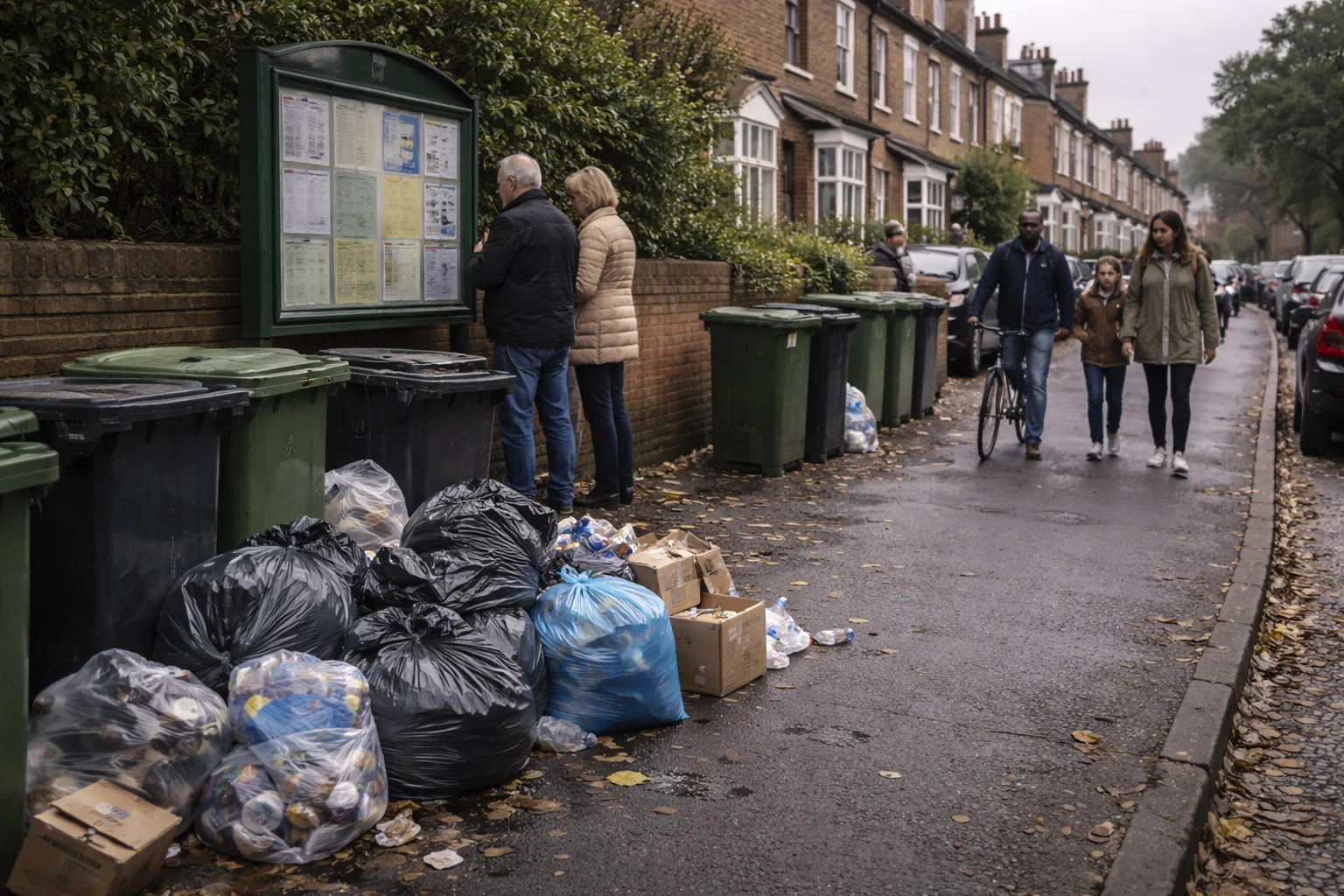
The Birmingham City Council bin strikes are an ongoing industrial dispute that began on 11 March 2025, with refuse workers taking all out strike action over proposed pay cuts and the removal of the Waste Recycling and Collection Officer role.
The dispute continues into 2026 with no final resolution, causing widespread disruption to waste collection services across Birmingham.
The conflict involves Unite the Union and Birmingham City Council, with wider political, financial and public health implications for residents.
Below is a clear summary of the key points covered in this article:
| Key Area | Direct Answer Summary |
|---|---|
| What is happening | Refuse workers have been on continuous strike since March 2025 |
| Why it started | Dispute over pay cuts and removal of WRCO role |
| Who is involved | Unite the Union and Birmingham City Council |
| Resident impact | Uncollected waste, major incident declaration, uneven area impact |
| Financial cost | Over £33.4 million reported by January 2026 |
| Political context | Government logistical support and equal pay pressures |
| Current status | Strike ongoing with extended action into 2026 |
What Are the Birmingham City Council Bin Strikes and Why Did They Start?
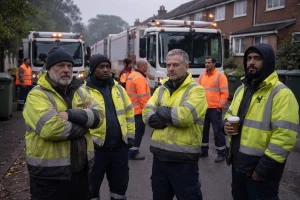
The Birmingham City Council bin strikes began as a workplace dispute but quickly developed into one of the most significant local authority industrial actions in the UK in recent years.
Refuse workers represented by Unite the Union commenced all out strike action on 11 March 2025 after earlier one day walkouts in January failed to resolve disagreements with the council.
At the centre of the dispute is the council’s proposal to remove the Waste Recycling and Collection Officer role, commonly known as the WRCO position.
This role functions as a senior operational grade within refuse crews. According to the union, removing the WRCO grade results in substantial pay reductions for long serving staff and limits career progression within waste services.
Unite argues that between 150 and 170 workers face pay cuts of up to £8,000 annually. The union also states that hundreds more could lose structured pay progression routes.
The council strongly disputes this scale, stating that only 17 workers are directly affected and that alternative roles with equivalent pay, large goods vehicle training opportunities, or voluntary redundancy packages have been offered.
The disagreement reflects deeper structural tensions about grading, equal pay compliance, and financial recovery following Birmingham City Council’s well documented budget crisis and Section 114 notice.
What Is the Waste Recycling and Collection Officer Role?
The WRCO role sits above loader and driver positions within bin collection teams. The union maintains that the position carries additional safety oversight responsibilities, route coordination duties and leadership within the crew.
Unite representatives have argued that removing this role undermines operational safety standards. They claim the WRCO position ensures accountability and structured team management during collections.
The council counters that the WRCO grade does not exist in comparable councils across England. Officials argue that retaining a predominantly male occupied higher graded role exposes the authority to potential equal pay claims.
Birmingham has faced extensive equal pay liabilities in the past and leadership has stated that restructuring is essential to avoid further legal challenges.
The dispute can be summarised in the following comparison table:
| Issue | Unite the Union Position | Birmingham City Council Position |
|---|---|---|
| WRCO role importance | Essential for safety and structure | Not required in modern service model |
| Workers affected | 150 to 170 facing cuts | 17 directly affected |
| Pay impact | Up to £8,000 annual reduction | Lower financial impact |
| Equal pay risk | Not a valid justification | Necessary reform to prevent claims |
The differences in interpretation have widened mistrust between the parties, making compromise more complex.
How Long Have the Birmingham Bin Strikes Been Ongoing?

The Birmingham City Council bin strikes formally escalated to continuous action on 11 March 2025. As of early 2026, the strike remains unresolved, extending well beyond initial expectations.
In February 2026, refuse workers voted to prolong industrial action past the May local elections and potentially into September.
This vote included support from some agency workers who had previously continued working during earlier phases of the dispute.
The timeline below illustrates key milestones in the dispute:
| Date | Event |
|---|---|
| January 2025 | One day walkouts begin |
| 11 March 2025 | All out strike commences |
| March 2025 | Major incident declared after 17,000 tonnes uncollected |
| April 2025 | Government logistical planners assist |
| October 2025 | Strike cost reported at £14 million |
| January 2026 | Cost estimate rises to £33.4 million |
| February 2026 | Workers vote to extend action |
The prolonged duration has elevated the dispute beyond a routine workplace disagreement. It has become a defining political issue within Birmingham and a symbol of wider local government tensions.
How Have the Birmingham City Council Bin Strikes Affected Residents?
The most visible impact of the Birmingham City Council bin strikes has been the accumulation of waste across neighbourhoods.
In March 2025, approximately 17,000 tonnes of rubbish remained uncollected, prompting the council to declare a major incident.
Waste buildup has affected communities unevenly. Higher density inner city areas such as Sparkhill, Small Heath, Sparkbrook, Ladywood and Balsall Heath have reported significant accumulation.
More affluent suburbs, including Harborne and Edgbaston, have experienced disruption but often to a lesser visible extent.
Researchers have suggested that several structural factors may explain disparities:
- Higher population density generates greater waste volumes
- Limited access to private transport for household waste disposal
- Proximity to waste facilities
- Potential fly tipping from neighbouring areas
Some residents in lower-income neighbourhoods have expressed concerns that their communities are being deprioritised.
While no conclusive evidence has proven systematic bias, the perception of unequal service has intensified frustration.
The operational impact can be illustrated as follows:
| Area Type | Reported Impact Level | Contributing Factors |
|---|---|---|
| Inner city high density | Severe accumulation | Population density, access limits |
| Mixed residential | Moderate disruption | Partial contingency collections |
| Affluent suburbs | Variable disruption | Lower density, complaint response |
Public health concerns have also emerged, particularly during warmer periods when decomposing waste attracts vermin and produces strong odours.
The council activated contingency arrangements, including assistance from neighbouring authorities, to reduce backlog risks.
During disruption, residents have been advised to secure waste carefully and monitor official updates for revised collection schedules.
What Has Been the Financial and Political Impact of the Bin Strikes?
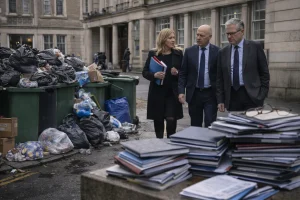
The financial consequences of the Birmingham City Council bin strikes have escalated significantly.
Initial council estimates placed costs at £14 million in October 2025. By January 2026, this figure had increased to £33.4 million.
These costs include:
- Emergency waste management contracts
- Overtime and contingency staffing
- Legal expenses
- Logistical coordination support
The rising expenditure has intensified scrutiny given the council’s already fragile financial position.
Political implications have extended beyond Birmingham. The UK government provided logistical planning assistance, deploying military planners to support operational coordination. This support did not involve frontline troops but demonstrated the seriousness of the situation.
In a direct conversation with a government policy professional familiar with local authority restructuring, he explained,
“From a governance perspective, councils facing equal pay liabilities must act to mitigate long term financial exposure. However, prolonged industrial disputes generate additional financial strain that can offset intended savings. The resolution must balance fiscal sustainability with workforce fairness.”
This statement highlights the tension at the heart of the dispute. The council argues that structural reform is essential to avoid further equal pay claims. Unite insists that financial mismanagement should not be resolved through worker pay reductions.
The broader political environment has also been influenced by national party positions and statements of support for the council from government figures. Unite has publicly criticised aspects of the political response, indicating that relationships between unions and governing parties have been tested by this dispute.
The financial comparison below illustrates projected pressures:
| Category | Estimated Cost or Risk |
|---|---|
| Industrial action costs to date | £33.4 million |
| Historic equal pay liabilities | Substantial previous settlements |
| Contingency operational costs | Ongoing |
| Reputational and service impact | Significant |
What Are Megapickets and Why Have They Drawn National Attention?
The Birmingham City Council bin strikes attracted national attention through organised solidarity demonstrations known as megapickets. These events were coordinated by Strike Map and involved participation from other trade unions.
Large gatherings occurred at sites including Lifford Lane Depot and Perry Barr Depot. Prominent trade union leaders and political figures addressed crowds, reinforcing solidarity messages.
A further escalation occurred when the council sought a six month injunction restricting certain protest activities linked to the strike. The application prompted legal proceedings at Birmingham County Court and additional demonstrations outside the courthouse.
Supporters described the injunction attempt as an effort to restrict lawful protest. Critics argued that operational access to depots needed protection to maintain essential services.
A trade union speaker at one event stated,
“Standing in solidarity with workers defending their pay and conditions is fundamental to our movement. We will not allow legitimate protest to be silenced.”
The council maintained that its priority was maintaining public order and ensuring waste services could operate safely under contingency arrangements.
What Allegations Have Emerged Around Agency Workers?
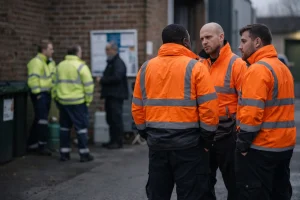
Agency workers employed through Job and Talent became central to a secondary controversy within the Birmingham City Council bin strikes. Audio recordings surfaced in October 2025 in which agency staff were allegedly informed that joining picket lines might affect future employment prospects.
Unite described this as blacklisting and called for an independent investigation. The council denied wrongdoing but acknowledged tensions.
Further allegations emerged that agency workers faced bullying, excessive workloads and public display of performance metrics in staff areas. The council admitted that one monitoring practice contravened General Data Protection Regulation requirements.
In November 2025, 18 of 22 Unite affiliated agency workers reportedly voted to join the strike. This shift increased pressure on the council’s contingency staffing arrangements.
The agency worker dispute can be summarised below:
| Issue Raised | Allegation | Council Response |
|---|---|---|
| Employment warning | Risk of no permanent role if striking | Denial of blacklisting |
| Workplace monitoring | Public display of performance data | GDPR breach acknowledged |
| Bullying claims | Excessive workload pressure | Investigation statements |
These developments broadened the scope of the dispute from structural pay reform to workplace conduct concerns.
What Could Happen Next in the Birmingham Bin Strike Dispute?
As the Birmingham City Council bin strikes continue into 2026, potential outcomes remain uncertain. Several realistic scenarios may unfold.
A negotiated compromise remains possible if both sides adjust expectations. This could involve transitional pay protection for affected staff combined with phased restructuring.
Alternatively, the dispute may continue if positions remain entrenched. Prolonged disruption risks further financial escalation and reputational damage for the council.
Political intervention at national level could increase if public health concerns intensify or if financial pressures worsen.
From my own perspective observing the dispute, I believe prolonged conflict benefits neither residents nor workers. I reflected recently,
“The longer rubbish remains on streets, the harder it becomes for any side to claim moral high ground. Residents want practical solutions more than political statements.”
The dispute has become a test of governance, labour relations and fiscal responsibility within one of the UK’s largest local authorities. Its resolution will likely influence future approaches to workforce restructuring in other councils facing similar financial pressures.
While negotiations may resume at any stage, the balance between protecting workers’ incomes and securing long term financial stability remains the central challenge driving the Birmingham City Council bin strikes.
Conclusion
The Birmingham City Council bin strikes remain one of the most significant local authority disputes in the UK today. What began as a disagreement over the removal of the WRCO role has evolved into a prolonged conflict shaped by equal pay liabilities, financial pressures, political involvement, and growing public frustration.
As rubbish continues to accumulate in parts of the city, residents are left navigating uncertainty while negotiations remain unresolved. Whether through compromise, restructuring, or political intervention, a resolution is urgently needed.
In my view, restoring trust between workers, the council, and the public will require transparency, fairness, and a willingness from both sides to move beyond entrenched positions. Until then, the Birmingham City Council bin strikes will continue to shape the city’s political and social landscape.
Frequently Asked Questions About the Birmingham City Council Bin Strikes
What triggered the escalation from limited walkouts to an all-out strike?
The shift occurred after negotiations over pay and the removal of the WRCO role failed to produce agreement, leading workers to begin continuous industrial action in March 2025.
Are all waste services suspended during the strike?
Not entirely. The council has implemented contingency plans, meaning some collections continue, though schedules remain inconsistent and delayed in many areas.
Has the government directly intervened in the dispute?
The government has provided logistical planning support but has not directly taken over negotiations between the council and the union.
Why is equal pay such a significant factor in this dispute?
Birmingham City Council has faced major equal pay liabilities in the past. Officials argue that retaining certain roles could expose the authority to further legal claims.
Are recycling collections affected as well?
Yes, recycling services have experienced disruption alongside general waste collection, depending on staffing availability and contingency arrangements.
Could council tax be impacted by the cost of the strike?
While no direct link has been announced, rising costs from industrial action add financial strain to an already pressured council budget.
Is there a historical precedent for bin strikes in Birmingham?
Yes, Birmingham experienced a similar refuse dispute in 2017, and comparisons have been drawn regarding unequal impact across neighbourhoods.

Leave a Reply