
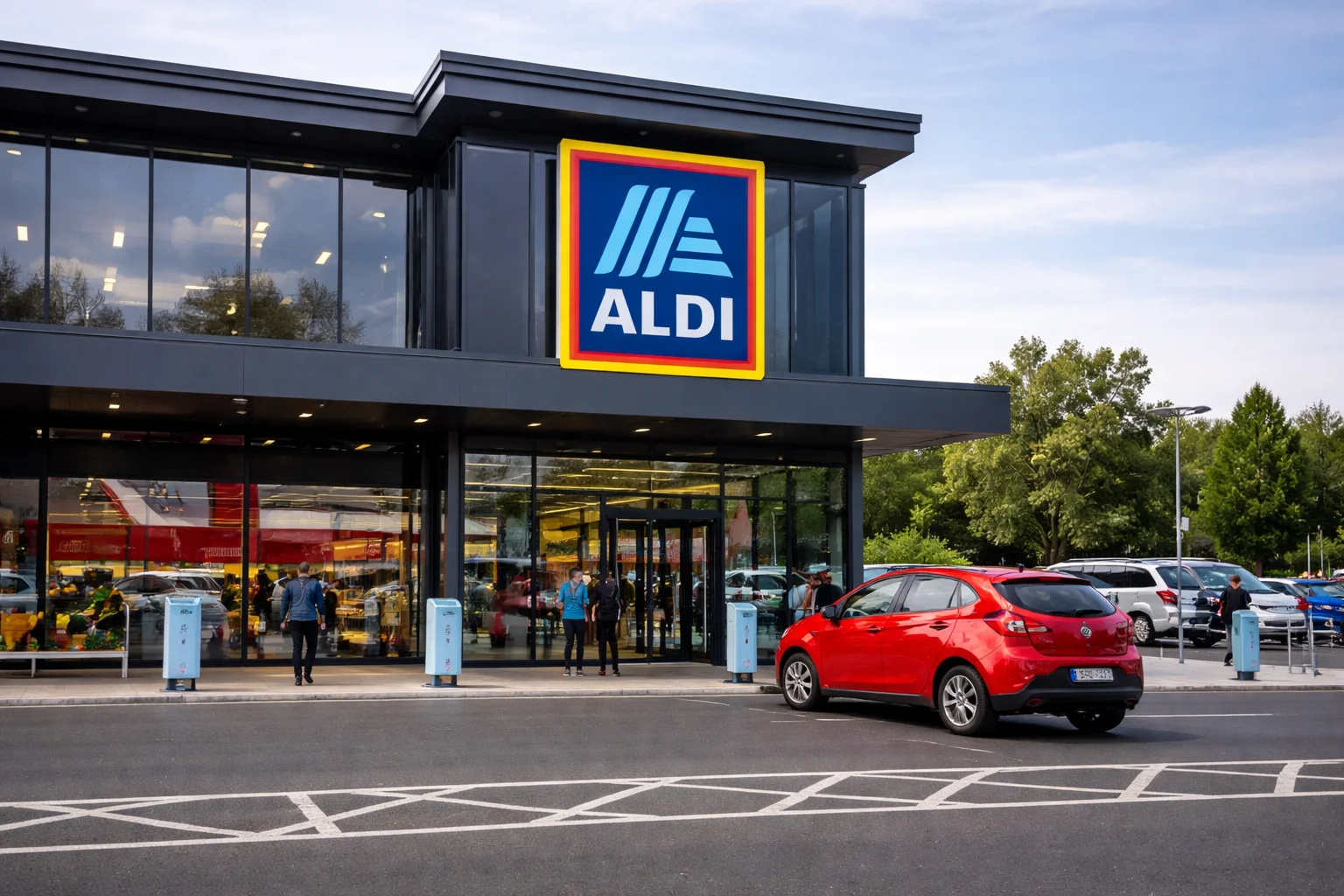
Aldi has confirmed a second wage increase for store colleagues in Spring 2026, meaning entry-level pay will rise to £13.50 per hour nationally and £14.88 in London, making it the highest paying major supermarket in the UK.
This Aldi pay rise comes in two stages across March and April and forms part of a £36 million investment in staff pay and benefits.
Key points covered in this article:
- New March and April 2026 hourly pay rates
- Comparison with Lidl, Sainsbury’s, and Waitrose
- Apprentice wage increases
- Paid breaks and enhanced maternity pay
- Impact of the National Living Wage rise
- What this means for recruitment and retention
- How the pay rise reflects wider UK retail wage trends
What Is the New Aldi Pay Rise in Spring 2026?

The Aldi pay rise in Spring 2026 is being implemented in two phases, reinforcing the supermarket’s commitment to maintaining market-leading pay rates in the UK retail sector. The first increase takes effect from 1 March 2026, followed by a further uplift in April 2026.
This double adjustment within weeks is unusual in the supermarket industry and reflects the intensity of competition for frontline retail staff.
From 1 March 2026, starting pay for Store Assistants rises to £13.35 per hour nationally and £14.71 per hour inside the M25.
With length of service, these rates increase to £14.30 nationally and £15.03 within the M25. In April 2026, Aldi confirmed a further rise to £13.50 nationally and £14.88 in London.
The structure of the new Aldi pay rise can be clearly understood in the table below.
Aldi Store Assistant Pay Rates 2026
Location From March 2026 With Service From April 2026
National £13.35 £14.30 £13.50
Inside M25 £14.71 £15.03 £14.88
In addition to Store Assistants, apprentices are also included in this wage uplift.
Aldi Apprentice Pay Rates 2026
Location Apprentice Hourly Rate
National £12.02
Inside M25 £13.22
These apprentice rates sit well above the statutory minimum wage for first-year apprentices, further strengthening Aldi’s employer positioning.
The legal National Living Wage is set to rise to £12.71 per hour in April 2026. The Real Living Wage, calculated by the Living Wage Foundation, currently stands at £13.45. Aldi’s April national rate of £13.50 exceeds both benchmarks, which strengthens its claim of sector leadership.
Why Has Aldi Introduced a Second Pay Rise This Year?
The second Aldi pay rise in 2026 is not occurring in isolation. It follows a series of announcements from competing supermarkets that are also raising wages above inflation.
Retail remains one of the largest employment sectors in the UK. Staff turnover, recruitment pressures, and rising living costs have forced major chains to rethink pay strategies. Aldi’s decision appears to be both defensive and strategic.
From a competitive standpoint, Lidl, Sainsbury’s, and Waitrose have all confirmed pay increases for 2026. Without adjusting rates again in April, Aldi risked losing its status as the highest-paying supermarket nationally.
There are several drivers behind this move:
- Rising cost of living pressures
- Competition for reliable store colleagues
- Expansion plans require new recruitment
- Employer branding considerations
Although some business leaders argue that rising minimum wages restrict hiring capacity, Aldi appears to be taking a different approach. Instead of limiting wage growth, it is leaning into higher pay as a competitive advantage.
How Does the Retail Sector Wage Competition Affect Aldi?

To fully understand the Aldi pay rise, it is essential to compare it against other major supermarkets.
UK Supermarket Pay Comparison 2026
Supermarket National Hourly Rate London Hourly Rate
Aldi £13.50 £14.88
Sainsbury’s £13.23 £14.54
Waitrose £13.25 £14.80
National Living Wage £12.21 Not Applicable
This comparison shows how narrow the margins are between competitors. Lidl briefly held the highest national rate outside London at £13.45. Aldi’s second increase moves it ahead by five pence per hour nationally.
While the difference may appear small, across thousands of employees and full-time hours, it becomes significant. Even a ten-pence difference can influence candidate decisions when applying for roles.
A retail industry consultant explained to me, “In high volume recruitment sectors like supermarkets, even minor pay advantages can shift applicant flow dramatically. The perception of being the highest paying employer is often more powerful than the numerical gap itself.” That observation highlights how branding and messaging are central to wage competition.
Is This About Staff Retention or Market Positioning?
In my view, the Aldi pay rise addresses both retention and strategic growth. Aldi plans to open 40 new UK stores in 2026 and already employs around 45,000 people. Expansion at this pace demands a stable and motivated workforce.
Higher hourly pay can reduce turnover, improve morale, and strengthen internal progression. When combined with benefits such as paid breaks and extended maternity pay, the overall employment package becomes more compelling.
At the same time, claiming market-leading rates supports Aldi’s public image. Being seen as both a value retailer for customers and a premium payer for employees enhances brand credibility.
How Does the Aldi Pay Rise Compare with Other UK Supermarkets?
While headline hourly rates attract attention, the broader compensation structure also matters. Several supermarkets have introduced increases in 2026, but the timing and scale vary.
John Lewis shop staff, including those in Waitrose, will receive £13.25 nationally and £14.80 in London from 1 April 2026. Sainsbury’s will pay £13.23 nationally and £14.54 in London. Lidl staff will earn £13.45 nationally and £14.80 in London from March 2026.
The following table summarises both entry rates and potential progression.
Supermarket Pay Progression Overview 2026
Supermarket Entry Rate National London Rate Service-Based Increases Paid Breaks
Aldi £13.50 £14.88 Yes, up to £14.30 national Yes
Sainsbury’s £13.23 £14.54 Limited No
Waitrose £13.25 £14.80 Yes No
Aldi remains the only major supermarket offering paid breaks to all store colleagues. This benefit alone is estimated to be worth up to £1,470 annually per employee.
When I assess this comparison, I see Aldi positioning itself not only slightly ahead on hourly pay but also ahead on tangible daily benefits. The paid breaks policy, in particular, reinforces its employee-centric image.
What Does the Aldi Pay Rise Mean for Employees?
For employees, the Aldi pay rise translates into measurable financial gain. A full-time employee working 37.5 hours per week at £13.50 per hour earns approximately £506 per week before tax. Over a year, this equates to more than £26,000 in basic pay.
The incremental increases based on length of service create additional earning potential. This encourages longer tenure and internal loyalty.
Beyond base wages, Aldi is enhancing family-friendly benefits. Maternity pay will be extended to 26 weeks at full pay. In the retail sector, this level of support is not universal and signals a shift toward improved work-life balance support.
A human resources professional I spoke with commented, “Extending maternity pay to 26 weeks at full salary is a serious financial commitment.
It sends a message that the company values long-term workforce stability rather than short-term savings.” I share that view.
Enhanced maternity provision often influences how female employees assess career continuity in retail roles.
The Aldi pay rise also affects apprentices, who will earn significantly above statutory apprentice minimum rates. For younger workers entering retail, this creates a more attractive entry pathway.
Is Aldi Now the Highest Paying Supermarket in the UK?

Based on announced 2026 rates, Aldi appears to hold the highest national entry rate among major UK supermarkets. While the London rates are closely matched by Lidl and Waitrose, Aldi’s April increase ensures its national rate of £13.50 leads the sector.
It is important to consider three wage benchmarks in 2026:
- National Living Wage at £12.71
- Real Living Wage at £13.45
- Aldi national entry rate at £13.50
By exceeding both the statutory and voluntary living wage figures, Aldi strengthens its claim of leadership.
However, the competition remains tight. If rivals respond later in 2026 with further adjustments, the ranking could shift again. The supermarket wage race is ongoing rather than settled.
How Does This Pay Rise Reflect Wider UK Wage Trends in 2026?
The Aldi pay rise is part of a broader shift in the UK labour market. Minimum wage levels continue to increase, placing upward pressure on pay structures across retail and hospitality sectors.
Some supermarket executives have argued that sustained minimum wage increases restrict their ability to hire more staff, particularly younger employees seeking first jobs. Higher wage bills inevitably affect operating margins.
At the same time, consumer behaviour is evolving. Following the surge in grocery prices after Russia’s invasion of Ukraine, many shoppers shifted toward own brand products and discount retailers.
Aldi and Lidl benefited from this trend, increasing market share while traditional supermarkets faced margin compression.
Retailers must now balance:
- Competitive pricing for customers
- Rising supplier costs
- Increasing wage bills
- Shareholder expectations
From my perspective, Aldi’s double increase indicates confidence in its business model. I believe the company recognises that operational efficiency and streamlined store formats allow it to absorb higher labour costs more effectively than some competitors.
A retail finance analyst told me, “Discount supermarkets operate with leaner staffing models and tighter product ranges.
That efficiency gives them slightly more flexibility when raising pay compared to traditional full range supermarkets.” That explanation helps clarify why Aldi can maintain its pricing reputation while increasing wages.
What Could This Mean for Aldi’s Future Growth in the UK?
Aldi has stated that it plans to open 40 new stores across the UK in 2026. This expansion requires sustained recruitment across regions, particularly in areas where competition for labour is strong.
The Aldi pay rise supports this growth strategy by strengthening its appeal to prospective employees. Higher wages can shorten recruitment cycles and increase applicant numbers.
With 45,000 employees already in the UK, even small pay increases represent substantial financial commitments. The £36 million investment in pay and benefits for 2026 underscores the scale of Aldi’s workforce spending.
From a strategic standpoint, this move may also influence market perception. Customers increasingly value ethical employment practices. By publicising market-leading wages and enhanced maternity benefits, Aldi reinforces its corporate responsibility narrative.
Long-term sustainability will depend on productivity levels and continued sales growth. If store expansion delivers increased revenue, the wage strategy could prove both commercially viable and reputationally beneficial.
The Aldi pay rise therefore, represents more than a simple adjustment to hourly rates. It reflects a broader competitive strategy that blends workforce investment, brand positioning, and expansion planning within the UK’s highly competitive supermarket landscape.
Conclusion – What Does the Aldi Pay Rise Signal for 2026?
The Aldi pay rise in Spring 2026 represents more than a simple wage adjustment. It is a strategic move in an increasingly competitive retail environment.
With hourly rates rising to £13.50 nationally and £14.88 in London, Aldi now leads the supermarket sector in entry-level pay. The double increase within weeks underscores its determination to remain ahead of Lidl, Sainsbury’s and Waitrose.
Combined with paid breaks, enhanced maternity benefits and expansion plans, the announcement signals confidence and ambition.
In my view, this development highlights a broader transformation within UK retail, where investment in people is becoming as important as pricing strategy.
As the supermarket wage race continues, Aldi has set a benchmark that others may feel pressured to match.
Frequently Asked Questions About Aldi Pay Rise 2026
When will the new Aldi pay rates take effect?
The first increase begins on 1 March 2026, with a further uplift in April 2026 for store assistants across the UK.
How much will Aldi staff earn in London in 2026?
London-based store assistants will earn up to £14.88 per hour, with potential increases based on length of service.
Does Aldi pay above the National Living Wage?
Yes, Aldi’s 2026 entry-level rates exceed the National Living Wage of £12.71 per hour.
Are apprentices included in the Aldi pay rise?
Yes, apprentice pay will increase to £12.02 nationally and £13.22 within the M25.
Do Aldi employees receive paid breaks?
Yes, Aldi is currently the only major UK supermarket offering paid breaks to all store colleagues.
How does Aldi’s pay compare with Lidl?
Aldi’s April 2026 rate of £13.50 nationally is slightly higher than Lidl’s £13.45 national rate.
Why are supermarkets increasing wages in 2026?
Rising minimum wage levels, cost-of-living pressures and competition for staff are driving wage increases across the sector.

Leave a Reply