
Building a recognizable brand in the UK right now is an absolute uphill battle for small and medium-sized companies.
The landscape is crowded, online ad costs are skyrocketing, and the average consumer is bombarded with thousands of marketing messages before they even eat lunch.
Standing out has stopped being a question of who has the biggest ad budget. Instead, it is about who can create the most consistent, real-world visibility through simple, everyday interactions.
This pressure is exactly why we are seeing an explosion of custom merchandise among independent shops, local cafes, universities, and event planners.
Brands are moving away from throwaway junk and leaning into items people actually use, think high-quality notebooks, insulated travel mugs, and sturdy cotton tote bags. These products keep a business visible long after the initial transaction or handshake is over.
For smaller operations, this pivot is all about redefining marketing value. Traditional ad campaigns are a constant drain on cash, and their lifespan is brutally short.
A digital ad disappears with a swipe, a paper flyer hits the bin immediately, and promotional marketing emails end up unread in the spam folder. Reusable merch operates on a completely different timeline; it stays in circulation for months, if not years.
Think about the math of a basic tote bag.
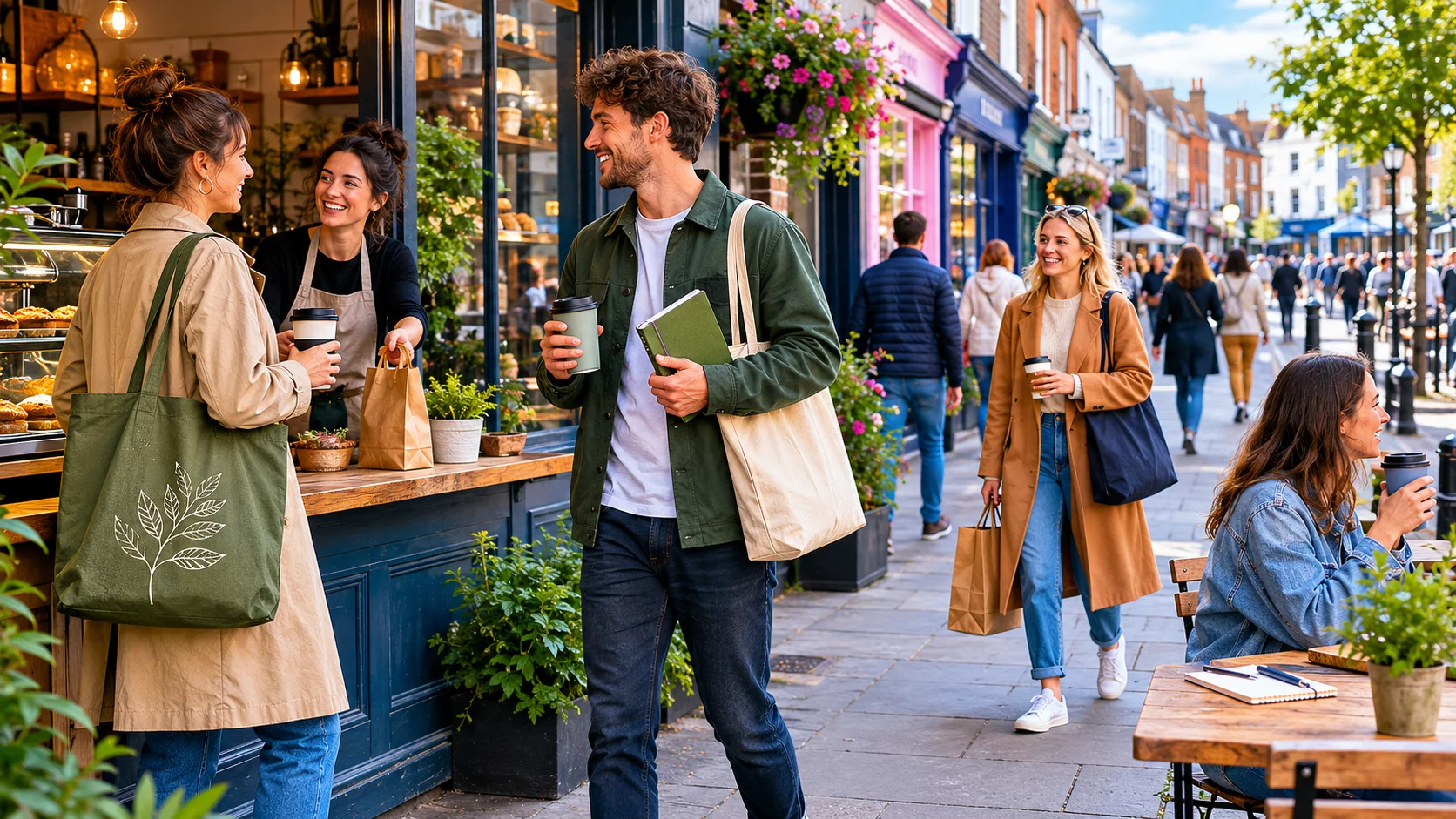
When a customer walks around town carrying a well-designed bag with your logo on it, they become a walking billboard.
They are generating hundreds of impressions in supermarkets, on trains, and in high streets, and it doesn’t cost the business a single extra penny. Over time, this passive repetition bakes your brand directly into the local community’s subconscious.
The explosion of e-commerce has forced this shift, too. Shoppers aren’t just choosing between two or three shops on their local high street anymore.
They can pull out their phone and compare hundreds of options in seconds. Because of this, small businesses have to work twice as hard to create an experience that sticks.
Branding has evolved far beyond a logo slapped on a website. Today, customers judge a business by its total presentation, how it packages orders, how consistent it feels, and how useful its products are.
A premium, everyday item that outlasts the purchase date turns from a simple giveaway into a genuine tool for keeping customers loyal.
This is the ultimate secret weapon for independent brands trying to survive against national corporate giants.
A small business can’t outspend a massive conglomerate on Google or Facebook ads, but it can win on personal connection and community vibe. Physical, reusable products reinforce that sense of belonging and keep locals coming back.
When you look at it strictly from a commercial standpoint, utility is everything. Businesses are finally abandoning cheap novelty plastic trinkets that end up in landfills. They are investing in durability because they know modern consumers demand products that actually work and last.
The events industry has gone through the exact same transformation. Go to any modern tech conference, university orientation, or networking hub, and you’ll notice the cheap plastic pens are missing. Organizers are handing out gear that people actually want to take home and use at their desks the next morning.
For a scrappy startup, this secondary life is pure gold. When your merchandise makes its way into offices, gym classes, or public transport, your brand reaches an entirely new audience organically.
You are expanding your marketing footprint without paying for extra distribution.
There is a lot of behavioral psychology backing this up. Human beings are simple creatures: the more we see something, the more familiar it becomes, and familiarity breeds trust.
Regular, real-world exposure through everyday objects builds a level of baseline comfort that a flashing banner ad on a website just can’t replicate.
This doesn’t mean companies should delete their social media accounts and just buy mugs. The smartest strategies blend the digital and physical worlds.
It’s about building a consistent loop where a customer sees you on Instagram, buys from your site, and then carries your brand into the real world on their morning commute.
Social media has made aesthetics incredibly important. Consumers expect a seamless visual identity whether they are looking at your TikTok, your shipping boxes, or the bag you handed them over the counter. If your branding looks cheap or inconsistent anywhere in that chain, it hurts your credibility.
At the end of the day, cost efficiency is the metric that rules small business budgets. Every pound spent has to work hard. Reusable products are highly attractive because they act as a long-term investment rather than a one-time operational expense.
Thankfully, manufacturing tech has caught up with this demand. In the old days, ordering custom gear required massive minimum volumes that only corporate giants could afford.
Today, digital printing and flexible supply chains mean a local coffee shop can order a small batch of high-quality, customized goods without breaking the bank.
This shift explains why lifestyle brands, boutique retailers, and creative agencies are leaning so heavily into physical merchandise.
They realize that customers hate being aggressively marketed to, but they love receiving things that are genuinely useful. If an item fits naturally into someone’s morning routine, the branding becomes part of their life, not an interruption.
With digital ad prices showing no signs of dropping, the physical world is looking more and more attractive to marketers.
Creating real-world awareness through practical items offers a reliable, steady stream of visibility that keeps your business in the conversation without relying on a paid algorithm.
Ultimately, the rise of reusable merchandise shows how much marketing has changed. Visibility isn’t just about yelling the loudest through advertisements anymore.
It’s about being useful, building long-term familiarity, and creating products that people naturally want to keep around. For small businesses fighting for survival in crowded spaces, fitting into a customer’s daily routine is the smartest way to grow a brand from the ground up.

Leave a Reply