
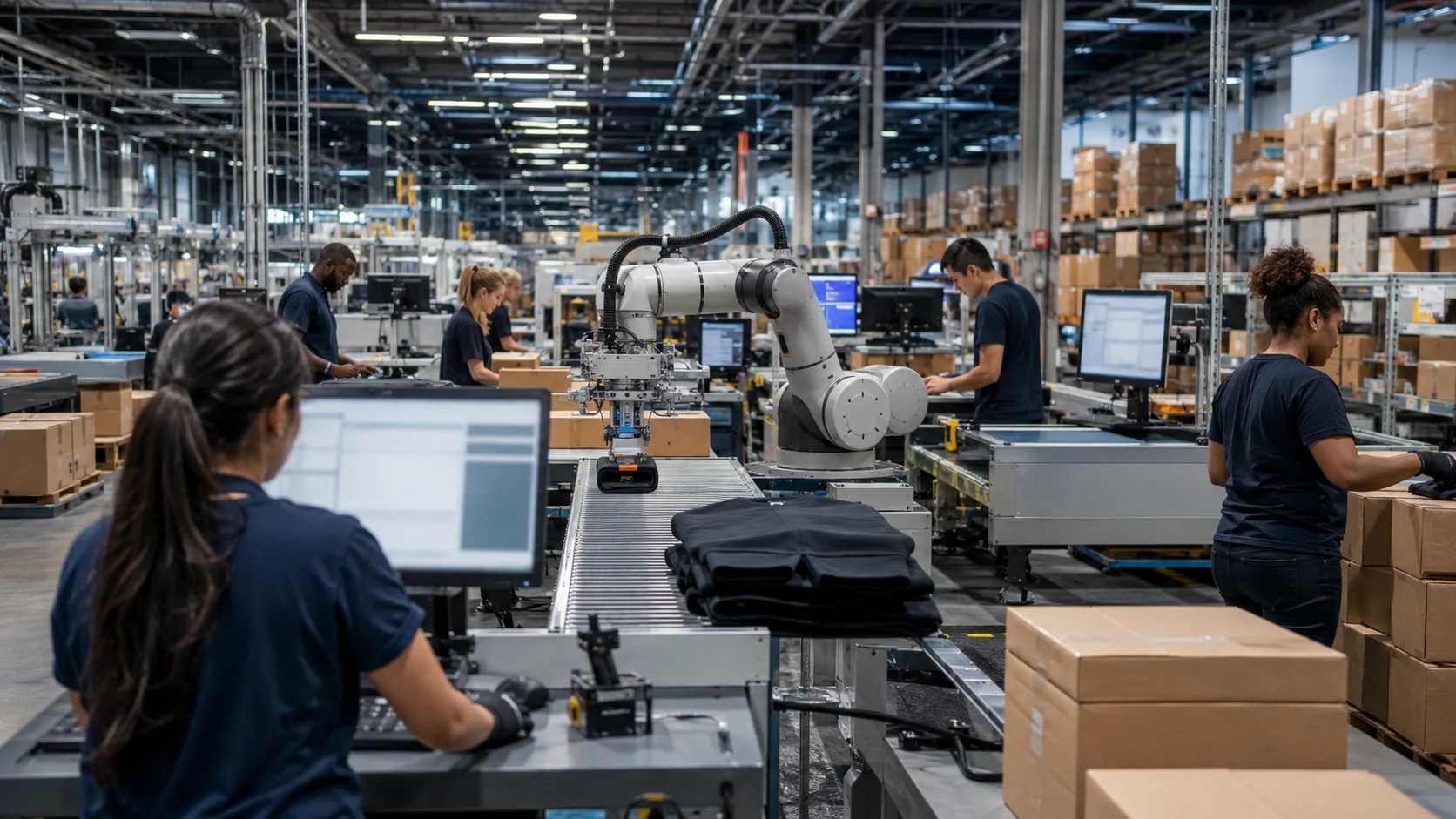
Custom product businesses face growing complexity as they seek to meet rising consumer expectations for speed and personalisation. Automation is rapidly becoming essential, not just for efficiency, but as the foundation for sustainable growth at scale.
This article explains how automation delivers operational advantages and underpins reliable expansion for print on demand and personalised goods providers.
Meeting large order volumes while maintaining customisation options presents a consistent challenge for any business involved in personalised goods.
Automation plays a central role by reducing repetitive manual tasks and allowing teams to focus on higher-value activities. When adopting automation, print on demand businesses are better positioned to scale operations, improve order accuracy, and keep fulfilment timelines consistent regardless of peaks in demand.
The competitive landscape increasingly rewards companies that see automation as a core business capability rather than an optional tool for cost-cutting.
Where Automation Delivers Operational Efficiency Gains?
Automation provides significant benefits at key stages across the order-to-delivery process. By streamlining order intake and routing, businesses can process large volumes of orders with fewer manual interventions, lowering the risk of human error and reducing order cycle times.
Automated order management systems help direct incoming requests to the right production queues, supporting faster response times during busy periods.
At the production stage, workflow automation standardises instructions and ensures that each job follows consistent processes.
Employing batching logic, digital job tickets, and real-time status tracking minimises delays and lost information. This approach lets production teams handle diverse orders efficiently, even as volumes grow or product customisation increases.
How Automation Helps Custom Product Businesses Scale Efficiently?
Cost Implications and Impacts on Business Margins

As order numbers rise, automation changes the unit economics for custom manufacturers. Automating repetitive tasks such as label creation or order confirmation can reduce labour costs and speed up throughput.
Over time, consistently applied automation can protect business margins by cutting down on rework, errors, and costly returns associated with manual mistakes.
Reducing the need for manual customer service interventions also protects profit margins, as enquiries about delayed shipments or poor-quality outcomes can decline. By automating shipping label generation, routing, and dispatch confirmations, custom product businesses can free staff resources for problem-solving instead of administrative follow-up.
Print on demand provides an additional layer of flexibility, helping companies adapt quickly to changes in order patterns or production requirements without accumulating excess inventory.
Sustaining Quality Control Through Automated Checks
Maintaining high standards across growing order volumes requires more than just speed. Quality control is essential to prevent customer dissatisfaction and returns.
Automated systems can validate artwork files, apply colour consistency checks, and flag design conflicts before orders reach production. These digital safeguards reduce errors that might otherwise be missed during busy periods or by less experienced staff.
Yet, human oversight remains essential for tasks that require nuanced judgement, such as assessing unusual custom requests or handling ambiguous errors flagged by software.
Automated picking and scanning reduces picking errors, but visual checks before final dispatch still play a critical role in ensuring customer satisfaction. Balancing automation with targeted manual review helps maintain output standards as scale increases.
Leveraging Data to Drive Scaling Decisions

Automation unlocks the ability to reliably gather and analyse operational data at every stage of the fulfilment process. By tracking metrics such as order lead times, defect rates, and the root causes of late dispatches, businesses can transform data into actionable performance management. Real-time dashboards highlight bottlenecks, helping teams intervene early to avoid service setbacks.
Advanced automation supports inventory and supply planning by generating automated replenishment alerts for raw materials and consumables.
Businesses can more accurately forecast demand based on order trends and trigger proactive stock movements, reducing the risk of running out during high season. Over time, data-driven forecasting enables smarter investments in equipment, staffing, and process improvements, strengthening the scaling journey for print on demand providers.
Managing Risks and Building Automation Maturity
Implementing automation for scaling comes with potential risks, especially if systems are over-extended or poorly integrated. Overly rigid automation can become brittle during sudden demand spikes, while failures in integration between sales, back office, production, and shipping systems may disrupt operations and customer experience.
Effective change management and staff training are crucial for smooth adoption and to prevent resistance that can undermine automation outcomes.
Successful businesses typically follow a phased approach, introducing automated workflow tools before moving to comprehensive process integration.
Measuring the impact of automation through key indicators such as processing speed, order accuracy, and customer satisfaction confirms whether investments are translating into improved outcomes.
Incremental improvements, backed by robust training and feedback loops, help custom product businesses move confidently toward large-scale, reliable operations powered by automation.

Leave a Reply