

The Suffolk council merger legal challenge is expected to escalate into a major judicial review dispute after the new Reform UK administration at Suffolk County Council confirmed plans to oppose the government’s proposal to split the county into three unitary authorities.
Council leaders argue the restructuring could divide resources, weaken county wide coordination and create long term governance issues, while supporters believe the reforms may improve accountability and simplify local services.
The dispute has already triggered political divisions across Suffolk, with Labour, Green and Conservative representatives taking different positions on the proposed changes and the legal action itself.
Key Takeaways
- Suffolk County Council plans legal action against government restructuring proposals
- Reform UK opposes splitting Suffolk into three unitary authorities
- A judicial review could delay or challenge the merger plans
- Critics fear competition for funding and weakened county coordination
- Supporters believe unitary authorities could improve accountability
- Labour, Green and Conservative leaders remain divided on the issue
- Norfolk and Essex councils are considering similar legal challenges
Why Is Suffolk County Council Planning a Legal Challenge Against the Merger?
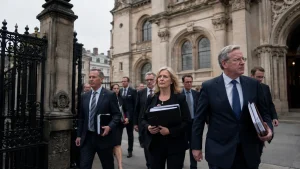
Suffolk County Council’s proposed legal challenge against the government’s restructuring plans has quickly become one of the most debated political developments in local government.
The newly elected Reform UK administration believes the decision to split Suffolk into three separate unitary authorities could fundamentally alter the county’s governance, finances and long-term planning structure.
The government’s wider reform programme is designed to replace two-tier council systems across parts of England with unitary authorities that combine responsibilities under one organisation.
However, Reform UK leaders in Suffolk argue the proposal risks damaging county-wide cooperation and creating divisions between regions competing for the same funding and public resources.
Michael Hadwen, who is expected to formally become the council leader, has openly criticised the proposal and described the planned reorganisation as “madness”.
His argument centres on the belief that Suffolk operates more effectively as a unified county rather than as three separate administrative bodies.
The administration has already indicated that legal proceedings could begin quickly through a pre-action letter to the government. This legal document is often the first formal stage before judicial review proceedings are filed in court.
Reform UK’s Opposition to the Three Unitary Proposal
Reform UK has made opposition to the merger one of its most visible local policy positions since gaining influence at the county council. Party representatives argue the proposal would create unnecessary fragmentation across Suffolk and could result in councils competing against one another for investment and infrastructure support.
According to party officials, the county currently benefits from coordinated strategic planning in areas such as transport, social care, education and economic development.
They believe dividing authority across three new councils may weaken that cooperation.
The party has also questioned whether the reforms are being introduced too quickly without enough public consultation or local agreement. Reform UK representatives argue that residents should have greater input before major structural changes are implemented.
The debate has become particularly important because Suffolk is not the only county opposing local government reform proposals. Norfolk and Essex councils have also discussed legal options against similar restructuring plans.
This growing resistance has increased national attention on how the government intends to proceed with devolution and council reorganisation.
Michael Hadwen’s Concerns About Dividing Suffolk
Michael Hadwen has repeatedly warned that splitting Suffolk into separate authorities could create long-term governance problems. His concerns focus heavily on financial competition, service coordination and county identity.
According to Hadwen, the proposed model may result in individual authorities prioritising their own local interests over county-wide planning strategies.
He believes this could create challenges in areas such as infrastructure investment, transport policy and public service funding.
A local governance adviser familiar with council restructuring debates explained the issue clearly:
“I have worked with authorities that underwent major restructuring and one of the biggest problems was maintaining cooperation after responsibilities were divided. Councils naturally begin focusing on their own regional priorities and that can create delays when wider county planning is needed.”
This reflects concerns shared by several critics of local government reform who believe larger strategic areas can become harder to manage once multiple authorities are created.
There are also concerns regarding economic balance between regions. Some opponents fear wealthier or more developed parts of Suffolk could attract greater investment while smaller communities struggle for resources.
Why the New Administration Calls the Plan “Madness”?
The Reform UK administration argues the proposed structure could create instability during the transition period while offering uncertain long term savings.
Critics of the reform claim the government has focused too heavily on structural redesign rather than addressing immediate local concerns.
Several council representatives have pointed to ongoing issues such as road maintenance, infrastructure delays and public service pressures as priorities that deserve greater attention.
The administration also believes the reforms may create additional layers of complexity during implementation. Existing council systems, staffing structures, contracts and service agreements would all require reorganisation under the new model.
The following table highlights some of the concerns raised by opponents of the restructuring proposal.
Concern Raised Explanation
Resource competition Authorities may compete for funding and investment
Service disruption Transition periods could affect public services
Administrative costs Reorganisation may require significant spending
Reduced coordination County wide planning could become fragmented
Governance uncertainty New systems may take years to stabilise
Critics argue these risks could outweigh any projected efficiency savings promoted by supporters of the reforms.
What Are the Government’s Plans for Suffolk Council Reorganisation?

The government’s proposal would replace Suffolk’s current two tier council structure with three unitary authorities.
This means responsibilities currently divided between county and district councils would be transferred into single organisations.
Supporters of the changes argue this approach could improve accountability and simplify administration for residents.
Replacing County, District and Borough Councils
Suffolk currently operates through a layered local government structure.
Suffolk County Council oversees services such as social care, education and highways, while district and borough councils handle areas including housing, waste collection and planning applications.
Under the proposed reform, these responsibilities would be combined into unitary authorities that manage all local government services within their designated areas.
The government argues this model reduces duplication and creates clearer accountability because residents deal with one authority instead of multiple councils.
The current structure compared with the proposed system can be seen below.
Current System Proposed System
County council plus district councils Three unitary authorities
Shared responsibilities Single authority responsibilities
Multiple administrative layers Simplified governance structure
Separate service management Unified service delivery
Different council leaderships Consolidated authority leadership
Supporters claim the new system could reduce confusion for residents when accessing local services.
How the Three Unitary Authorities Would Work?
Although detailed boundaries and operational plans are still under discussion, each authority would manage local services independently within its region.
These responsibilities would likely include:
- Education
- Adult social care
- Planning
- Housing
- Transport
- Waste collection
- Highways maintenance
Supporters believe this structure could improve decision-making speed because services would no longer be divided between separate councils.
However, critics argue county wide priorities could become more difficult to coordinate once decision-making is divided across multiple authorities.
A regional planning consultant involved in previous restructuring projects described the challenge this way:
“In theory unitary authorities can streamline decision making, but the real test comes when neighbouring authorities need to cooperate on major projects. Transport, housing growth and infrastructure rarely stop at administrative boundaries.”
This concern has become a key part of the debate surrounding Suffolk’s future governance structure.
The Wider UK Local Government Reform Agenda
The Suffolk proposal forms part of a broader national programme aimed at modernising local government across England. The government has encouraged councils to adopt unitary authority models as part of wider devolution plans.
The reform agenda focuses on several key objectives:
Government Objective Intended Outcome
Simplified governance Easier public access to services
Greater local powers Increased regional decision making
Administrative efficiency Reduced duplication between councils
Financial savings Lower operational costs over time
Stronger regional leadership Better long term planning
While supporters believe these changes could modernise local government, opponents remain concerned about the financial and practical impact of restructuring.
Could the Suffolk Council Merger Legal Challenge Lead to a Judicial Review?

The possibility of a judicial review has become central to the dispute surrounding Suffolk’s restructuring plans. Judicial review proceedings allow courts to examine whether government decisions were made lawfully and according to proper procedures.
Importantly, judicial reviews do not determine whether a policy is politically popular or unpopular. Instead, they focus on whether legal standards and consultation requirements were followed correctly.
What a Pre Action Letter Means
Before judicial review proceedings begin, legal representatives normally send a pre-action letter outlining their concerns. This document gives the government an opportunity to respond before court action is filed.
The pre action process often includes:
- Explanation of legal concerns
- Requests for clarification
- Allegations regarding consultation or procedure
- Requests for reconsideration
In some cases, disputes are resolved during this stage without formal court proceedings.
However, if Suffolk County Council believes the government’s response is unsatisfactory, the authority may proceed to file a judicial review claim in the High Court.
How Judicial Reviews Work in the UK?
Judicial reviews involve several stages and can become lengthy legal processes depending on the complexity of the case.
The following table outlines the general process.
Judicial Review Stage Purpose
Pre action letter Notify government of legal concerns
Permission stage Court decides if case can proceed
Full hearing Legal arguments presented
Court judgment Decision issued by judges
Potential appeal Further legal review if necessary
Legal experts note that local government judicial reviews can involve substantial legal costs for both councils and central government departments.
A public law specialist familiar with local authority disputes explained:
“In my experience, courts look very carefully at whether consultation processes were fair and whether authorities properly considered alternative options. Judicial review cases are rarely simple political disagreements.”
This means Suffolk County Council would need to present clear legal arguments rather than purely political objections.
Similar Legal Challenges in Norfolk and Essex
The situation in Suffolk reflects wider tensions across eastern England. Reform led councils in Norfolk and Essex have also discussed judicial review proceedings against restructuring proposals.
This coordinated resistance suggests some local authorities believe the government’s reform programme is moving too quickly or lacks sufficient local support.
Observers believe the outcome of these disputes could influence future council reorganisations elsewhere in the country.
Why Are Critics Opposing the Judicial Review Proposal?

Although Reform UK strongly supports legal action, opposition parties within Suffolk have criticised the decision to pursue a judicial review.
Their concerns focus primarily on financial costs, political priorities and the practical likelihood of success in court.
Concerns Over Legal Costs to Taxpayers
Judicial reviews involving public authorities can become expensive. Legal representation, court fees and preparation costs may place additional pressure on council budgets.
Michael Hadwen acknowledged that legal proceedings would involve taxpayer expense but argued the long-term costs of restructuring could be far greater.
Opponents remain unconvinced and believe council funds should instead be directed toward frontline services and infrastructure improvements.
The potential financial debate is outlined below.
Supporters of Legal Action Opponents of Legal Action
Challenge may prevent expensive restructuring Court proceedings may waste public money
Long-term savings could outweigh legal costs Funds should support local services
Legal review may improve the consultation process Judicial review may not succeed
This financial disagreement has become one of the most divisive aspects of the debate.
Opposition Views from Labour, Green and Conservative Leaders
Political leaders from multiple parties have criticised the legal challenge proposal for different reasons.
Neil MacDonald, Labour leader at Ipswich Borough Council, argued local authorities should prioritise infrastructure and public services instead of lengthy legal disputes.
Andrew Stringer from the Green Party stated that a unitary government may actually improve accountability by combining services under one structure.
Meanwhile, Conservative representatives questioned whether sufficient legal grounds exist for judicial review proceedings.
Richard Rout suggested that political disagreement alone may not justify court intervention.
Debate Over Accountability and Public Services
The wider political argument centres on how local accountability is best achieved.
Supporters of unitary authorities argue that residents benefit from simplified governance because responsibility for services becomes clearer. Instead of dealing with separate county and district councils, residents interact with a single authority.
Critics argue that larger authorities may reduce community representation and create more distant decision-making structures.
Questions also remain over how effectively three separate authorities would cooperate on county-wide projects after restructuring takes place.
How Could the Suffolk Council Merger Affect Local Services and Residents?

The proposed merger could significantly affect residents across Suffolk depending on how services are reorganised.
Potential impacts include changes to planning systems, social care administration, infrastructure coordination and local funding distribution.
Supporters believe the changes could streamline services and improve efficiency.
Critics fear transition periods may create disruption and uncertainty.
The effects on residents could include:
- New council boundaries
- Different service management systems
- Changes to local planning procedures
- Revised administrative structures
- Updated council leadership arrangements
Many residents remain uncertain about how quickly these changes could occur and whether services would improve under the new structure.
Local businesses are also monitoring developments closely because planning, licensing and economic development policies may change depending on how the authorities are structured.
Conclusion: Will the Suffolk Council Merger Legal Challenge Change the Government’s Plans?
The Suffolk council merger legal challenge highlights growing tensions surrounding local government reform in England.
While the government believes unitary authorities could modernise council services and improve efficiency, critics fear the proposals may divide Suffolk and create unnecessary competition between regions.
The coming judicial review battle could shape not only Suffolk’s future governance structure but also influence how similar reforms are challenged elsewhere in the country.
With political divisions widening and legal preparations already under way, the outcome may become an important test for the government’s wider devolution strategy.
FAQ
What Is a Judicial Review in UK Local Government?
A judicial review is a legal process where courts examine whether a public authority or government department acted lawfully when making a decision. It focuses on procedure and legality rather than political opinions.
Why Does Reform UK Oppose the Suffolk Council Split?
Reform UK argues the three-unitary proposal could divide Suffolk, create competition for resources and weaken county-wide coordination of public services.
How Many Councils Could Replace Suffolk’s Current Structure?
The government proposal would replace Suffolk’s existing county, district and borough councils with three separate unitary authorities.
Could the Legal Challenge Delay Council Reforms?
Yes, a judicial review could potentially delay implementation if courts decide the government must revisit consultation procedures or legal processes.
What Are the Benefits of Unitary Authorities?
Supporters say unitary authorities can simplify administration, reduce duplication and improve accountability by placing services under one council structure.
How Much Could a Judicial Review Cost Taxpayers?
Exact costs are currently unknown, but judicial reviews involving local government reforms can become expensive depending on the complexity and duration of proceedings.
Are Other UK Councils Challenging Similar Reforms?
Yes, councils in Norfolk and Essex have also indicated they may pursue judicial reviews against similar restructuring proposals.

Leave a Reply