

The RMT union train strike threats point to a high likelihood of nationwide rail disruption in the UK if ongoing pay disputes are not resolved.
The union is pushing for above-inflation pay rises without conditions, while the Government and rail operators are resisting due to financial constraints and reform requirements.
With disputes involving 11 major train companies and the possibility of coordinated strike action, millions of passengers could face delays, cancellations, and reduced services.
The situation is further complicated by potential action from other unions, increasing the risk of widespread transport disruption.
Key Takeaways:
- RMT is threatening coordinated nationwide rail strikes
- Disputes involve 11 major UK train operators
- Pay demands are linked to RPI inflation at 5.3 percent
- Government opposes unconditional pay increases
- Past strikes caused severe service reductions
- Other unions like ASLEF may also strike
- Passengers should prepare for potential disruption
What Are the Latest RMT Union Train Strike Threats in the UK?

The latest developments surrounding the RMT union train strike threats indicate a serious escalation in industrial tensions across the UK rail network.
The Rail, Maritime and Transport union has signalled its intention to move towards a coordinated national strike campaign that could affect the majority of train services if negotiations fail.
At the centre of the issue is a formal dispute between the RMT and 11 out of 14 train operating companies.
This level of coordination has not been seen in recent years and reflects a broader strategy to apply pressure across the entire rail system rather than targeting individual operators.
The warning comes at a time when the rail industry is still stabilising after previous waves of disruption between 2022 and 2024.
Unlike earlier actions that were staggered and operator-specific, the current approach is more unified.
This raises the likelihood of simultaneous disruption across multiple regions, increasing the potential for nationwide impact.
Recent industrial action on the London Underground has also influenced expectations. While those strikes did not shut down the network entirely, they demonstrated that even partial participation can still lead to widespread delays and uncertainty for passengers.
Why Is the RMT Union Threatening Nationwide Rail Strikes?
The dispute is fundamentally rooted in disagreements over pay, working conditions, and the future structure of the rail workforce.
The RMT is pushing for pay increases that exceed inflation levels, specifically using the Retail Price Index as a benchmark.
The difference between inflation measures has become a key point of contention.
Inflation Measure Current Rate Description
Retail Price Index RPI 5.3 percent Preferred by unions as it reflects household costs
Consumer Price Index CPI 3.4 percent Preferred by the Government for policy decisions
The union argues that RPI better reflects the real financial pressures faced by workers, including housing and everyday expenses. In contrast, the Government and Treasury rely on CPI as a more stable and internationally recognised measure.
In addition to pay, the RMT is resisting proposed changes to working practices. Rail operators and Government bodies have suggested linking pay rises to productivity improvements and the adoption of modern technology.
The union has rejected these conditions, stating that workers should not have to trade job security or established conditions for wage increases.
A rail workforce representative described the situation clearly:
“From my experience working closely with rail staff, the frustration is not just about pay levels but about the conditions attached. Many workers feel they are being asked to accept long term changes without sufficient guarantees.”
This tension highlights a deeper structural issue within the rail sector, where modernisation efforts often clash with workforce concerns about job stability and fairness.
What Did Eddie Dempsey Announce About Coordinated Strike Action?

Eddie Dempsey, the general secretary of the RMT, has taken a direct and assertive approach in communicating the union’s position.
In a message to members, he outlined the possibility of coordinated strike action across multiple train operating companies.
His statement made it clear that the union is prepared to escalate the dispute if meaningful negotiations are not allowed to proceed.
The emphasis on coordination is particularly significant, as it shifts the focus from isolated disputes to a unified national campaign.
What Does Co-ordinated Strikes Mean for UK Rail Services?
Coordinated strikes involve simultaneous industrial action across several train operators. This approach increases the scale of disruption and reduces the ability of the rail network to compensate by rerouting or redistributing services.
For passengers, this could result in:
- Limited or no services on key intercity and commuter routes
- Knock on delays affecting connected journeys
- Reduced availability of alternative rail options
How Many Train Operators Are Affected by the RMT Dispute?
The RMT has formally declared disputes with 11 train operating companies, representing a substantial portion of the UK rail network.
Category Number of Operators Impact Level
Total UK Train Operators 14 Full network
Operators in Dispute 11 High disruption risk
Operators Not in Dispute 3 Limited impact zones
A transport policy analyst explained the broader implications:
“I have analysed previous strike patterns, and when disputes reach this scale, the system struggles to maintain even a basic level of service. Coordination changes everything because it removes the flexibility the network usually relies on.”
This coordinated approach is likely to intensify pressure on both the Government and rail operators to reach a settlement.
Which Train Companies Could Be Affected by the Strike Threats?
The dispute spans a mix of nationalised and privately operated train companies, reflecting the complex structure of the UK rail system.
Although operations vary, pay negotiations are largely influenced by Government funding and policy decisions.
The following table outlines the key operators involved:
Train Operator Operational Model Region Covered
Avanti West Coast Mixed Long distance intercity
Chiltern Railways Private London and Midlands
East Midlands Railway Public Midlands region
Govia Thameslink Railway Private London and South East
Great Western Railway Private South West and Wales
Greater Anglia Private East of England
London North Eastern Railway Public East Coast mainline
Northern Trains Public Northern England
Southeastern Public South East England
TransPennine Express Public Northern intercity
West Midlands Trains Private Midlands commuter routes
This wide coverage means that both urban and regional services could be affected. Major commuter routes into cities such as London, Manchester, and Birmingham are particularly vulnerable.
The involvement of nationalised operators also highlights the Government’s central role in resolving the dispute, as funding and pay approvals ultimately sit within public sector constraints.
How Could Nationwide Rail Strikes Impact UK Passengers?
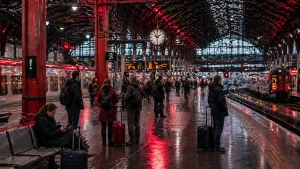
The impact of nationwide rail strikes would extend far beyond simple delays. The UK rail network plays a critical role in daily commuting, business travel, and regional connectivity.
Passengers could face a range of disruptions, including reduced service frequency and overcrowding on operational routes.
Even where trains continue to run, capacity limitations can significantly affect journey times and comfort.
What Happened During Previous RMT Strikes From 2022 to 2024?
During earlier strike periods, service levels dropped dramatically across many parts of the network.
Service Level Typical Availability During Strikes
Peak Intercity Routes 30 to 40 per cent
Regional Services 20 to 30 per cent
Rural Lines Often suspended
Entire sections of the network were temporarily closed, particularly in less densely populated areas. This created challenges not only for commuters but also for businesses relying on staff mobility.
How Did Recent London Underground Strikes Perform?
Recent London Underground strikes presented a slightly different picture. While disruption was expected to be severe, several lines continued to operate at reduced capacity.
Underground Line Percentage Operational
Bakerloo 66 percent
Victoria 64 percent
Northern 61.3 percent
Jubilee 56.3 percent
Piccadilly 32.9 percent
Circle 0 percent
A commuter shared their experience:
“I expected the network to be completely shut, but some lines were still running. The real issue was unpredictability rather than total closure.”
This suggests that future strike impacts may vary depending on participation levels and contingency planning by operators.
What Is the Government’s Response to RMT Strike Threats?
The Government has maintained a cautious approach, balancing fiscal responsibility with the need to maintain essential services. Rail funding remains heavily dependent on public subsidies, which reached approximately £12 billion in the past year.
Officials have emphasised that pay increases must remain within affordable limits, particularly given broader economic pressures. This stance has led to a firm resistance against demands for above-inflation pay rises without accompanying reforms.
A senior rail executive explained the financial reality:
“I have been involved in rail budgeting for several years, and the key issue is sustainability. Public funding cannot stretch indefinitely, so every pay decision has wider implications for taxpayers.”
The Department for Transport plays a central role in coordinating negotiations, but ultimate decisions often involve the Treasury. This layered decision making process can slow progress and contribute to prolonged disputes.
Political factors also influence the situation. With elections approaching and public scrutiny increasing, the Government must weigh the risks of disruption against the cost of concessions.
Are Other Rail Unions Like ASLEF Also Planning Strike Action?
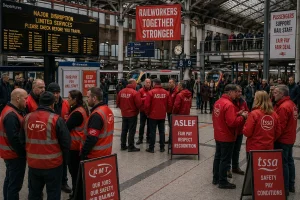
The presence of multiple unions within the rail sector adds complexity to the current situation. ASLEF, which represents train drivers, is also considering industrial action in response to separate disputes.
The union is currently conducting a ballot among members at Greater Anglia. The core issue is the lack of pay negotiations for the current year, which has led to growing dissatisfaction among drivers.
If ASLEF proceeds with strike action alongside the RMT, the combined effect could significantly amplify disruption. Driver shortages alone can halt services, even if other staff remain available.
Key risks associated with multiple union actions include:
- Simultaneous service shutdowns across regions
- Increased difficulty in maintaining partial operations
- Greater uncertainty for passengers and businesses
The overlap of disputes highlights broader tensions within the rail industry, where different groups of workers face similar concerns but operate under separate negotiation frameworks.
What Are the Key Figures and Data Behind the Rail Dispute?
The current dispute is shaped by a combination of economic data, operational costs, and workforce demands. Understanding these figures helps clarify why negotiations have reached a critical point.
Key Metric Value Significance
RPI Inflation 5.3 percent Union benchmark for pay demands
CPI Inflation 3.4 percent Government benchmark
Annual Rail Subsidy £12 billion Indicates reliance on public funding
Operators in Dispute 11 Reflects scale of conflict
These numbers illustrate the gap between expectations and financial constraints. While workers seek pay increases that match or exceed inflation, the Government must consider the long-term sustainability of funding commitments.
A financial analyst noted:
“When you look at the subsidy levels and inflation trends together, it becomes clear why this dispute is difficult to resolve. Both sides are operating within very different financial frameworks.”
This disconnect continues to drive tensions and complicate efforts to reach a compromise.
What Could Happen Next If RMT Strike Threats Escalate?
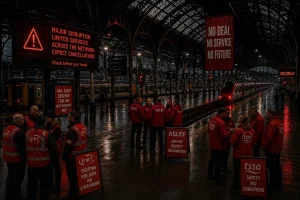
If the situation continues to escalate, several scenarios are likely to unfold in sequence. The next step would typically involve formal strike ballots among union members across the affected train companies.
Once ballots are approved, official strike dates could be announced with relatively short notice. This would trigger contingency planning by rail operators, including reduced timetables and prioritisation of key routes.
Possible developments include:
- Phased strike action targeting specific days
- Full nationwide walkouts affecting most services
- Extended negotiations alongside intermittent disruption
The scale and duration of any strike action will depend on the outcome of ongoing negotiations. However, the coordinated nature of the current threat suggests that any disruption could be more widespread than in previous disputes.
Passengers, businesses, and local economies will all be affected if the situation is not resolved promptly. The coming weeks are likely to be critical in determining whether a settlement can be reached or whether the UK faces another period of significant rail disruption.
Conclusion
The RMT union train strike threats represent a critical moment for the UK rail network. With disputes spanning most major operators and demands centred on above-inflation pay, the risk of coordinated nationwide disruption is high.
The outcome will depend on negotiations between unions, train operators, and the Government. Until then, passengers should remain alert and prepared for potential travel disruption in the coming weeks.
FAQs
What are the RMT union train strike threats?
These refer to warnings issued by the RMT union about possible nationwide rail strikes if pay demands are not met.
When could the next UK rail strikes happen?
Strike dates have not yet been confirmed, but ballots and announcements could occur soon if negotiations fail.
Why is the RMT demanding above-inflation pay rises?
The union argues that rising living costs require pay increases that exceed inflation to protect workers’ real income.
Which train companies are affected by the dispute?
At least 11 major train operators across the UK are currently involved in disputes with the RMT.
Will all UK rail services stop during strikes?
Not necessarily, but services could be severely reduced depending on the level of participation.
How can passengers check for train cancellations?
Passengers should use National Rail Enquiries or train operator websites for real-time updates.
Are other unions planning strikes alongside RMT?
Yes, ASLEF is also considering strike action, particularly affecting services in East Anglia.

Leave a Reply