
Last Updated on AUG 17, 2026
Regen Central remains in liquidation, with official records providing a clearer timeline of what happened. Companies House shows that compulsory liquidation began on 20 August 2025 following a winding-up petition dated 21 May 2025. A liquidator appointment was subsequently filed on 8 January 2026.
The Civil Aviation Authority records Regen Central Ltd, ATOL 11020, as having ceased trading as an ATOL holder on 13 January 2026.
Importantly, ATOL states that it understood the company had no outstanding ATOL-protected bookings at the time of the failure.
Customers with other outstanding claims may therefore need to consider their card provider, travel insurance or the liquidation process depending on the circumstances of their booking.
Key takeaways from this situation include:
- Regen Central Ltd has ceased trading, cancelling all upcoming holidays
- Regen Central ceased trading as an ATOL holder on 13 January 2026, with ATOL reporting no outstanding ATOL-protected bookings
- Not all bookings qualify for refunds, especially non-flight or separate bookings
- Customers may recover money through insurance, Section 75 or chargeback
- The collapse highlights risks in booking with smaller travel companies
- Checking financial protection before booking is essential for future travel plans
Why Were Regen Central Holidays Cancelled?

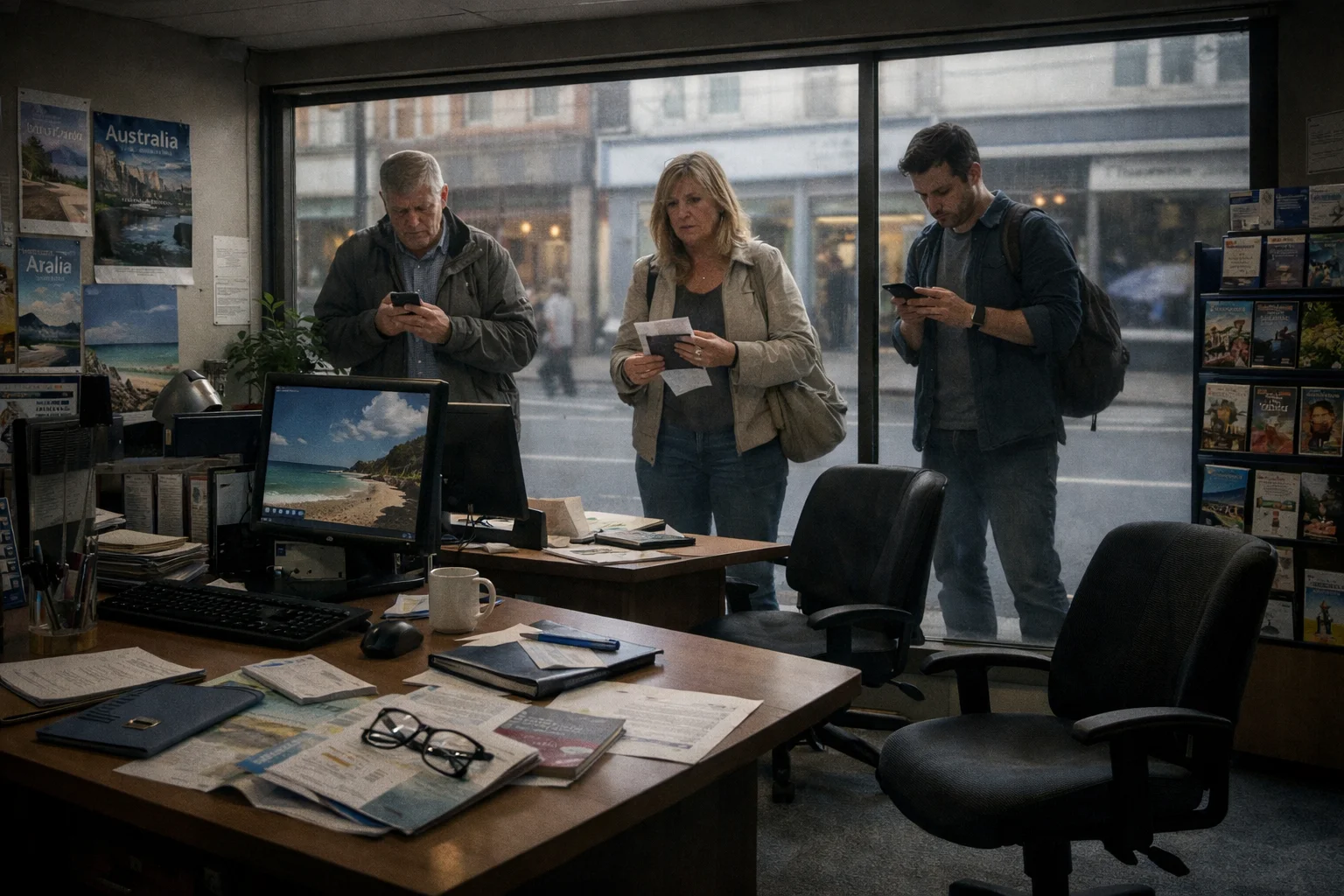
Regen Central holidays cancelled has become a major issue for UK travellers after the company entered liquidation, bringing its operations to a sudden halt.
The decision to liquidate typically follows ongoing financial difficulties, where a company can no longer meet its obligations or sustain operations.
In this case, Regen Central Ltd, known for offering package holidays to destinations across Europe, Southeast Asia and the Middle East, has ceased trading entirely.
The impact has been immediate and widespread. Customers who had booked holidays months in advance are now facing cancellations with no clear resolution.
The company’s collapse highlights the fragility of some travel businesses, particularly those operating in a highly competitive and economically sensitive market.
Several contributing factors often lead to such outcomes in the travel sector. These can include rising operational costs, fluctuating demand, global instability and increased competition.
Although specific internal financial details of Regen Central Ltd may not be publicly disclosed, the result is clear. The company is no longer in a position to provide services or honour its commitments.
For travellers, this situation means:
- All future bookings have been cancelled
- No services will be delivered
- Customers must seek alternative arrangements independently
The ripple effect of such cancellations extends beyond just financial loss. Many travellers may have arranged time off work, planned family events or coordinated multi-destination trips.
The disruption therefore carries both financial and emotional consequences.
What Does the Regen Central Liquidation Mean for UK Travellers?
Understanding the implications of liquidation is essential for those affected. Liquidation is a formal insolvency process in which a company’s assets are sold to repay creditors, and the business is permanently closed. Unlike administration, there is no attempt to restructure or save the company.
For UK travellers, this translates into a complete breakdown of service delivery. There is no fallback plan from the company itself, and customers are not automatically reassigned to alternative providers.
The key differences between liquidation and administration are outlined below:
Aspect Liquidation Administration
Business Status Permanently closed May continue operating
Customer Bookings Cancelled May be honoured or transferred
Refund Possibility Limited More likely
Objective Repay debts Rescue or restructure
This distinction is important because customers often assume that some level of recovery or continuity will be provided. In liquidation, this is rarely the case.
The immediate consequences for travellers include the need to rebook holidays, often at higher prices, and the challenge of recovering funds. In many cases, customers must act quickly to minimise losses.
Why Are Some Customers Not Receiving Refunds?

One of the most concerning aspects of the Regen Central holidays cancelled situation is that many customers are not eligible for refunds.
This has caused confusion, particularly among those who believed their bookings were protected.
ATOL Protection Explained
ATOL protection is a government-backed scheme designed to protect consumers when booking package holidays that include flights. It ensures that customers can receive refunds or be repatriated if a travel company collapses.
The scheme is managed by the Civil Aviation Authority and is a critical safety net within the UK travel industry.
Withdrawal of Regen Central’s ATOL Licence
The official CAA wording is that Regen Central Ltd, operating under ATOL number 11020, “ceased trading as an ATOL holder” on 13 January 2026. ATOL also states that it understood Regen Central had no outstanding ATOL-protected bookings at the time of the failure.
A travel compliance consultant explained the issue clearly:
“I often speak to clients who assume ATOL protection applies automatically. In reality, I always advise checking the licence status at the time of booking because that is what determines eligibility.”
Customers should therefore not determine whether they were protected simply by looking at when they booked. The strongest evidence of ATOL protection is the ATOL Certificate issued when payment was first made for an eligible protected booking.
The certificate identifies what is protected, who is covered and the ATOL holder providing that protection.
Bookings Not Covered by ATOL
Not all travel bookings qualify for ATOL protection. The type of booking plays a crucial role in determining eligibility.
| Booking Type | ATOL Protected? | Explanation |
|---|---|---|
| Flight-inclusive package | Usually yes | Eligible packages sold by an ATOL holder should be protected |
| Accommodation only | No | ATOL does not cover accommodation-only bookings |
| Flight only | Sometimes | Certain flight-only bookings through an ATOL holder can qualify |
| Non-flight package | No under ATOL | Other financial protection rules may apply |
| Booking with ATOL Certificate | Yes, as specified | Certificate confirms what and who is protected |
As a result, customers should not assume that every flight booking is automatically covered or excluded. Some flight-only bookings arranged through an ATOL holder can receive protection, while ordinary airline tickets may fall outside the scheme.
An ATOL Certificate is the clearest way to confirm whether a particular booking is protected.
What Are Your Rights If a Travel Company Goes Bust in the UK?
When a travel company collapses, customer rights vary depending on how the booking was made. Understanding these rights can help individuals take appropriate action.
Customers with ATOL-protected bookings are entitled to refunds or assistance. However, those without such protection must rely on alternative mechanisms.
Payment Method Protection Type Coverage
Credit card Section 75 Legal protection for purchases over £100
Debit card Chargeback Bank-dependent recovery process
Cash None No direct recovery option
Consumer rights laws provide some level of support, but they are not always sufficient to guarantee refunds. This is why financial protection schemes are so important when booking travel.
How Can Customers Try to Recover Money from Cancelled Holidays?

Although refunds are not guaranteed, there are several avenues customers can explore to recover their money. Each option depends on the booking method, the type of protection in place and how quickly action is taken after the cancellation.
In situations like Regen Central holidays cancelled, the process of recovering funds can feel complex, but understanding the available routes can significantly improve the chances of success.
Customers should approach this step by step, starting with the most reliable protection linked to their booking.
Recovery Method Who It Applies To Success Likelihood Key Requirement
Travel Insurance Insured travellers Medium Supplier failure cover
Section 75 Credit card users High Purchase over £100
Chargeback Debit card users Medium Bank approval
ATOL Claim Protected bookings High Valid ATOL certificate
Travel Insurance Claims
Travel insurance is often the first route customers consider when trying to recover money after a travel company collapses. Many comprehensive policies include cover for supplier failure, which specifically applies when a travel provider goes out of business.
However, this type of cover is not always standard. Some basic policies exclude insolvency protection entirely, leaving customers without support. It is therefore essential to carefully review the policy wording, particularly sections related to cancellations and financial failure.
When making a claim, customers are typically required to provide:
- Proof of booking and payment
- Cancellation confirmation
- Evidence of the company’s liquidation
Processing times can vary depending on the insurer, and claims may be subject to excess fees or limits. It is also important to note that insurers may reject claims if the policy was purchased after signs of financial instability became public.
Insurance Feature Included in Basic Policies Included in Comprehensive Policies
Trip cancellation Yes Yes
Supplier failure cover No Often included
Refund processing Limited More extensive
Because of these variations, travellers should not assume automatic coverage and must verify their policy details before proceeding.
Chargeback and Section 75 Claims
Another effective route for recovering money is through the payment provider. Customers who paid using a credit card have stronger legal protection under Section 75 of the Consumer Credit Act. This law makes the credit card provider jointly responsible if the service is not delivered.
Section 75 applies when:
- The transaction value is between £100 and £30,000
- The purchase was made directly with the provider
- There is a clear breach of contract
This protection is particularly valuable in cases like Regen Central holidays cancelled, where services were paid for but not delivered.
Debit card users, on the other hand, can request a chargeback. While not a legal right, it is a widely accepted banking process that allows customers to dispute transactions and attempt to reclaim funds.
A financial advisor explained this approach clearly:
“When I speak to clients dealing with cancelled holidays, I always recommend starting with the card provider. From my experience, Section 75 claims are often the most straightforward and successful option, especially when all documentation is in place.”
Payment Method Protection Type Legal Backing Time Limit Credit Card Section 75 Yes Up to 6 years Debit Card Chargeback No Typically 120 days
Acting quickly is crucial, particularly for chargeback claims, as banks often enforce strict deadlines.
Contacting the Civil Aviation Authority
The Civil Aviation Authority plays a central role in overseeing travel protection schemes in the UK, particularly ATOL. Customers who believe their booking may have been protected should contact the CAA to verify their status.
In the case of Regen Central, the CAA has confirmed that there are no outstanding ATOL-protected bookings. This significantly limits the possibility of refunds through this route. However, customers who booked before the ATOL licence withdrawal may still wish to check their eligibility.
When contacting the CAA, customers should be prepared to provide:
- Booking reference numbers
- Payment receipts
- ATOL certificate if available
Although the outcome may not always be favourable, seeking official confirmation can provide clarity and prevent unnecessary delays in pursuing alternative recovery options.
How Does This Affect the UK Travel Industry?
The collapse of a travel company like Regen Central has wider implications that extend beyond individual customers. It highlights ongoing challenges within the UK travel industry and raises concerns about financial resilience and regulatory oversight.
Regen Central is no longer one of the most recent ATOL failures. As of 17 August 2026, the CAA’s latest failure list includes several companies that ceased trading as ATOL holders after Regen Central.
These include Yourtravelshop.com Ltd on 4 August 2026 and TS Travel Realisations Ltd on 6 August 2026, alongside Travel Bespoke Ltd and Trav Expert Limited earlier in the year.
This puts the Regen Central case within a wider series of ATOL-holder failures during 2026. However, each failure needs to be considered separately, as the existence of an ATOL failure does not automatically mean every customer has an eligible ATOL refund claim. In Regen Central’s case specifically, ATOL continues to state that it understood there were no outstanding ATOL-protected bookings.
Travel companies operate in a highly competitive and cost-sensitive environment. Factors such as rising fuel prices, fluctuating demand and global uncertainty can quickly impact profitability. Smaller agencies, in particular, often lack the financial buffer needed to withstand prolonged disruption.
As a result, events like Regen Central holidays being cancelled can influence consumer behaviour in several ways. Travellers may become more cautious, prioritising financial protection and choosing well-established brands over lesser-known providers.
Impact Area Effect Long-Term Outcome
Consumer Trust Declines after collapse Increased demand for transparency
Booking Behaviour Shift to larger companies Market consolidation
Financial Protection Awareness Rises significantly More ATOL checks
Industry Competition Smaller firms exit Reduced diversity
The industry also faces increased scrutiny from regulators and consumers alike. Transparency around financial protection, clearer communication and stronger compliance measures are becoming more important than ever.
Over time, these changes may lead to a more resilient industry, but they also reduce opportunities for smaller travel businesses to compete.
Is There a Risk of More Travel Disruptions Due to Global Events?

External global factors continue to play a significant role in shaping the travel industry. Even when individual companies are stable, geopolitical tensions and supply chain disruptions can affect operations on a broader scale.
The current global climate has introduced new uncertainties, particularly around energy supply and international relations. These factors can influence flight availability, pricing and overall travel reliability.
Global Factor Potential Impact on Travel
Geopolitical conflict Route disruptions
Fuel shortages Increased ticket prices
Economic instability Reduced travel demand
Regulatory changes Travel restrictions
Middle East Conflict and Jet Fuel Supply
Ongoing tensions in the Middle East have raised concerns about the availability of jet fuel, which is a critical component of airline operations. Any disruption in supply chains could lead to increased operational costs for airlines.
Higher fuel costs often translate into increased ticket prices for passengers. In more severe cases, airlines may reduce flight frequencies or cancel routes altogether to manage expenses.
This creates uncertainty for travellers, particularly those planning long-haul trips or travelling during peak seasons.
Airline and Government Responses
Airlines and government bodies are closely monitoring the situation to ensure continuity of operations. While there is currently no immediate disruption, contingency plans are being discussed to mitigate potential risks.
An aviation industry expert explained the situation:
“From what I am observing across the sector, airlines are preparing for possible fuel supply challenges. I always advise that even minor disruptions can quickly escalate into schedule changes, especially during busy travel periods.”
Government engagement with airlines also plays a key role in maintaining stability. Ongoing communication helps ensure that any emerging issues are addressed promptly, reducing the likelihood of widespread disruption.
How Can Travellers Protect Themselves When Booking Holidays?
Given the risks highlighted by the Regen Central holiday cancellation situation, travellers must take a more proactive approach when booking holidays. Financial protection and informed decision-making are now essential parts of the travel planning process.
One of the most important steps is verifying whether a travel company holds a valid ATOL licence. This provides a safety net in case the company collapses. Travellers should also prioritise booking package holidays rather than separate components, as these are more likely to be protected.
Protection Step Why It Matters
Check ATOL licence Ensures refund eligibility
Use a credit card Enables Section 75 protection
Buy comprehensive insurance Covers supplier failure
Book with reputable providers Reduces risk of collapse
In addition to these measures, travellers should:
- Read the terms and conditions carefully
- Avoid deals that seem unusually cheap
- Keep records of all transactions
These actions may seem simple, but they can make a significant difference if something goes wrong.
What Should You Do Next If Your Regen Central Holiday Was Cancelled?
Taking immediate and structured action is essential for customers affected by Regen Central holidays cancelled. Delays can reduce the chances of recovering funds, particularly when dealing with banks or insurance providers.
The first step is to gather all relevant documentation, including booking confirmations, payment receipts and cancellation notices. This information will be required for any claims or disputes.
Step Action Purpose
1 Review booking details Identify protection type
2 Contact the bank or card provider Initiate the refund process
3 Check the insurance policy Determine coverage
4 Contact CAA if needed Verify ATOL status
Customers should then prioritise contacting their payment provider, as this often offers the fastest route to recovery. At the same time, reviewing insurance policies can help identify additional support options.
Keeping a clear record of all communications is also important. This includes emails, claim references and responses from organisations. Having a documented trail can strengthen claims and reduce disputes.
By acting promptly and following a structured approach, customers can improve their chances of recovering at least part of their financial loss while regaining control over their travel plans.
Conclusion
This situation highlights the importance of understanding travel protections before booking. While the collapse has caused disruption, it also offers valuable lessons for future planning.
Being aware of ATOL protection, payment methods, and insurance coverage can help travellers avoid similar issues.
The Regen Central holidays cancelled case serves as a reminder that preparation and awareness are essential in today’s travel environment.
FAQs About Regen Central Holidays Cancelled
Can I get a refund if my Regen Central holiday was cancelled?
Refunds depend on whether your booking was protected by ATOL, insurance, or payment methods like credit cards.
Why are some bookings not protected under ATOL?
Bookings made after the ATOL licence was withdrawn or those without flights are typically not covered.
What is the best way to recover my money?
Options include travel insurance claims, Section 75 claims, or chargeback requests through your bank.
Is ATOL protection mandatory for all holidays?
No, it only applies to certain package holidays that include flights.
Can I still travel if my booking was cancelled?
You will need to make alternative arrangements, as the company is no longer operating.
How can I check if a travel company is ATOL protected?
You can verify this on the Civil Aviation Authority’s official website.
What should I look for when booking a holiday in the future?
Always check for financial protection, use secure payment methods, and choose reputable providers.

Leave a Reply