
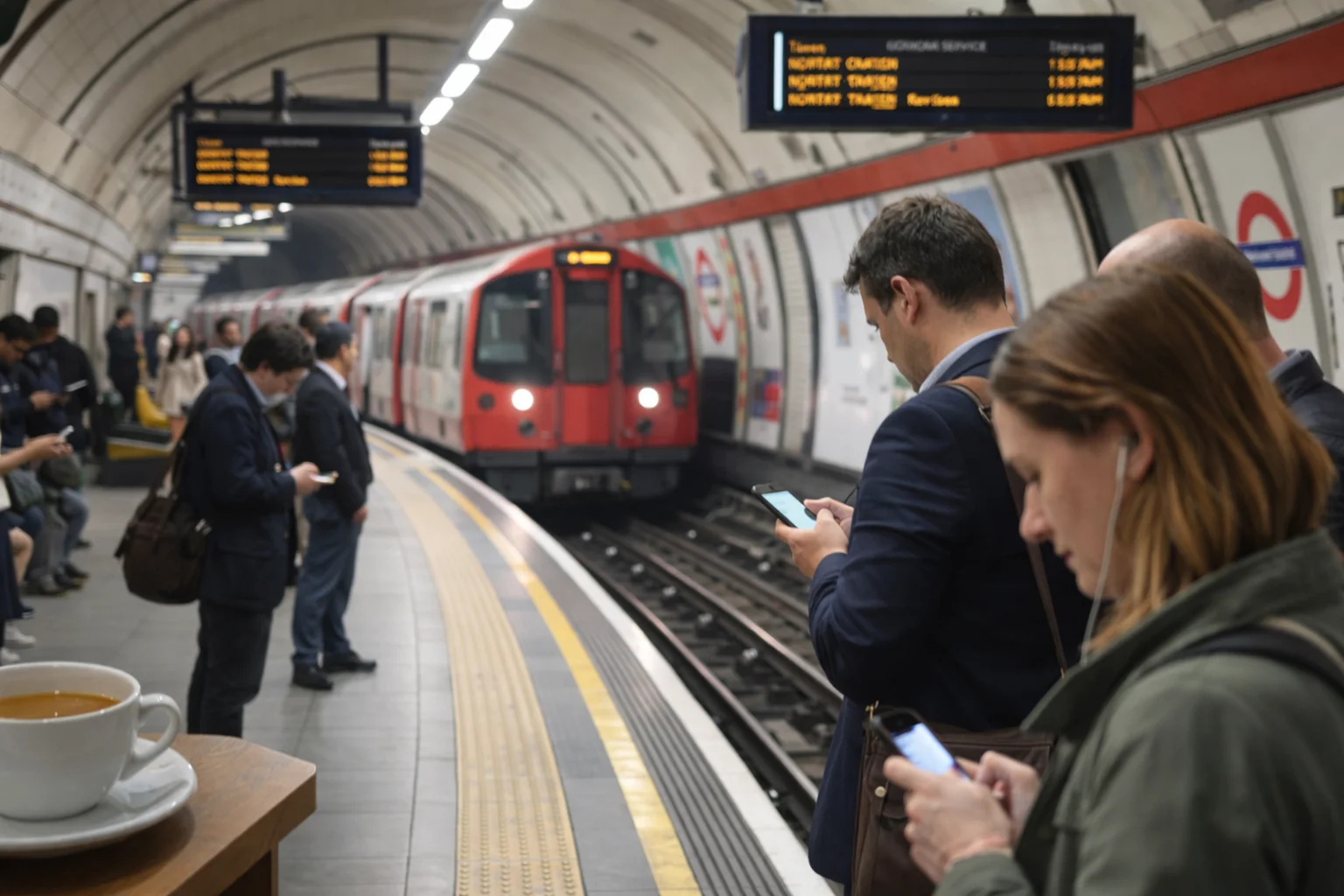
The Tube strike is partially cancelled. The planned London Underground strikes between 24 March and 27 March have been suspended following talks between the RMT union and London Underground management.
However, the dispute is still ongoing, and further strike action is currently scheduled for April and June, meaning disruption could still happen.
Key Takeaways:
- March Tube strikes from 24 to 27 have been suspended
- The dispute between RMT and London Underground is not resolved
- Strike action in April is still planned
- Additional strikes are scheduled for 16 and 18 June
- The disagreement centres on a proposed four day working week
- Safety concerns and working hours remain key issues
- Further negotiations could lead to more cancellations or disruptions
What Is the Latest Update on the London Underground Strike?

The latest development confirms that the Tube strike situation is only partially resolved. The planned strike action between 24 March and 27 March has been suspended following discussions between the RMT union and London Underground management.
However, the wider industrial dispute remains active, and further strike dates are still scheduled.
At present, the situation can be understood as a temporary pause rather than a complete resolution. Both sides have agreed to continue negotiations, which has helped avoid immediate disruption across the London Underground network.
Key developments include:
- Suspension of March strike dates
- Ongoing negotiations between RMT and London Underground
- Confirmation that the dispute is still active
- Additional strike dates already announced for the coming months
For commuters, this creates a mixed scenario. While services are currently operating without the expected March disruption, uncertainty still surrounds upcoming travel periods.
From a transport industry perspective, this type of development is often interpreted as a tactical pause. As one professional insight highlights,
“When strike action is suspended rather than cancelled outright, it usually indicates that both parties see value in continuing negotiations but have not yet reached a final agreement. It is a sign of progress, but not closure.”
This means passengers should remain alert to further updates, as the situation could evolve quickly depending on how negotiations progress.
Why Were the March Tube Strikes Suspended?
The suspension of the March Tube strikes followed a period of intensified dialogue between the RMT union and London Underground.
These discussions appear to have addressed some immediate concerns raised by the union, creating enough progress to delay industrial action.
The decision was not made lightly. Strike action often represents a last resort for unions, and suspending it indicates that there has been a meaningful shift in discussions.
What Did the RMT Union Announce?
RMT general secretary Eddie Dempsey confirmed that the union had successfully pushed London Underground into engaging more seriously with workers’ concerns. He emphasised that the union remains committed to resolving the dispute but is willing to pause action while negotiations continue.
The phrase “the dispute remains live” carries significant weight. It means that while strikes have been paused, the union is still prepared to resume action if talks do not produce satisfactory outcomes.
This reflects a strategic approach often used in labour disputes. By suspending strikes rather than cancelling them entirely, the union maintains pressure while allowing space for negotiation.
How Did London Underground Respond to the Suspension?

London Underground welcomed the suspension, describing it as positive news for both commuters and the city. Management expressed a willingness to continue working with trade unions to resolve outstanding issues and prevent further disruption.
Nick Dent from London Underground highlighted the importance of constructive engagement, reinforcing the organisation’s aim to maintain reliable services while addressing workforce concerns.
This response suggests that London Underground recognises the importance of balancing operational stability with employee satisfaction. Avoiding disruption in a city as dependent on public transport as London is a key priority.
What Is the Dispute Between RMT and London Underground About?
The core of the dispute lies in proposed changes to working patterns, specifically the introduction of a four day working week for Tube drivers.
While the idea may appear progressive at first glance, the details of the proposal have led to significant disagreement.
London Underground has proposed a restructuring of working hours that would reduce the number of days worked per week while slightly adjusting total weekly hours.
The proposal includes:
- A shift from a five day to a four day working week
- A reduction in weekly hours from 36 to 35
- Introduction of paid meal breaks
- Longer working days to compensate for fewer working days
This model is currently being trialled on the Bakerloo line to assess its practicality and impact.
How Does the Proposed Four Day Week Work?
Under the proposed system, drivers would work fewer days but with extended shifts. While total weekly hours are slightly reduced, the increase in daily working time is a key concern.
The structure of the current and proposed systems can be compared below:
| Feature | Current Model | Proposed Model |
|---|---|---|
| Weekly Hours | 36 hours | 35 hours |
| Work Days | 5 days | 4 days |
| Daily Shift Length | Standard shifts | Extended shifts |
| Break Structure | Unpaid breaks | Paid meal breaks |
| Trial Status | Fully implemented | Trial on Bakerloo line |
The intention behind this change is to modernise working arrangements and potentially improve work life balance. However, the longer shifts required under this model have become a central point of contention.
Why Is the Union Opposing the Proposal?
The RMT union has raised several concerns, focusing primarily on safety and worker wellbeing. Their argument is that longer shifts could lead to fatigue, which is particularly critical in a role that requires constant attention and responsibility.
Key concerns include:
- Increased risk of driver fatigue
- Potential safety implications for passengers
- Longer working days despite fewer total hours
- Lack of sufficient reduction in overall workload
The union has proposed an alternative model that would involve a 32 hour working week spread over four days, without extending daily shifts to the same extent.
A comparison of the two positions highlights the gap between both sides:
| Aspect | London Underground Proposal | RMT Union Demand |
|---|---|---|
| Weekly Hours | 35 hours | 32 hours |
| Work Days | 4 days | 4 days |
| Daily Hours | Longer shifts | Shorter shifts |
| Pay Structure | Maintained | Maintained |
| Focus | Efficiency and restructuring | Safety and reduced fatigue |
Which Tube Strike Dates Are Still Planned in 2026?

Although the March strikes have been suspended, several future strike dates remain in place. This indicates that the dispute is ongoing and could still lead to disruption in the coming months.
Currently confirmed developments include:
- Strike action in April remains scheduled
- Additional strike dates have been announced for 16 June and 18 June
- No confirmation yet on whether these will be suspended
The timeline of strike activity can be summarised below:
| Month | Strike Status | Details |
|---|---|---|
| March | Suspended | 24 to 27 March strikes called off |
| April | Planned | Strike action still scheduled |
| June | Planned | Additional strikes on 16 and 18 June |
This timeline shows that while there has been short term progress, the long term outlook remains uncertain.
Passengers should be aware that strike dates can change at short notice depending on the outcome of negotiations. This makes it important to stay updated through official channels.
How Could Future Tube Strikes Affect London Commuters?
If upcoming strike action goes ahead, the impact on London commuters is likely to be significant. The London Underground is one of the busiest transport systems in the world, and even partial disruption can lead to widespread delays.
Common effects of Tube strikes include:
- Reduced service frequency across multiple lines
- Temporary suspension of certain routes
- Increased congestion on operational lines
- Overcrowding at stations and platforms
The level of disruption often depends on the number of staff participating in the strike and the specific roles affected.
A breakdown of potential impacts is shown below:
| Impact Area | Expected Effect |
|---|---|
| Service Availability | Reduced or suspended services |
| Travel Time | Increased journey durations |
| Station Congestion | Higher passenger volumes |
| Alternative Transport | Increased demand and delays |
| Peak Hours | Severe overcrowding |
For daily commuters, this can lead to longer travel times and increased uncertainty. Those who rely on the Tube for work or essential travel may need to adjust schedules or consider alternative options.
What Is the Current TfL Service Status and Travel Advice?
Transport for London continues to provide guidance to help passengers navigate potential disruption. While services are currently running following the suspension of the March strikes, TfL advises caution due to the ongoing dispute.
Passengers are encouraged to:
- Check live service updates before travelling
- Allow extra time for journeys
- Consider travelling outside peak hours
TfL uses multiple channels to communicate updates, including its official website, mobile applications, and station announcements.
The current service approach can be summarised as follows:
| Category | Current Status |
|---|---|
| Service Operation | Running with caution |
| Strike Impact | Suspended for March |
| Future Risk | High due to planned strikes |
| Passenger Advice | Stay updated and plan ahead |
Maintaining awareness of service updates is essential, particularly during periods of industrial uncertainty.
What Transport Alternatives Are Available During Tube Strikes?
London offers a wide range of alternative transport options that can help mitigate the impact of Tube strikes. While these alternatives may not fully replace the Underground, they provide viable options for many यात्रneys.
Available alternatives include:
- London Buses, which operate extensive routes across the city
- London Overground services
- Elizabeth line connections
- Cycling infrastructure and bike hire schemes
Additional options such as taxis and ride sharing services can also provide flexibility, although they may be more expensive during periods of high demand.
A comparison of transport alternatives is provided below:
| Transport Option | Availability | Reliability During Strikes | Cost Level |
|---|---|---|---|
| Buses | High | Moderate to High | Low |
| Overground | Moderate | Moderate | Medium |
| Elizabeth Line | High | High | Medium |
| Cycling | Variable | High | Low |
| Taxis | High | Variable | High |
From a practical standpoint,
“Relying on a single mode of transport during strike periods can be risky. Combining options such as buses and cycling often provides more flexibility and reduces delays.”
This highlights the importance of planning ahead and being adaptable.
Could Upcoming Tube Strikes Still Be Cancelled?
There remains a realistic possibility that future strike action could be suspended, depending on the outcome of ongoing negotiations. The suspension of the March strikes demonstrates that both sides are willing to engage and potentially reach compromises.
Several factors will influence whether future strikes proceed:
- Progress made during upcoming negotiations
- Willingness of both parties to adjust their positions
- External pressures such as public impact and political considerations
A scenario overview can help illustrate possible outcomes:
| Scenario | Likelihood | Impact |
|---|---|---|
| Full Agreement | Moderate | All strikes cancelled |
| Partial Agreement | High | Some strikes suspended |
| No Agreement | Moderate | All planned strikes proceed |
While it is impossible to predict the exact outcome, the current situation suggests that negotiations are active and ongoing.
This creates a dynamic environment where strike plans can change quickly, reinforcing the need for commuters to stay informed and prepared.
Final Thoughts on the Tube Strike Situation
So, is the Tube strike cancelled? The answer is partially. March strikes have been called off, but the wider dispute continues, and further strike action is already scheduled.
For London commuters, this means short-term relief but ongoing uncertainty. Keeping up with the latest updates will be key to navigating the weeks ahead.
FAQs
Are London Tube strikes fully cancelled?
No, only specific March strike dates have been suspended. Future strikes in April and June are still planned.
Which Tube strike dates were suspended?
Strike action between 24 March and 27 March was called off following negotiations.
Why are Tube workers going on strike?
The dispute centres around proposed changes to working hours, particularly a four-day working week.
Will there be Tube strikes in April and June?
Yes, as of now, strike action in April and on 16 and 18 June is still scheduled.
How can commuters check live Tube updates?
Commuters can use the TfL website, mobile app, or official social media channels for real-time updates.
What lines are affected during Tube strikes?
The level of disruption can vary, but multiple lines may be impacted depending on staff participation.
Can Tube strikes still be avoided?
Yes, ongoing negotiations mean future strikes could still be suspended if agreements are reached.

Leave a Reply