
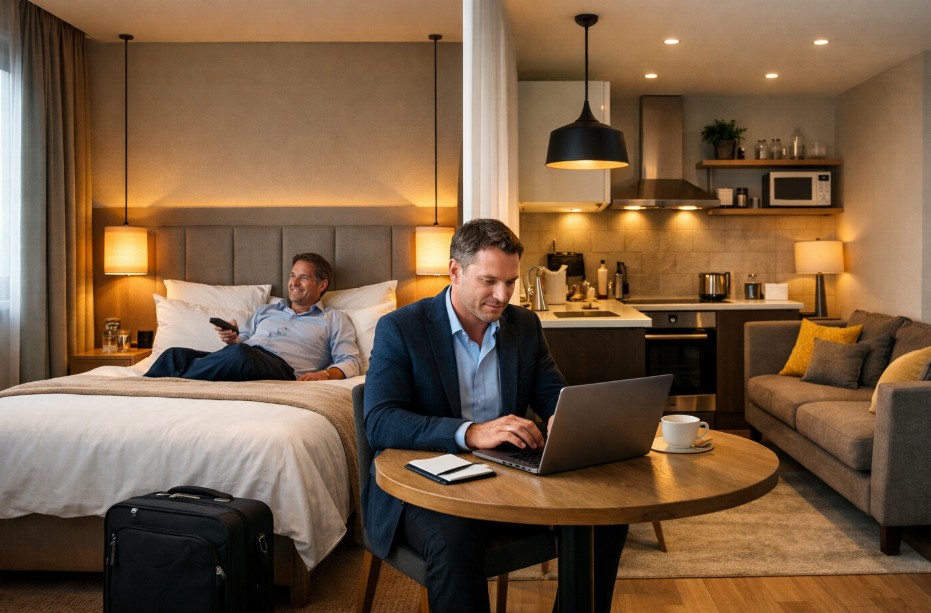
For business travellers on short stays in unfamiliar cities, choosing the right accommodation type can make a real difference. Hotels offer convenience, serviced apartments provide the comfort and space of a home.
But what about when a traveller needs both? That’s where the aparthotel comes in.
The aparthotel is somewhere between a traditional hotel and a fully self-contained apartment, combining the independence of private living with some of the hospitality features associated with hotel stays.
It’s a format that has grown in popularity among corporate travellers, particularly those on short-term assignments or project-based trips.
Now let’s dive in and find out exactly what an aparthotel is, how it differs from other accommodation types, and when it could be the right choice for business travel.
Defining the Aparthotel
An aparthotel (sometimes known as apartment hotel) is a property that provides guests with self-contained apartment-style units alongside hotel-style services and facilities.
Each unit typically includes a kitchen or smaller kitchenette, a separate living area, and en-suite bathroom. In addition, the property may also offer a reception desk, housekeeping, and communal areas.
Unlike a standard hotel room, an aparthotel unit gives guests room to spread out, cook their own meals, and settle into a routine.
Unlike a fully serviced apartment, it typically doesn’t require a long minimum stay and benefits from on-site staffing and amenities.
What’s Included in an Aparthotel Stay?

The facilities on offer will vary by property, but if you stay in an aparthotel, including an aparthotel by Situ, you will find that it includes a standard set of features designed for independent living.
For corporate travellers, this level of self-sufficiency can help keep day-to-day costs down while maintaining a comfortable standard of living.
Typical aparthotel amenities include:
- A kitchenette with basic cooking facilities
- Free Wi-Fi and internet access
- A living area separate from the sleeping space
- Laundry facilities (either in-unit or shared)
- Linen, towels, and housekeeping service
- TV and in-room entertainment
- On-site reception and guest support
The blend of home comforts and hotel convenience is what makes the aparthotel a practical option for travellers who don’t want to live out of a suitcase for the duration of their stay.
How Aparthotels Differ from Serviced Apartments?
It’s easy to confuse aparthotels with serviced apartments, and the two share a lot of common ground.
Both offer self-contained living spaces with kitchen facilities and are aimed at guests staying beyond a standard night or two. The key differences lie in scale, structure, and the level of service provided.
Serviced apartments tend to operate more like independent residential properties, often with greater space and a higher degree of privacy. They’re well-suited to longer stays and extended business assignments.
Aparthotels, by contrast, operate with a more hotel-like setup, shared spaces, front-of-house staffing, and a structure that makes them more flexible for shorter business trips.
Why Aparthotels Appeal to Business Travellers?

For individual business travellers on short stays, the aparthotel format offers a compelling mix of practicality and comfort.
They’ll have space to work and relax without being confined to a single hotel room, and they can prepare their own meals rather than relying entirely on hotel dining or eating out every night.
From a corporate travel management perspective, aparthotels can also be a cost-effective solution.
Guests who cook some of their own meals naturally reduce subsistence costs, and properties with on-site laundry allow travellers to pack lighter for longer trips, which can lower baggage and logistical expenses.
Travel managers and HR teams will also appreciate the duty-of-care benefits.
Aparthotels typically have staffed reception areas, established guest support processes, and a clear chain of accountability, all of which can help organisations meet their obligations when deploying people to unfamiliar locations.
In a Nutshell
The aparthotel has earned its place as a versatile option within the corporate accommodation market.
It doesn’t try to replace the hotel or the serviced apartment, instead, it fills a specific gap for travellers who want independence and comfort without sacrificing the structure and support that hotels provide.
For travel managers, global mobility professionals, and HR teams, understanding the distinction between accommodation types will help with placing employees in the right property for every trip.

Leave a Reply