

Diesel prices in the UK may start to fall later in 2026, but in the short term they are likely to remain high or fluctuate due to global oil market tensions, supply disruptions, and strong demand for diesel across transport and industry sectors.
Recent increases in crude oil prices above $100 per barrel have already pushed diesel costs higher at UK petrol stations, and further volatility is possible if supply issues continue.
Understanding the reasons behind these price changes can help motorists and businesses prepare for potential fuel cost trends throughout the year.
Key Takeaways
- Diesel prices in the UK recently increased to around 151p per litre
- Rising global oil prices above $100 per barrel are pushing fuel costs higher
- Supply disruptions and geopolitical tensions are tightening diesel availability
- Analysts warn diesel could approach 160p per litre if oil prices remain high
- Prices may stabilise during summer 2026 if supply conditions improve
- A gradual decrease in diesel prices could occur later in 2026 if oil markets stabilise
Why Are Diesel Prices Rising in the UK Right Now?

Diesel prices in the UK are closely connected to global energy markets. Unlike some goods that are mainly influenced by domestic production, fuel prices are shaped by international oil supply, currency exchange rates, geopolitical events, refinery output, and transportation costs.
Because the UK imports a large portion of its refined fuel, even small disruptions in global markets can quickly influence the price drivers pay at petrol stations.
Over the past year, several developments have combined to push diesel prices upward. Oil production decisions by major exporting countries, conflicts in key regions, and supply chain issues have all contributed to higher wholesale fuel costs. These costs eventually reach petrol stations and are reflected in the price motorists pay per litre.
Global Oil Prices Surging Above $100 Per Barrel
One of the most significant drivers behind rising diesel prices is the increase in global crude oil prices. Brent crude, the main benchmark used in Europe, recently climbed above $100 per barrel. This level historically signals a strong upward pressure on fuel prices across many countries, including the UK.
Crude oil is refined into petrol, diesel, jet fuel, and other petroleum products. When oil becomes more expensive, refiners and distributors face higher costs. These costs are passed through the supply chain until they reach retail fuel stations.
A study from the Energy and Climate Intelligence Unit shows that pump prices tend to follow oil price movements with a slight delay. The relationship between crude oil and retail petrol prices often follows a predictable pattern.
| Brent Crude Price | Typical Petrol Price in UK | Market Impact |
|---|---|---|
| $70 per barrel | Around 130p per litre | Stable fuel market |
| $90 per barrel | Around 140p per litre | Gradual price increase |
| $100 per barrel | Around 150p per litre | Strong upward pressure |
| $120 per barrel | Around 170p per litre | High fuel cost environment |
When oil crosses the $100 threshold, energy markets tend to react strongly. Investors anticipate supply shortages and increased demand, which can push prices even higher. Diesel is particularly sensitive to these movements because it is widely used in commercial transportation and industrial sectors.
From the author’s perspective, analysing market reports shows that diesel tends to respond faster to oil price increases than petrol.
“When oil markets spike above $100 per barrel, it almost always creates immediate concern for logistics companies and commercial transport sectors because diesel demand is so closely linked to economic activity.”
Middle East Conflict Affecting Oil Supply
Geopolitical tensions play a major role in shaping global oil markets. Many of the world’s largest oil reserves are located in the Middle East, and conflicts in this region can disrupt supply routes or production levels.
When conflicts occur near key oil-producing countries or major shipping routes, markets react quickly because supply uncertainty increases. Traders often raise prices in anticipation of potential shortages.
The Middle East remains central to global oil supply. Countries such as Saudi Arabia, Iraq, Iran, and the United Arab Emirates collectively produce a significant portion of the world’s oil exports. Any disruption in these regions can affect fuel prices across Europe.
Oil shipments typically travel through several strategic routes, including the Strait of Hormuz and major shipping lanes that connect the Middle East with Europe and Asia. If tensions threaten these routes, oil supply chains become less predictable.
Industry experts frequently warn that geopolitical conflicts can influence energy prices for months rather than days. A senior energy analyst recently noted,
“Global oil markets respond quickly to political instability because traders price in potential supply disruptions even before production is actually affected.”
Wholesale Fuel Costs Increasing in the UK
Fuel retailers in the UK purchase petrol and diesel through wholesale markets. These wholesale prices are determined by international energy markets, refinery output, and regional fuel supply.
When global oil prices increase, the wholesale cost of refined fuels rises as well. Petrol stations cannot immediately lower prices when oil falls because they must first sell existing stock purchased at higher prices. This delay often creates the impression that prices rise faster than they fall.
The process that links oil prices to retail fuel prices typically follows several stages:
- Refineries process crude oil into diesel and petrol
- Wholesale fuel prices rise due to higher production costs
- Fuel distributors deliver products to petrol stations
- Retail prices gradually adjust for consumers
Understanding this chain helps explain why fuel prices sometimes change slowly even when oil prices fluctuate daily.
What Is the Current Diesel Price in the UK in 2026?

Diesel prices in the UK have experienced noticeable fluctuations in recent months. At the beginning of 2026, the average diesel price was estimated at around 140 to 142 pence per litre. However, global market disruptions pushed prices significantly higher.
Recent data from fuel price monitoring organisations indicates that diesel prices have risen to around 151 pence per litre, with some regions seeing prices closer to 155 pence depending on the retailer and location.
The increase has been faster than petrol price growth. Diesel is heavily used by commercial vehicles such as delivery trucks, buses, and agricultural machinery. When supply becomes limited, demand from these sectors keeps prices elevated.
| Fuel Type | Early 2026 Average Price | Recent Average Price | Change |
|---|---|---|---|
| Petrol | 132p per litre | 137.5p per litre | Increase of 5p |
| Diesel | 142p per litre | 151p per litre | Increase of 9p |
Regional differences can also affect fuel prices. Urban areas with more competition between petrol stations may offer slightly lower prices, while rural regions often experience higher costs due to transportation and distribution expenses.
Another factor influencing diesel prices is refinery production capacity. European refineries historically produced more petrol than diesel. This imbalance means the region sometimes relies on imported diesel to meet demand.
| Factor Influencing Diesel Prices | Impact on UK Market |
|---|---|
| Refinery production limits | Reduced supply of diesel |
| Import dependency | Higher transportation costs |
| Commercial transport demand | Consistently high diesel consumption |
| Seasonal demand changes | Temporary price fluctuations |
From an analytical perspective, the current diesel price trend reflects a combination of supply concerns and strong demand.
“Looking at the pattern of fuel prices over the past decade, diesel tends to experience sharper increases during periods of global uncertainty because commercial sectors depend heavily on it.”
Could Diesel Prices Continue Rising in 2026?
Energy analysts believe there is still a possibility that diesel prices could increase further during 2026. Forecasts from several market observers suggest that diesel prices could approach 160 pence per litre if oil markets remain unstable.
The potential for higher prices depends largely on global economic conditions, supply availability, and geopolitical developments.
Global Oil Market Instability
Oil markets are influenced by a complex network of supply agreements, production quotas, and international demand. Organisations such as OPEC regularly adjust production levels in response to global demand forecasts.
If production remains limited while demand continues growing, oil prices may stay elevated. This situation could keep diesel prices high for a longer period.
| Market Condition | Possible Effect on Diesel Prices |
|---|---|
| Limited oil production | Higher wholesale fuel prices |
| Increasing global demand | Rising diesel consumption |
| Geopolitical tensions | Market uncertainty and price spikes |
Energy markets can react quickly to unexpected events. Political instability, natural disasters affecting refineries, or transportation disruptions can all lead to sudden price increases.
Shipping Disruptions and Diesel Export Issues
Diesel supply chains depend heavily on global shipping networks. Refined fuel is transported between regions by tanker ships before reaching distribution hubs.
Shipping delays or restrictions can reduce the amount of diesel reaching European markets. When supply decreases, prices often increase due to competition between buyers.
Recent disruptions in shipping routes have raised concerns about the reliability of global fuel deliveries. Insurance costs for fuel shipments have also increased in some regions due to security risks.
Key supply chain challenges include:
- Shipping route disruptions
- Port congestion and logistics delays
- Higher maritime insurance costs
- Reduced refinery exports from certain regions
Each of these factors can contribute to temporary supply shortages that push diesel prices upward.
Growing Demand from Transport and Industry
Diesel continues to be an essential fuel for many industries. The logistics sector alone consumes a large share of diesel fuel across Europe.
Commercial demand tends to remain strong even during economic uncertainty because goods transportation must continue. This steady demand often prevents diesel prices from falling quickly.
Major sectors that rely heavily on diesel include:
- Freight and logistics companies
- Construction and heavy machinery operations
- Agriculture and farming equipment
- Public transport fleets and buses
Industry experts frequently highlight the importance of diesel for maintaining economic activity. An energy policy specialist recently explained,
“Diesel demand remains resilient because it powers the infrastructure that keeps goods moving. Even when petrol consumption fluctuates, diesel demand from commercial sectors remains steady.”
What Factors Will Determine When Diesel Prices Go Down?

Predicting fuel prices requires analysing several economic indicators at the same time. Diesel prices rarely fall due to a single change. Instead, a combination of improved supply conditions and stable markets usually leads to price reductions.
The most influential factors include global oil supply, currency exchange rates, refinery output, and geopolitical stability.
| Key Factor | How It Influences Diesel Prices |
|---|---|
| Oil supply levels | Increased supply lowers crude oil prices |
| Global demand | Lower demand reduces market pressure |
| Currency exchange rates | Stronger pound lowers import costs |
| Shipping and logistics | Efficient transport reduces supply delays |
Oil prices are one of the most powerful drivers. When crude oil prices fall significantly, refiners can produce diesel at lower costs. These savings eventually reach consumers through reduced pump prices.
Currency exchange rates also play an important role. Oil is traded globally in US dollars. When the British pound strengthens against the dollar, importing oil becomes cheaper for UK companies.
For example:
| Pound vs Dollar Exchange Rate | Likely Effect on Fuel Prices |
|---|---|
| Strong pound | Lower import costs for fuel |
| Stable exchange rate | Moderate price stability |
| Weak pound | Higher fuel import costs |
Another important factor is refinery capacity. If refineries increase diesel production, supply improves and price pressure decreases.
From the author’s perspective, the combination of these factors often determines whether fuel prices fall quickly or gradually.
“Fuel prices behave like a chain reaction. When oil prices fall, exchange rates improve, and supply increases at the same time, drivers usually see noticeable price reductions.”
When Could Diesel Prices Start Falling in the UK?
Forecasting future fuel prices requires analysing economic trends and supply projections. Many energy economists expect diesel prices to remain unstable throughout much of 2026 before potentially declining later in the year.
Spring 2026 – Prices Likely to Stay High
During the early months of the year, global oil markets remain sensitive to geopolitical developments. Supply chains continue adjusting to changing trade patterns and refinery output levels.
Because of these factors, diesel prices are expected to remain relatively high during spring.
| Season | Market Expectation | Diesel Price Trend |
|---|---|---|
| Spring 2026 | Continued oil market uncertainty | High or volatile prices |
| Summer 2026 | Potential supply stabilisation | Slower price increases |
| Late 2026 | Improved supply outlook | Possible gradual decrease |
Summer 2026 – Possible Stabilisation
If oil production increases and geopolitical tensions ease, markets may begin stabilising during the summer months. Stabilisation does not necessarily mean prices will drop immediately. Instead, prices may stop rising and remain within a predictable range.
Fuel retailers typically adjust pump prices based on wholesale market movements. If wholesale costs level out, drivers may notice fewer weekly price increases.
Late 2026 – Potential Gradual Price Drop
Many forecasts suggest that a gradual decline could become more likely toward the end of 2026. This would depend on several improvements in global energy markets.
Conditions that could support lower prices include:
- Increased oil production from major exporting countries
Reduced geopolitical tensions affecting supply routes
Improved refinery output across Europe - Lower global demand growth
Professional analysts emphasise that fuel markets rarely move in straight lines. Prices may fluctuate several times before reaching a sustained downward trend.
An experienced energy economist recently commented,
“Oil markets are currently unpredictable. While prices could decline later in the year, short term volatility should still be expected.”
Why Is Diesel Often More Expensive Than Petrol in the UK?
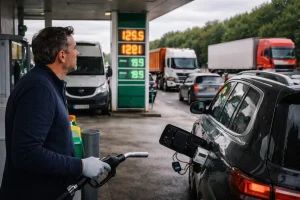
Many drivers notice that diesel often costs more per litre than petrol. Although both fuels originate from crude oil, their pricing structures can differ due to supply and demand dynamics.
Several structural factors explain this difference in the UK and across Europe.
One major factor is diesel demand from commercial transportation. Trucks, delivery vans, agricultural machinery, and construction equipment rely heavily on diesel engines. This strong demand can push prices higher when supply is limited.
Another factor is refinery production balance. European refineries historically produced more petrol than diesel. As a result, additional diesel must often be imported from other regions.
| Reason Diesel Costs More | Explanation |
|---|---|
| Higher commercial demand | Transport and logistics rely heavily on diesel |
| Limited refinery output | Less diesel produced compared with petrol |
| Import dependency | Additional transportation costs |
| Supply disruptions | Shortages increase wholesale prices |
Environmental regulations can also influence refinery operations. Modern fuel standards require cleaner fuels with lower sulphur content. Producing these fuels can increase refining costs.
The combined effect of strong demand and supply limitations often explains why diesel prices remain higher than petrol in many European countries.
FAQs About Diesel Prices in the UK
Why are diesel prices higher than petrol in the UK?
Diesel is often more expensive because demand from the transport and logistics industries is very high. Europe also imports significant quantities of diesel, which increases supply costs.
Will diesel prices fall in 2026?
Diesel prices may fall later in 2026 if global oil supply improves and crude oil prices decline. However, prices are expected to remain volatile in the short term.
What affects diesel prices the most?
Global crude oil prices, geopolitical conflicts, fuel supply disruptions, exchange rates, and government fuel taxes are the main factors influencing diesel prices.
Could diesel reach 160p per litre in the UK?
Yes, some analysts warn diesel could reach around 160p per litre if oil prices remain above $100 per barrel and supply issues continue.
Why do fuel prices change so often?
Fuel prices change because oil markets fluctuate daily. Retail fuel prices usually adjust after wholesale fuel costs rise or fall.
Does the pound affect fuel prices in the UK?
Yes. Oil is traded in US dollars, so a stronger pound makes imported fuel cheaper, while a weaker pound increases fuel costs.
Should drivers expect cheaper diesel soon?
In the short term, prices may remain high. A more noticeable drop is more likely later in 2026 if oil markets stabilise.

Leave a Reply