
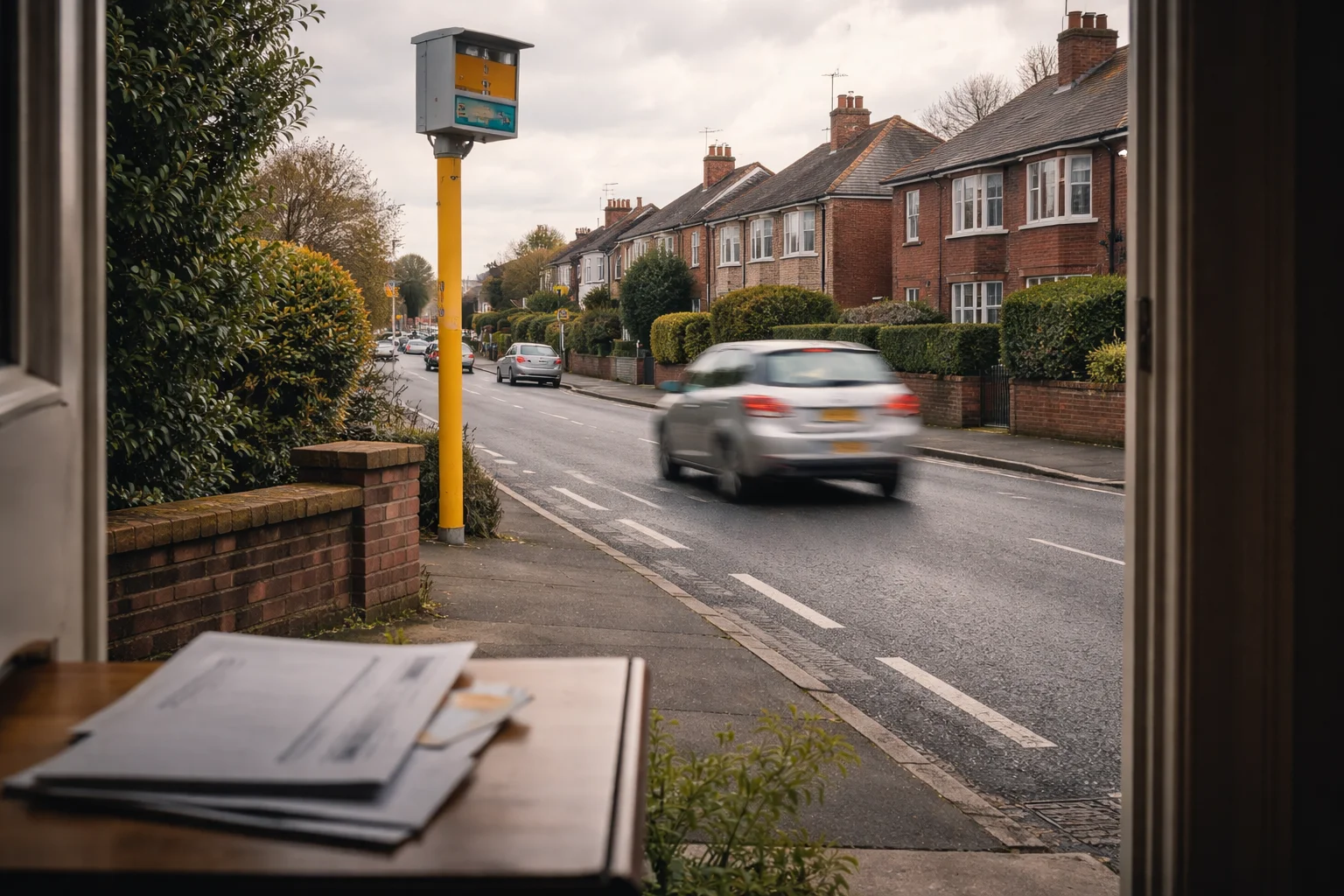
Receiving a speeding ticket can be stressful, especially when drivers are unsure how long it might take to arrive.
In most cases in the UK, a Notice of Intended Prosecution (NIP) must be sent to the registered vehicle keeper within 14 days of the speeding offence if the incident was detected by a speed camera.
However, the exact timing can vary depending on factors such as how the offence was recorded, whether the car is leased or registered to a company, and how quickly the police process the case.
Key points drivers should know include:
- Speed camera offences usually trigger a Notice of Intended Prosecution within 14 days
- The driver must respond to the Section 172 notice within 28 days
- After responding, the driver may receive a Fixed Penalty Notice or a court summons
- The minimum speeding penalty is £100 and 3 penalty points
- Some drivers may be offered a speed awareness course instead of points
Understanding how the speeding fine process works helps drivers respond correctly and avoid further penalties.
When Should Drivers Expect a Speeding Fine Letter After Being Caught by a Camera?

Speed cameras are widely used across the United Kingdom to enforce road safety regulations. When a vehicle exceeds the speed limit and is detected by a speed camera, the enforcement process usually begins automatically.
One of the most common questions drivers ask is how long it takes before they receive a speeding fine or official notice.
In most cases, drivers do not receive a fine immediately. Instead, the police must first send a legal document called a Notice of Intended Prosecution (NIP) to the registered keeper of the vehicle. According to UK law, this notice must normally be issued within 14 days of the alleged offence.
The 14-day timeframe is important because it ensures drivers are notified promptly. It also protects motorists from being prosecuted for offences they were not informed about within a reasonable time.
Understanding the 14 Day Rule for Speed Camera Offences
The 14-day rule is one of the most widely discussed aspects of speeding enforcement in the UK. When a speed camera records a vehicle exceeding the speed limit, the enforcement authority must send the first NIP to the registered keeper within fourteen days.
The rule works in the following way:
- The police must issue the notice within fourteen days of the offence.
- The notice is usually sent by first-class post.
- It must be addressed to the registered keeper listed on the DVLA Driving Licence database.
The timing relates to the date the notice was issued, not necessarily the date it arrives through the letterbox. Because of postal delivery times, a notice may arrive slightly later while still remaining legally valid.
The process often follows a predictable timeline.
Stage of Enforcement Typical Timeframe Description
Speeding offence detected Day 0 A speed camera records a vehicle exceeding the speed limit
Notice of Intended Prosecution issued Within 14 days Police send a legal notice to the registered keeper
Section 172 response deadline 28 days after receipt Keeper must identify the driver
Fixed Penalty Notice issued After the driver identified The driver may receive a fine or further action
Many drivers assume the speeding ticket will arrive within a few days. However, the administrative process and identification of the driver mean the full procedure can take several weeks.
Why Some Speeding Notices Arrive Earlier or Later?
While the law requires the first notice to be issued within fourteen days, drivers sometimes receive their notice much later. Several factors can affect the timing.
One of the most common reasons is vehicle ownership. The police always contact the registered keeper first. If the registered keeper is not the driver, additional steps are required before the actual driver receives their notice.
Situations that can delay the process include:
- Vehicles registered to leasing companies
- Company fleet vehicles
- Recently purchased cars
- Rental vehicles
- Outdated DVLA registration details
If a leasing company receives the notice first, it must confirm who was driving before the police can send a new notice to that individual.
A road traffic compliance professional explained the process during a legal briefing. “In my experience advising drivers, the majority of delays occur because the registered keeper and the driver are not the same person.
The police must follow the legal chain of identification before issuing the penalty.”
Because of these administrative steps, drivers may sometimes receive their notice several weeks after the original offence.
What Is a Notice of Intended Prosecution (NIP) and Why Do Drivers Receive It?
A Notice of Intended Prosecution is a legal document used by police forces across the United Kingdom to notify a person that they may be prosecuted for a traffic offence.
It does not immediately impose a fine or penalty. Instead, it formally informs the recipient that legal proceedings may follow.
The NIP is required in most camera-detected traffic offences, including speeding and traffic signal violations. Its purpose is to ensure fairness by informing motorists about the alleged offence while the details are still fresh.
The notice usually includes several pieces of information.
Information in a NIP Explanation
Date and time of offence When the speeding incident occurred
Location of offence Road name or camera location
Vehicle registration number Identification of the vehicle
Alleged speed recorded Speed detected by the camera
Speed limit for the road Legal limit at the location
Instructions for response Directions for completing Section 172
The NIP is usually combined with another document called a Section 172 notice, which requires the recipient to identify the driver.
What Information Is Included in a NIP?
The document provides enough information for the recipient to understand the alleged offence. While the notice informs the recipient of potential prosecution, it does not automatically confirm guilt or impose penalties.
In many cases, the notice also includes instructions on how to request evidence, such as photographs from the speed camera. These images are often used to help confirm who was driving the vehicle.
The information contained in the notice allows drivers to verify important details such as the location and time of the incident. If there are obvious errors in the notice, drivers may be able to raise this with the police or challenge the allegation.
Who Receives the Notice First?
The first NIP is always sent to the registered keeper recorded by the DVLA.
The registered keeper could be:
- The vehicle owner
- A company managing a fleet of vehicles
- A leasing company
- A car rental provider
This system ensures the police have a clear legal starting point when identifying the driver responsible for the offence.
During my research into UK traffic enforcement procedures, I came across an explanation that highlighted why this step is necessary.
“When I analysed several speeding cases for this article, it became clear that the NIP system exists to protect both drivers and authorities. It creates a documented trail showing how the driver was identified.”
What Is a Section 172 Notice and What Must Drivers Do After Receiving It?
The Section 172 notice is issued under the Road Traffic Act 1988. This legal requirement obliges the recipient to identify the person who was driving the vehicle at the time of the offence.
Even if the recipient believes they were not speeding, they must still complete the Section 172 notice.
The recipient normally has 28 days to respond.
Failure to provide the requested information can lead to a separate offence that carries serious penalties.
Offence Penalty
Failure to identify the driver Up to 6 penalty points
The court imposed fine Can exceed £1,000
Additional legal costs Possible court charges
Because the penalties for ignoring the notice are severe, drivers should always respond within the required timeframe.
The Section 172 notice is often misunderstood. Some drivers believe ignoring the notice might prevent the police from pursuing the case. In reality, failure to respond usually results in harsher penalties than the original speeding offence.
What Happens After You Return the Section 172 Notice to the Police?
Once the completed Section 172 form is returned, the police review the information and confirm the identity of the driver. The enforcement authority then decides what action to take.
Most cases are resolved through a Fixed Penalty Notice, although more serious cases may proceed to court.
Receiving a Fixed Penalty Notice
A Fixed Penalty Notice is the most common outcome for minor speeding offences.
If the driver accepts the penalty, the standard punishment is straightforward.
Fixed Penalty Outcome Details
Standard fine £100
Penalty points 3 points added to licence
Payment period Usually 28 days
The driver may accept the penalty and pay the fine without attending court. This is often the quickest and simplest way to resolve the matter.
When a Speeding Case Goes to Court?
More serious offences may lead to a court summons instead of a fixed penalty.
Situations that commonly result in court proceedings include cases where the driver was travelling significantly above the speed limit or already has several penalty points on their licence.
Court penalties can vary depending on the severity of the offence.
Offence Severity Potential Court Penalty
Moderate speeding Fine based on weekly income
High-speed offences Larger fine and additional points
Very serious cases Driving disqualification
The maximum fine for speeding is normally £1,000, although offences on motorways can reach £2,500.
What Are the Speeding Penalties Drivers Can Receive in the UK?

Speeding penalties in the United Kingdom are structured to discourage dangerous driving behaviour. The penalties increase depending on the seriousness of the offence and the driver’s previous record.
The most common outcome for minor offences is a fixed penalty.
Offence Type Typical Penalty Additional Consequences
Minor speeding £100 fine 3 penalty points
Repeated offences Higher fines More penalty points
Excessive speed Court decision Possible driving ban
Failure to respond to notice Court fine 6 penalty points
Drivers who accumulate too many points can face disqualification.
Total Points in 3 Years Consequence
6 points for new drivers Licence revoked
12 points for experienced drivers Possible driving ban
These penalties highlight the importance of responding correctly to speeding notices and maintaining a clean driving record.
What Happens If a Driver Is Stopped by the Police Instead of a Speed Camera?
Not every speeding offence involves automated cameras. In some cases, police officers detect speeding using handheld devices or patrol vehicles.
When a driver is stopped directly by the police, the process can be different because the officer has already identified the driver.
Possible outcomes include:
- A verbal warning
- A Fixed Penalty Notice was issued immediately
- A requirement to attend court
Because the driver has already been informed of the offence at the roadside, a Notice of Intended Prosecution may not be necessary.
This type of enforcement often leads to quicker resolution since there is no need to identify the driver later.
Can Drivers Avoid Penalty Points by Taking a Speed Awareness Course?

Speed awareness courses are designed to educate drivers about road safety and encourage better driving habits.
Police forces may offer this option for certain minor offences instead of issuing penalty points.
Eligibility usually depends on several factors:
- The driver has not attended a course within the past three years
- The speed was only slightly above the legal limit
- The police determine that the offence qualifies for educational intervention
The course is not free, and drivers must pay the course fee themselves. However, successfully completing the course allows them to avoid penalty points on their licence.
While researching the availability of these courses, I noticed a common misunderstanding among motorists.
“From my perspective, while analysing driver forums and official guidance, many drivers assume the course is automatically offered. In reality, the decision rests entirely with the police authority managing the case.”
What Happens If You Ignore a Speeding Notice or Fail to Respond?
Ignoring a speeding notice can create much more serious legal problems.
If the Section 172 notice is not returned, the police may prosecute the recipient for failing to identify the driver.
This offence carries harsher penalties than the original speeding allegation.
Typical consequences include:
Offence Penalty
Failure to provide driver details 6 penalty points
Court fine Up to £1,000 or more
Increased insurance premiums Long-term financial impac
Courts treat non-response seriously because it interferes with the enforcement of road traffic laws.
Can a Speeding Ticket Still Be Valid If It Arrives After 14 Days?

Many drivers believe a speeding ticket automatically becomes invalid if it arrives after fourteen days. The reality is more complex.
The law requires that the first Notice of Intended Prosecution be issued within fourteen days to the registered keeper.
If that requirement is met, later notices sent to other individuals may arrive much later while still remaining valid.
Common situations where notices are delayed include vehicles that are leased or rented.
Scenario Reason for Delay
Company car Notice sent to the employer first
Lease vehicle Leasing company receives notice
Rental car Hire company identifies the driver
Recently purchased vehicle DVLA records may not yet be updated
These situations often create confusion among drivers who are unaware that multiple notices can be issued during the identification process.
How Can Drivers Check or Challenge a Speeding Fine in the UK?
Drivers who believe a speeding allegation is incorrect have the right to challenge it through the legal system.
The process often begins by reviewing the details provided in the notice.
Drivers may request additional evidence, such as photographs from the speed camera. These images can help confirm whether the vehicle was correctly identified.
Some drivers also review the location of the camera and the applicable speed limit to ensure the details are accurate.
Challenging a speeding offence may involve:
- Requesting photographic evidence
- Verifying the accuracy of the vehicle details
- Reviewing the speed limit signage at the location
- Entering a not guilty plea in court
Court challenges can involve legal costs, so drivers often seek professional advice before proceeding.
While reviewing case examples for this article, I reflected on how frequently drivers misunderstand the enforcement process.
“When I examined several UK speeding cases, it became clear that most disputes arise from confusion about procedure rather than errors in enforcement.
Understanding how the NIP and Section 172 process works can prevent unnecessary legal complications.”
FAQs
How many days does it usually take for a speeding ticket to arrive in the UK?
Most drivers receive the Notice of Intended Prosecution within 14 days of the offence if the speeding incident was recorded by a speed camera.
Does the 14-day rule apply to all speeding offences?
No. The 14-day rule mainly applies to camera-detected offences. If a driver is stopped by police at the roadside, the notice may not be required.
What happens if the speeding notice is sent to the wrong address?
If the address held by the DVLA is incorrect, the notice may still be considered valid if it was sent to the address registered for the vehicle.
Can leased or company vehicles delay speeding notices?
Yes. The initial notice is usually sent to the leasing company or employer first, which can delay the driver receiving their own notice.
How long do penalty points stay on a driving licence in the UK?
Most speeding penalty points remain on a licence for four years, although they are typically considered active for three years when calculating disqualification.
Can a speeding fine be cancelled if the notice arrives late?
If the first NIP sent to the registered keeper was not issued within 14 days, the case may be challenged. However, exceptions can apply.
What happens if someone else were driving the car?
The registered keeper must identify the correct driver on the Section 172 notice. The police will then issue the next notice to that driver.

Leave a Reply