
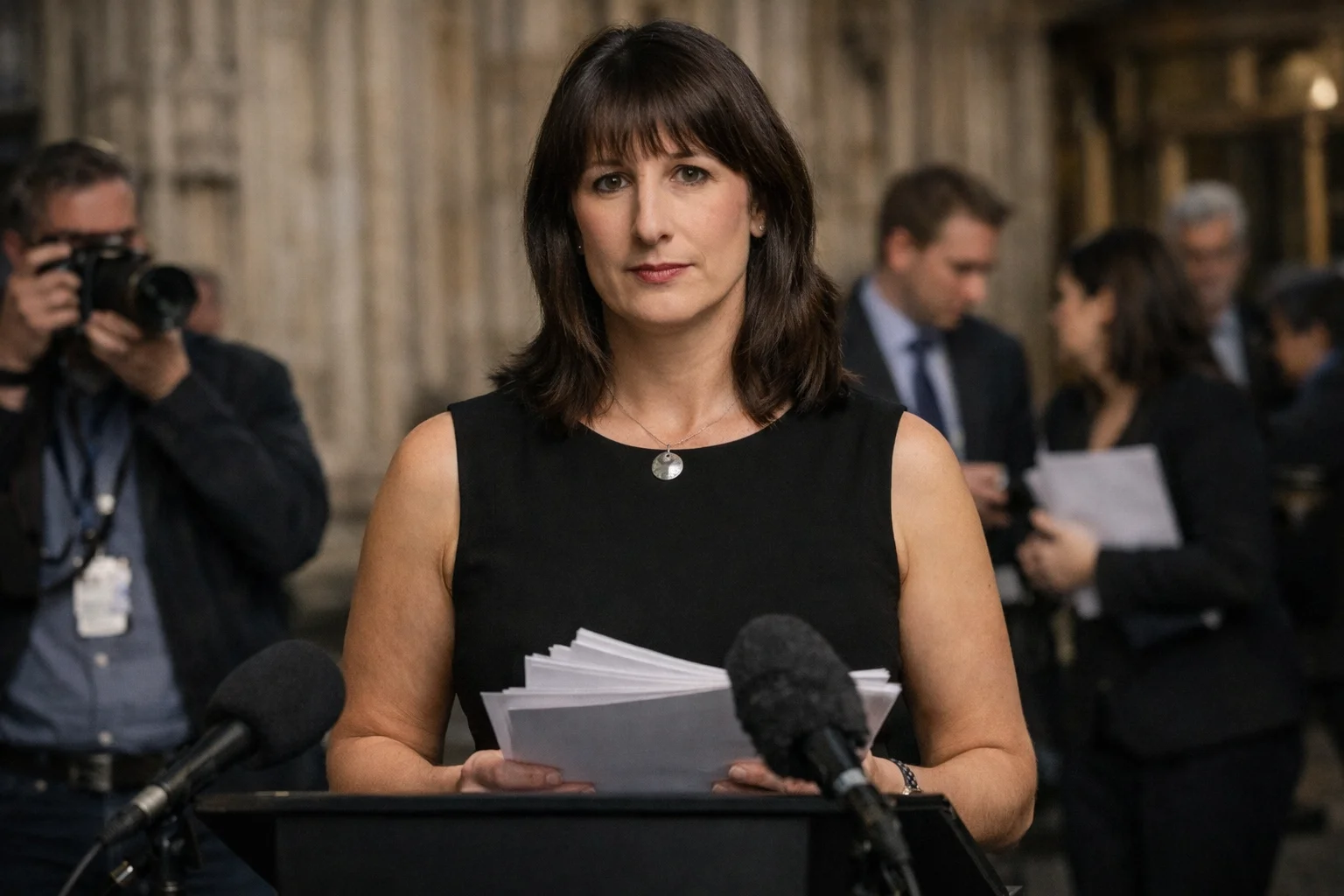
Rachel Reeves will deliver the 2026 Spring Statement, despite growing political pressure and speculation about her stepping aside. Treasury sources and a spokesperson have confirmed her commitment to presenting the statement on March 3.
However, intense internal debate and recent controversies have placed her leadership under scrutiny.
Key points covered in this blog:
- Internal Treasury discussions on delegating the statement
- Market fears and political risks of Reeves stepping back
- Impact of the 2025 Budget U-turn on her credibility
- Resignation of OBR head and its fallout
- Reeves’s exclusion from key international visits
- Opposition criticism and calls for her resignation
- Labour’s internal divisions over economic messaging
- Broader implications for the UK’s fiscal direction and public trust
Why Is Rachel Reeves Facing Scrutiny Over the 2026 Spring Statement?
Rachel Reeves, the current Chancellor of the Exchequer, finds herself at the centre of mounting political and media attention as speculation builds around her role in delivering the Spring Statement on March 3, 2026.
Traditionally, this annual update is a moment for the Chancellor to communicate the government’s economic direction, progress on public finances, and any fiscal adjustments. However, discussions inside the Treasury and among senior Whitehall officials have introduced uncertainty over whether Reeves will present it herself.
I’ve been following these developments closely, and it’s clear that this isn’t simply about protocol. The speculation comes in the aftermath of a tumultuous few months for Reeves, marked by communication failures, reversed tax policies, and damaging leaks that have put her authority under serious pressure.
Whitehall sources have reportedly floated the idea of having a junior Treasury minister deliver the statement to downplay its significance. This, they argue, would reduce the risk of financial market speculation. One official was quoted in The Telegraph saying,
“We don’t want the levels of speculation and market instability that we had in the run up to the Budget.”
These internal talks suggest a calculated attempt to manage external reactions by framing the statement as a technical, low-key event. But politically, this move is fraught with implications. In Westminster, it’s seen not as risk management but as a sign that Reeves might be losing control over her brief.
The mere possibility that she may not deliver the Spring Statement herself has created a wave of media and political commentary questioning her position and her grasp on Labour’s economic strategy.
Political opponents have seized the opportunity to paint her as faltering. Priti Patel’s criticism was particularly sharp, calling the idea of avoiding the responsibility “a dereliction of duty” and “a sign of a dying government.” That’s the kind of language that sticks in the public discourse, regardless of the final decision Reeves makes.
What Are the Political and Market Risks of Delegating the Statement?
The economic rationale behind possibly delegating the Spring Statement is understandable. With the memory of volatile market reactions still fresh from the 2025 autumn Budget, Treasury officials are cautious.
At the time, contradictory signals on tax policy led to a spike in market jitters, with pension funds and investment houses reacting to any hints of major fiscal shifts.
From a civil service perspective, keeping this statement as a low-profile, administrative update may make sense.
It signals to investors that no major surprises are expected, thereby preserving market calm. However, this assumes that political perception is secondary, which clearly isn’t the case.
Delegating this task would create multiple layers of risk:
- It could be interpreted as an admission that Reeves lacks the confidence of her party or the Prime Minister.
- It would invite intense scrutiny over Labour’s cohesion and readiness to manage the economy.
- It risks setting a precedent where the Chancellor avoids the spotlight during turbulent times, further eroding public confidence.
From a market perspective, uncertainty and perception matter just as much as actual fiscal content. A Chancellor stepping aside at a time when markets crave stability could send the wrong message internationally.
Could Removing Reeves From the Spotlight Backfire?
It’s hard to see how it wouldn’t. In politics, visibility equals strength. If Reeves were to step back, critics would frame it as a retreat, regardless of the economic rationale behind it.
I’ve spoken with a few political analysts who suggest that this kind of move can create more noise than it prevents.
One of them put it this way:
“You can’t calm markets by making people wonder who’s really in charge.” That stuck with me because it underscores how leadership, especially in financial matters, is about perception just as much as policy.
Is This a Strategic Move or a Sign of Weakness?

Supporters within the Treasury might argue this is a strategic communications decision. But in the broader political theatre, it looks like weakness. In my view, the debate over this issue reflects a much deeper problem, Labour’s ongoing struggle to appear economically credible after several missteps.
Here’s a breakdown of the two contrasting views:
| Perspective | Argument |
|---|---|
| Treasury officials | Delegation signals stability and avoids unnecessary market movement |
| Political observers | Delegation shows weakness, invites criticism, and undermines leadership optics |
| Financial sector analysts | Prefer consistency but cautious about unclear leadership and vague fiscal plans |
In balancing these competing pressures, Reeves must decide which cost she’s willing to bear: the economic risk of a high-profile delivery, or the political price of stepping back.
How Did Past Budget Controversies Influence Current Sentiments?
The backdrop to the current uncertainty lies in the rocky handling of the 2025 autumn Budget. That period was marked by a whirlwind of mixed signals from the Treasury, speculation around income tax changes, and last-minute reversals that painted an image of a government without a cohesive fiscal narrative.
In her November 4, 2025 speech, Reeves suggested that the public would need to contribute more to strengthen national finances. This was widely interpreted as a prelude to an income tax rise. Yet, within days, the proposal was scrapped following a backlash both within Labour and in the media.
The public and political fallout was immediate:
- Media headlines accused the government of betraying manifesto pledges.
- Labour MPs publicly distanced themselves from the tax plan.
- Markets, already jittery, reacted sharply to the lack of clarity.
Dame Meg Hillier of the Treasury select committee called the reversal “a glaring error” and accused Reeves of creating unnecessary confusion.
In her words, “She threw several grenades onto the pitch and then tried to walk it back.”
That’s the sort of public statement that leaves lasting reputational damage.
This episode significantly weakened Reeves’s perceived control over the Treasury. It also opened the door for rival narratives to take hold, ones that question not just her decisions but her judgment.
Here’s a comparative timeline of the major missteps that have contributed to the current political pressure:
| Date | Event Description | Consequence |
|---|---|---|
| Nov 4, 2025 | Reeves suggests public contribution to economic recovery | Interpreted as an income tax rise |
| Nov 8, 2025 | Proposal for tax hike scrapped | Accusations of inconsistency |
| Dec 2025 | OBR leaks budget details early, Hughes resigns | Undermines fiscal credibility |
| Jan 2026 | Reeves excluded from PM’s China visit | Sparks internal leadership speculation |
Each of these incidents added layers to the perception that the Chancellor and the Treasury lack coordination and clarity.
What Role Did the OBR Leak and Resignation Play in Shaping This Crisis?
The resignation of Richard Hughes, head of the Office for Budget Responsibility, was a watershed moment.
As the person responsible for providing independent analysis of the government’s fiscal plans, Hughes’s decision to step down following a premature leak of budgetary details struck at the heart of the UK’s economic transparency mechanisms.
Following his resignation, Hughes claimed that misleading narratives about a so-called “fiscal black hole” were being pushed by unnamed government sources. In his statement, he said,
“We’ve been left in a position where public confidence has been damaged by misinformation from those at the top.”
This was a serious accusation. It implied that the government, and by extension Reeves, may have been complicit in distorting public understanding for political gain. The market impact was notable, with a short-lived spike in government bond yields and a temporary dip in investor confidence.
In response, Reeves told MPs that the leak was not authorised and called the episode “incredibly damaging and frustrating.” A formal leak inquiry was launched, but it didn’t erase the damage done.
From a policy communication standpoint, this was a breakdown on multiple levels:
- Premature disclosure of fiscal measures damaged trust in the Treasury.
- Hughes’s resignation added weight to critics’ claims of dysfunction.
- The government’s failure to control its internal messaging made headlines.
Table: Breakdown of Fallout from the OBR Leak
| Issue Highlighted | Public Impact | Political Cost |
|---|---|---|
| Premature budget disclosure | Confusion among analysts and investors | Undermined Treasury credibility |
| Misleading briefings | Raised fears of politicised fiscal reporting | Fed opposition narratives |
| Resignation of OBR head | Loss of independent oversight authority | Fuelled calls for Chancellor’s resignation |
This incident amplified doubts about the Treasury’s internal stability and has contributed to the intense scrutiny Reeves now faces as the Spring Statement looms.
How Are Reeves’s Leadership and Influence Being Perceived Inside Labour?
Within Labour, there are growing questions about Rachel Reeves’s role in shaping economic policy. While she remains Chancellor, her influence appears to be waning.
One of the most visible signs of this was her exclusion from Keir Starmer’s trip to China in January 2026. Originally expected to accompany the Prime Minister, she was replaced by Lucy Rigby, a junior minister.
The official explanation focused on “logistical considerations,” but behind closed doors, party insiders have pointed to political strategy. Reeves, they argue, had become a distraction. One source told GB News,
“There’s an appetite to change the tone on economic messaging, and that means sidelining Reeves for now.”
This sort of internal shift can be subtle but telling. Being replaced on a major diplomatic trip speaks volumes about who has the PM’s trust in managing international economic relationships.
Does This Indicate a Shift in Labour’s Internal Power Dynamics?
It appears so. While Reeves retains her title, her authority is being eroded by events and decisions that signal the leadership’s desire to pivot. The idea of delegating the Spring Statement only adds to this perception.
There’s also chatter among Labour backbenchers calling for a rethink of the party’s cautious fiscal stance.
Reeves has been the main proponent of economic restraint to maintain market trust, but some MPs argue that more public investment is needed to respond to cost-of-living pressures.
From my perspective, this internal division is more than routine disagreement. It represents a potential fracture in Labour’s unity on economic policy, one that could affect how the public views the party’s ability to govern.
What Do Critics and Supporters Say About Rachel Reeves’s Strategy?
Critics have pounced. Priti Patel called the potential withdrawal from the Spring Statement “a dereliction of duty,” while Mel Stride demanded her resignation following the OBR controversy. These are not isolated barbs; they reflect a broader narrative of a Chancellor under siege.
That said, Reeves’s camp remains defiant. Treasury spokespeople insist she will deliver the statement and deny all claims of her stepping down. As recently as last week, they confirmed to Parliament that she is fully committed to taking the lead.
Supporters argue that Reeves is still the best person to guide Labour’s economic vision, and see the Spring Statement as an opportunity to reclaim lost credibility.
What Could the Spring Statement Mean for the UK’s Economic Direction?
The upcoming statement won’t just update us on public finances, it will signal Labour’s economic priorities at a time of uncertainty. With inflation pressures, public spending demands, and investor concerns all in play, this is a delicate moment.
Key areas likely to be addressed include:
- Spending restraint to calm market fears
- Clarity on income tax and corporate tax commitments
- Updates on infrastructure and public investment
- Potential guidance on tariffs and global supply chain resilience
Here’s a summary of what I expect:
| Topic | Expected Approach | Public Reaction Risk |
|---|---|---|
| Income Tax | Maintain current rate | Moderate |
| Public Spending | Limited increases | Low to moderate |
| Green Investment | Modest new pledges | Low |
| Borrowing Strategy | Conservative stance | Low |
| Inflation Management | No drastic policy shift expected | Low |
From my point of view, if Reeves delivers this message with clarity and confidence, she can reset the narrative but only if she’s front and centre, not hidden in the wings.
Why Does This Spring Statement Matter More Than Ever?

This isn’t just another policy update, it’s a referendum on Reeves’s leadership and Labour’s economic coherence. Whether or not she delivers the Spring Statement herself will send a powerful message about the government’s internal unity and its ability to navigate economic uncertainty.
More importantly, the public, investors, and global partners are watching closely. The memory of last year’s market turmoil is still fresh. The statement must strike a balance between honesty and reassurance, without triggering new fears.
For Reeves, this is more than just a speech. It’s a chance to take control of the economic narrative and prove that she still has the political capital and clarity to lead Britain’s financial future.
Conclusion
Rachel Reeves’s role in the upcoming Spring Statement has become a focal point for broader questions about Labour’s economic leadership and internal unity. With past controversies still fresh, the decision on whether she presents the statement herself will shape public perception and political confidence.
As scrutiny intensifies, Reeves faces a pivotal moment, one that could either reaffirm her position or deepen doubts about her authority. The coming weeks will reveal whether she can reassert control and restore credibility within both Westminster and the wider public.
FAQs About Rachel Reeves and the 2026 Spring Statement
What is the Spring Statement and why is it significant in 2026?
The Spring Statement provides a mid-year update on the UK’s fiscal position. In 2026, it’s particularly critical due to recent political instability and past controversies involving Reeves.
Has Rachel Reeves confirmed she will deliver the Spring Statement?
Yes. Treasury spokespeople have publicly confirmed that Reeves will deliver the statement, despite speculation to the contrary.
Why is there speculation about Rachel Reeves stepping back?
The speculation arose from internal discussions about delegating the statement to a junior minister, allegedly to avoid market instability.
What was the impact of the 2025 income tax U-turn?
It damaged Labour’s economic credibility and caused public confusion, leading to criticism from MPs and the media.
Why did Richard Hughes resign from the OBR?
He resigned following an early release of budget information and later accused the government of spreading fiscal misinformation.
What was the significance of Reeves being excluded from the China visit?
Her exclusion suggested a shift in her political influence and raised questions about her standing within Labour’s leadership team.
What’s at stake politically in this year’s Spring Statement?
The outcome could affect public trust in Labour, Rachel Reeves’s political future, and market confidence in the UK’s fiscal stability.

Leave a Reply