
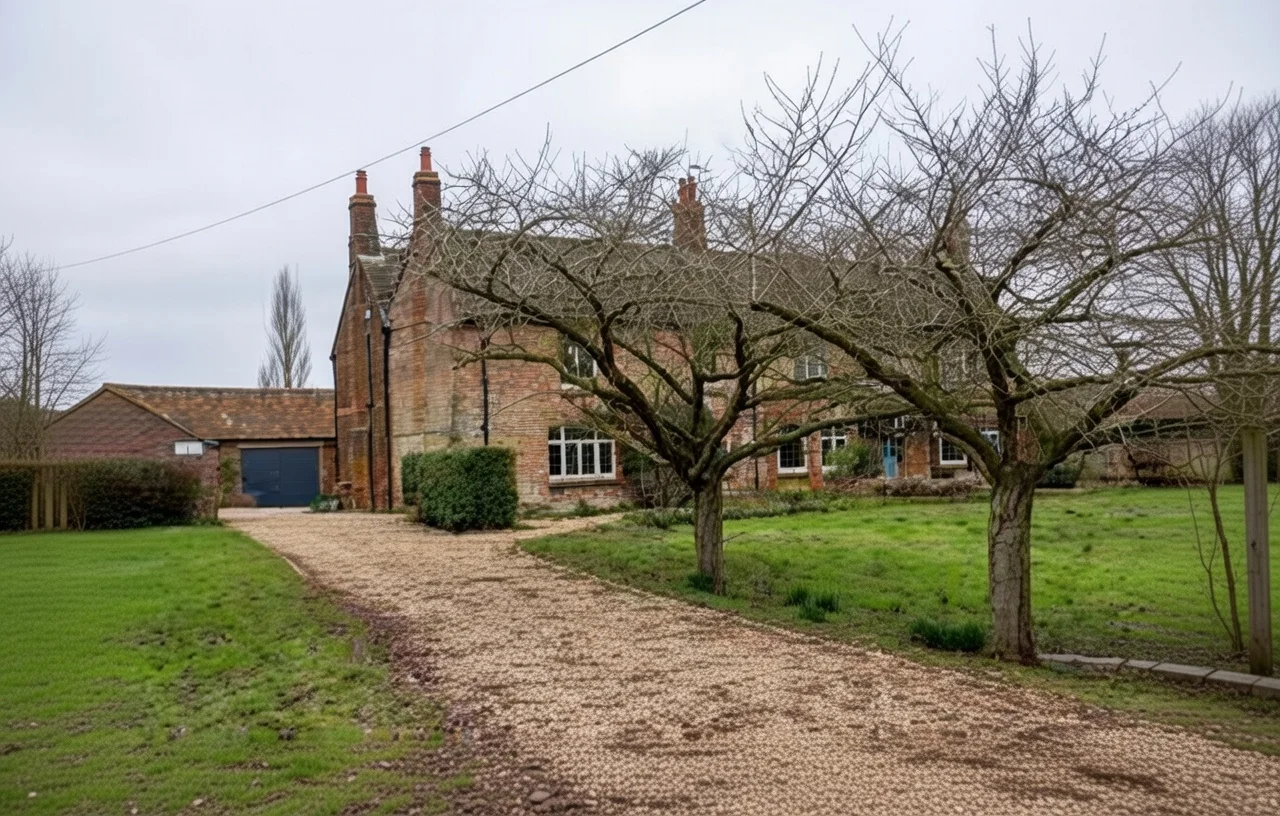
Andrew Mountbatten-Windsor has now completed his move to Marsh Farm on the Sandringham Estate in Norfolk, after leaving Royal Lodge in Windsor earlier in 2026. He initially stayed at nearby Wood Farm while renovations were completed, before moving into Marsh Farm in April 2026.
The five-bedroom former farmhouse is now his permanent base on the King’s privately owned Sandringham Estate, marking the completion of a relocation process that began after Buckingham Palace formally required him to surrender his Royal Lodge lease.
Key points covered in this article:
- Why Andrew left Royal Lodge earlier than expected
- The private nature and location of Marsh Farm
- Temporary stay at Wood Farm Cottage during renovations
- King Charles’s financial and logistical involvement
- Impact of the Epstein scandal on Andrew’s public role
- Termination details of the Royal Lodge lease
- Media and public response to Andrew’s relocation
- Implications for the Royal Family’s image and future strategy
Why Has Andrew Mountbatten-Windsor Left Royal Lodge in Windsor?
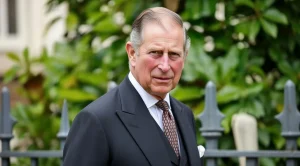
The decision for Andrew Mountbatten-Windsor to leave Royal Lodge in Windsor is the outcome of a long-brewing series of events that have tested the resilience of the Royal Family’s institutional discipline.
His exit didn’t occur in a vacuum. Over the years, the former prince’s relationship with Jeffrey Epstein has cast a long shadow.
The scandal, which had already severely impacted his public duties, was reignited in early 2026 by a tranche of documents released by the US Department of Justice.
These documents included emails and photographs placing Andrew in close contact with Epstein even after his conviction for sex offences.
The sudden release, along with growing pressure from both the media and legal observers in the US and UK, accelerated the timeline of his removal from Royal Lodge. What was originally anticipated to take place quietly later in the year became an urgent necessity for the Royal Family.
A legal advisor I spoke to who specialises in public trust and accountability stated: “When an individual is this closely tied to a scandal of this scale, proximity to symbols of state-funded privilege becomes impossible to justify. Royal Lodge was too visible, too symbolic.”
His departure also coincides with a more transparent push by King Charles III to modernise and protect the monarchy from reputational damage.
Buckingham Palace confirmed in late 2024 that notice had been served to terminate the 75-year lease Andrew held on Royal Lodge, which he had acquired in 2003.
The property, despite Andrew’s substantial initial investment, had reportedly fallen into disrepair. A Crown Estate report submitted to Parliament outlined that Royal Lodge’s physical state meant any compensation for early termination was unlikely.
Key factors driving the exit:
- Release of DOJ files related to Epstein
- Growing public and political pressure
- Buckingham Palace’s formal lease termination
- Condition of Royal Lodge
- Strategic distancing by King Charles
What Is Marsh Farm Sandringham and Why Was It Chosen as His New Home?
Marsh Farm, located within the vast Sandringham Estate in Norfolk, is set to become Andrew Mountbatten-Windsor’s new permanent home.
The Sandringham Estate is privately owned by the King and has long functioned as a retreat for the Royal Family, away from the administrative confines of Buckingham Palace.
The decision to move Andrew to Marsh Farm is notable for its strategic intent. Unlike Royal Lodge, which sits within the public’s line of sight in Windsor Great Park, Marsh Farm is nestled deep within the royal agricultural lands. It’s private, rural, and away from both the media glare and royal event venues.
The farm itself has historically served as part of the estate’s agricultural division. Over time, several outbuildings have been converted into functional living spaces. Marsh Farm is currently undergoing renovation to accommodate Andrew’s long-term residence.
What makes Marsh Farm particularly suitable is its distance from the central estate and the fact that it can be refurbished without public scrutiny or funding.
Reasons Marsh Farm was selected:
- Privacy and limited access
- Located far from public tourist routes
- Part of the privately-owned royal estate
- Ability to renovate discreetly
- Controlled narrative around usage
Where Is Marsh Farm Located Within the Sandringham Estate?
Marsh Farm sits on the periphery of the estate, adjoining a network of woodland and agricultural paddocks. According to estate documents and historical land use records, this part of the estate has seen minimal public interaction, reserved mostly for agricultural staff and seasonal use.
The location provides:
- Discreet vehicle access from rear estate lanes
- No direct visibility from Sandringham House
- Close proximity to estate security facilities
Its relative seclusion makes it ideal for a figure whose association with scandal now requires physical and symbolic distance from central royal operations.
Location Detail Description
Estate Area Western perimeter of Sandringham Estate
Proximity to Sandringham House Approximately 2.4 miles
Primary Access Via service and maintenance roads
Public Access Nearby None
How Does Marsh Farm Fit into the History of Sandringham?
Sandringham has always had a layered existence , it is both a private sanctuary and a working estate. Purchased in 1862 for Edward VII, it has remained in private royal hands ever since. Over the years, smaller holdings like Marsh Farm were used to support estate operations.
While Marsh Farm itself has no significant historical events attached to it, its status as a private and quiet corner of the estate fits the current royal need to house Andrew discreetly without attracting controversy.
What Role Did Wood Farm Cottage Play in Andrew’s Move?
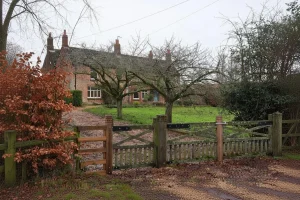
Wood Farm served as Andrew Mountbatten-Windsor’s temporary accommodation after he left Royal Lodge in February 2026. The property, which was previously used by Prince Philip during his retirement, provided a short-term base while work continued at Marsh Farm.
Andrew was still living at Wood Farm when he was arrested on 19 February 2026 on suspicion of misconduct in public office. His stay there subsequently ended, and by April he had relocated to the renovated Marsh Farm property, which is now his permanent Sandringham residence.
| Property | Current Use | Notes |
|---|---|---|
| Wood Farm Cottage | Former temporary residence for Andrew | Used after his departure from Royal Lodge |
| Marsh Farm | Andrew’s permanent residence | Andrew moved there in April 2026 |
What Is the Role of King Charles in Supporting the Move?
King Charles III’s involvement in Andrew’s relocation has been subtle but direct. According to royal insiders and multiple reports, the King is personally funding the renovation and upkeep of Marsh Farm to avoid accusations of public money being used.
This action represents a delicate balancing act. On one hand, Andrew is family, and Charles has made clear through private channels that some level of care remains appropriate. On the other hand, the monarchy’s credibility rests on transparency and accountability.
“The King is trying to draw a line between private family loyalty and public duty,” a constitutional historian told me. “This is a monarchy that has learned hard lessons from public backlash over the years. They can’t afford ambiguity.”
While Marsh Farm’s funding is covered privately, Andrew’s security , as a former senior royal, may still rely on public resources, although these details are not disclosed for operational reasons.
Support Element Responsibility
Property Renovation King Charles (private funds)
Lease Termination Support Managed through the Crown Estate
Security (unconfirmed) Possibly through Metropolitan Police
Public Communications Handled via Buckingham Palace advisors
How Has the Epstein Scandal Affected Andrew’s Royal Standing?
Andrew’s royal status has changed more significantly than his earlier withdrawal from public duties. In October 2025, King Charles initiated the formal removal of Andrew’s remaining royal styles, titles and honours, and Buckingham Palace announced that he would thereafter be known as Andrew Mountbatten Windsor rather than Prince Andrew.
He had already withdrawn from official royal duties in 2019 and lost his military affiliations and royal patronages in 2022.
The change represented a much more definitive separation from official royal life than the earlier decision simply to stop undertaking public engagements.
He remains the King’s brother and remains within the line of succession, but he no longer performs official duties on behalf of the monarchy.
The 2022 settlement with Virginia Giuffre, which reportedly amounted to £12 million, was a pivotal moment. Though no admission of guilt was included, the sheer scale of the payment led many to believe the Palace wanted the matter closed quickly and quietly.
The legal situation developed significantly in February 2026. Following the release of millions of Epstein-related documents by the US Department of Justice, Thames Valley Police opened a formal investigation into allegations that Andrew shared confidential government information with Jeffrey Epstein while serving as the UK’s Special Representative for International Trade and Investment.
On 19 February 2026, Andrew was arrested on suspicion of misconduct in public office and questioned by detectives before being released under investigation. King Charles subsequently said that the authorities had the Royal Family’s full cooperation and that the law must be allowed to take its course.
The investigation remains active. In May, Thames Valley Police described it as extensive and complex, involving multiple lines of inquiry.
By July, officers were still pursuing evidence and potential witnesses, including possible enquiries in the United States connected with information relating to Virginia Giuffre. Andrew has consistently denied wrongdoing.
From a media standpoint, this is a crisis that continues to evolve. In my view, the royal approach now focuses less on rebuttal and more on repositioning. The move to Sandringham is part of that strategy.
“A client of mine who has worked inside royal communications described the tone shift as dramatic,” I was told during a call with a senior PR strategist. “They’re no longer trying to defend Andrew, they’re quietly removing him from the public equation.”
Why Did Buckingham Palace End the Lease at Royal Lodge?
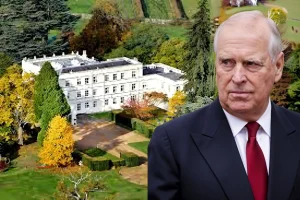
Andrew’s Royal Lodge arrangement was a 75-year lease dating from 2003, but the financial structure was more complicated than a single £8 million upfront payment.
The National Audit Office confirmed in June 2026 that Andrew agreed to spend £7.5 million on refurbishment, which reduced the capital premium payable to the Crown Estate to £1 million, alongside a peppercorn rent.
Formal notice to surrender the lease was given in October 2025. Under the lease terms, Royal Lodge is due to be handed back to the Crown Estate by 30 October 2026 at the latest, assuming the full 12-month notice period.
The position on compensation is also more nuanced than previously reported. The NAO calculated that Andrew could theoretically receive between £301,967.66 and £488,342.21, depending on the surrender date.
However, any payment must be offset against repair or dilapidation costs identified when the property is finally inspected and handed back.
| Lease Component | Updated Position |
|---|---|
| Original Term | 75 years from 2003 |
| Capital Premium | £1 million |
| Refurbishment Commitment | £7.5 million |
| Rent | Peppercorn rent |
| Notice to Surrender | October 2025 |
| Latest Handover Date | 30 October 2026 |
| Potential Compensation | £301,967.66–£488,342.21 before dilapidation costs |
What Are the Public and Media Reactions to Andrew’s New Move?
Reactions to the move have been mixed, though mostly critical. News outlets including BBC, The Guardian, and The Times have highlighted the discomfort of having a royal figure, mired in such scandal, receive housing on the King’s private estate.
Commentators have focused on themes of privilege, accountability, and justice. Some argue that despite the private funding of Andrew’s new home, the optics are still problematic.
Public opinion has hardened. Andrew’s brief appearance in Windsor, where he was seen riding horseback near his former residence, was widely panned. Images of him waving at photographers were described in op-eds as “tone-deaf.”
Yet, within the Palace, the sentiment is more complex. “He remains family,” one source told a royal correspondent. “But he is not part of the Firm anymore.”
FAQs About Marsh Farm, Sandringham, and Andrew Mountbatten-Windsor
What is Marsh Farm and who owns it?
Marsh Farm is part of the privately owned Sandringham Estate, which belongs to King Charles III. It is being prepared as Andrew’s permanent home.
Why did Andrew leave Royal Lodge?
He left due to a formal notice from Buckingham Palace and increasing scrutiny over his ties to Jeffrey Epstein.
Was Andrew evicted or did he leave voluntarily?
Technically, he was served notice, making the departure more of a forced hand than a voluntary decision.
Is Andrew Mountbatten-Windsor still a member of the Royal Family?
Andrew remains King Charles III’s brother and remains in the line of succession, but he no longer performs official royal duties and his remaining royal styles, titles and honours were removed in 2025.
What is Wood Farm Cottage?
It’s a smaller residence on the Sandringham Estate where Andrew is temporarily staying during renovations at Marsh Farm.
Will Andrew return to royal duties?
Highly unlikely. All indications suggest a permanent withdrawal from public royal roles.
Is the public paying for Andrew’s new home?
No. King Charles is reportedly covering all costs personally to avoid public funding controversies.

Leave a Reply