
Last Updated on AUG 22, 2026
Bill Buckler, a property developer in Poole, remained liable for £20,000 in environmental civil sanctions after the First-tier Tribunal dismissed his appeal against Natural England in January 2026.
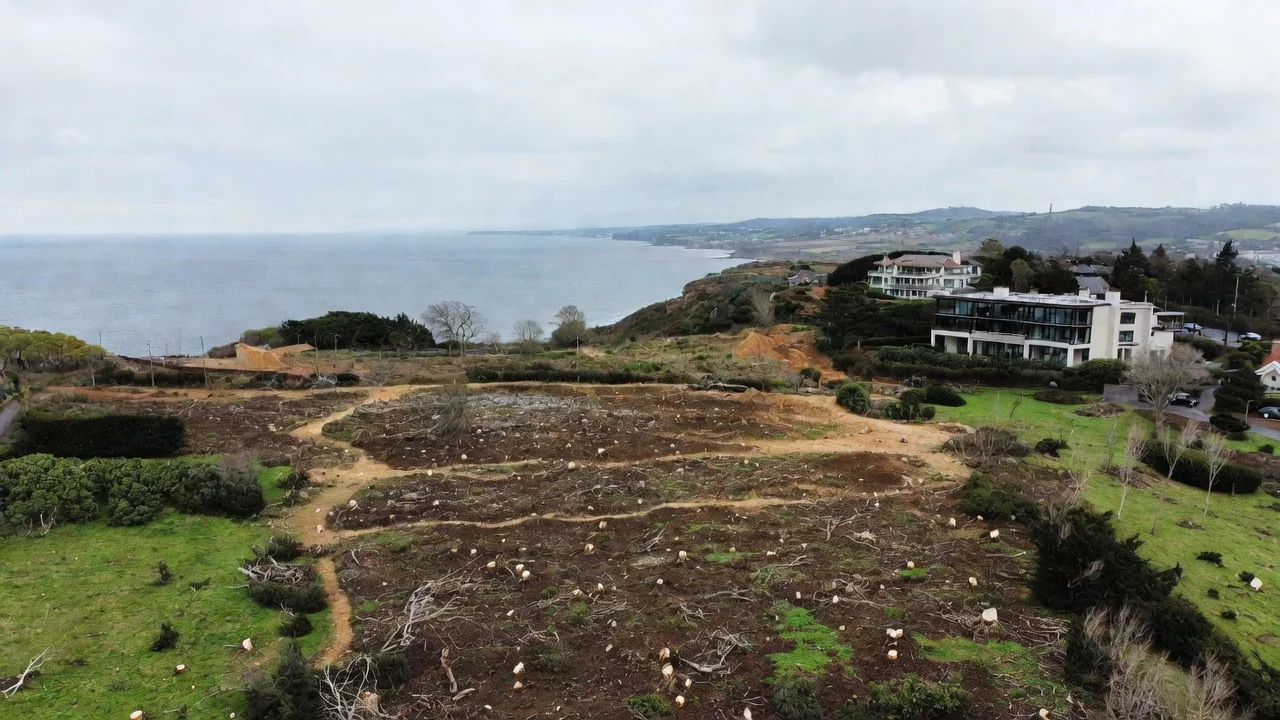
Natural England had previously consented to tree-felling at the Canford Cliffs site, but later excavation and construction works within the Poole Bay Cliffs Site of Special Scientific Interest were carried out without the required notice or planning permission.
Natural England assessed the resulting damage to protected geological features as permanent and irreversible.
Key Points:
- Background of the Canford Cliffs property and development intentions
- Natural England’s approval of the tree-felling and the later unauthorised excavation works
- Natural England’s investigation and legal enforcement
- Breakdown of the court fine and legal breaches
- The site’s environmental and geological importance
- Permanent damage caused to protected land and species habitats
- Court’s rejection of Buckler’s appeal
- Broader implications for UK planning enforcement and conservation laws
What Triggered The Investigation Into Bill Buckler’s Clifftop Development?
The case developed after tree-felling and subsequent construction activity at Buckler’s Canford Cliffs property. Natural England gave permission for tree-felling works following communications with Buckler’s agent in January and February 2021.
The official tribunal judgment does not find that this consent was obtained fraudulently or under false pretences. The enforcement case instead centred on later excavation and building works affecting the SSSI, which appear to have begun in July 2021 without the required permission or notification.
Key developments that led to the investigation include:
- Natural England consented to tree-felling works following discussions with Buckler’s agent in January and February 2021, before the later unauthorised excavation began.
- Speculations by neighbours that the tree removal was aimed at improving sea views and creating space for a development.
- Rapid commencement of construction involving a luxury garden room and an infinity pool.
- Location of the property within an SSSI, intensifying scrutiny due to strict environmental protections.
The initial suspicion by the local community played a critical role in escalating the issue to authorities, who began monitoring the site closely.
How Did Natural England Respond To The Unauthorised Work?
Natural England responded swiftly once reports of unauthorised construction emerged. Multiple site visits confirmed that excavation and structural works were underway, well beyond what had been permitted under the conservation agreement.
Their response included:
- Two site inspections in May and September 2022, confirming deep excavation and foundation work.
-
On 28 June 2022, Natural England wrote asking Buckler to stop the works while further action was considered. He initially objected but subsequently halted the works, before construction later resumed.
- Warnings of enforcement action, leading to a temporary halt in work.
- Resumption of work in February 2023, violating previous notices and escalating legal action.
Natural England’s Timeline Of Actions
| Date | What Happened | Outcome |
|---|---|---|
| Jan–Feb 2021 | Natural England consented to tree-felling works | Approved tree works could proceed |
| July 2021 | Unauthorised excavation appears to have begun | Works later formed part of the enforcement case |
| 9 May 2022 | Natural England carried out a site visit | Excavation affecting SSSI geology identified |
| 28 June 2022 | Natural England asked Buckler to stop the works | Buckler initially objected but later stopped |
| 1 Sept 2022 | Natural England carried out another site visit | Unauthorised works remained under investigation |
| 2023 | Works were subsequently resumed without the required permission | Further excavation occurred |
| Around 28 March 2023 | Local planning authority inspected the site and instructed that work stop immediately | Further excavation within the SSSI was identified |
| 4 March 2025 | Natural England issued the VMP and enforcement-cost notice | Total liability was £20,000 |
| 21 January 2026 | First-tier Tribunal decision issued | Buckler’s appeal was unanimously dismissed |
The tribunal records the relevant Wildlife and Countryside Act infringements as occurring between 16 July 2021 and 18 April 2023.
Why Was Bill Buckler Given A £20,000 Environmental Penalty?
Natural England issued Buckler with two civil enforcement notices on 4 March 2025 after finding breaches connected with unauthorised building works on the Poole Bay Cliffs SSSI.
The Variable Monetary Penalty was £8,812.07, while a separate Enforcement Costs Recovery Notice required £11,187.93, leaving a combined liability of exactly £20,000.
The case concerned breaches of sections 28P(1) and 28P(6) of the Wildlife and Countryside Act 1981, including failure to give the required notice before carrying out specified operations and damage to protected SSSI features.
The fine was composed of:
- £8,812 under the Wildlife and Countryside Act 1981
- £11,187 under the Enforcement Costs Recovery Notice
Key reasons for the penalty included:
- Failure to consult with local planning authorities before excavation.
- Disregard for stop notices issued by Natural England and the council.
- Continued construction within an SSSI, causing irreversible geological damage.
Fine Breakdown By Legal Breach
| Enforcement Measure | Amount | What It Covered |
|---|---|---|
| Variable Monetary Penalty | £8,812.07 | Wildlife and Countryside Act 1981 infringements |
| Enforcement Costs Recovery Notice | £11,187.93 | Natural England’s recoverable enforcement costs |
| Total Liability | £20,000 | Combined amount confirmed following the appeal |
Despite Buckler’s claims that he had been cooperative, the court found no credible evidence to support this. The judge’s comments were scathing, dismissing his appeal and reinforcing the importance of compliance in sensitive environmental zones.
What Is The Environmental Significance Of The Poole Bay Cliffs?
Why Is The Area A Site Of Special Scientific Interest?
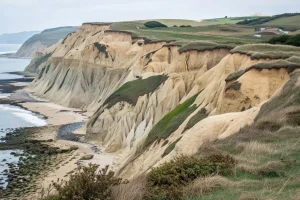
Poole Bay Cliffs are designated as an SSSI due to their rare geological formations and the presence of protected species such as the sand lizard. The cliffs contain fossilised flora, sediment layers, and sand formations that date back thousands of years. These features are considered irreplaceable by Natural England and are protected under national conservation laws.
SSSI designation imposes strict regulations, including:
- Prohibition of any unauthorised excavation or structural work.
-
Owners or occupiers must notify Natural England and obtain the required consent before carrying out operations listed as potentially damaging to the SSSI, unless another applicable statutory process provides the necessary authorisation.
- Required consultations with Natural England and the local council.
These rules are in place to ensure the longevity of the site’s ecological and geological value.
What Damage Was Caused By The Unauthorised Construction?
Natural England officials confirmed that the construction on the clifftop caused severe and permanent damage. The use of concrete pillars and excavation disrupted the natural structure of the cliff, and the works disturbed geological layers that can no longer be studied or restored.
Key impacts of the unauthorised works included:
- Loss of unique geological layers, which formed the scientific basis for the site’s SSSI designation.
- Disturbance to habitats supporting protected species like the sand lizard.
- Increased risk of cliff erosion, affecting public safety for beach users below.
- Irreversible alteration of natural land features, resulting in permanent damage.
As a planning consultant, I must stress that once such geological and biological features are damaged, they are virtually impossible to restore. These are not just rocks and soil, they are valuable scientific records of Britain’s natural history.
Environmental Damage Assessment
| Environmental Feature | Impact | Restoration Feasibility |
|---|---|---|
| Geological rock formations | Destroyed by piling and excavation | Not restorable |
| Sand lizard habitat | Disrupted due to habitat clearance | Partially restorable |
| Cliff stability | Undermined by deep construction | Restoration may cause collapse |
| Public safety | Threatened by unstable cliff edge | Ongoing monitoring required |
Natural England’s Nick Squirrel commented:
“Had the works been the subject of the legally required consultation process, both Natural England and the council would have raised strong objections. The site’s geological features have now been lost permanently.”
Did Bill Buckler Try To Challenge The Fine In Court?

Yes. Buckler appealed Natural England’s Variable Monetary Penalty to the First-tier Tribunal (General Regulatory Chamber) on 28 March 2025.
The final hearing took place by video on 2 December 2025, with the decision issued on 21 January 2026 as Buckler v Natural England [2026] UKFTT 84 (GRC).
Buckler argued that he had been open and cooperative and that the overall £20,000 liability was disproportionate and excessive. The three-member tribunal unanimously dismissed the appeal.
His appeal was based on three main arguments:
- The fine was disproportionate to the alleged damage.
- He had consulted with authorities before proceeding.
- He acted in good faith and aimed to support conservation.
The tribunal rejected his challenges to Natural England’s assessment of blameworthiness, cooperation, foreseeability, mitigation and enforcement costs, ultimately leaving the £20,000 combined liability unchanged.
The court found that Buckler had resumed work despite receiving clear warnings, had not obtained permission for the scale of his construction, and had misrepresented his intentions.
The tribunal, led by Judge Anthony Snelson, concluded:
“This is an appeal which is notably free of merit… There is no substance in any of the individual points of appeal we examined.”
What Happened To The Retrospective Planning Application?
Buckler submitted application APP/24/01030/F in September 2024 seeking permission for a lower garden area, an amended swimming-pool location, associated retaining works and a replacement garden room, with part of the proposal retrospective.
Although Natural England objected to the application in November 2024, the application was subsequently recorded as approved by April 2026.
That later planning approval should not be confused with the separate environmental enforcement case. The January 2026 tribunal decision still upheld Natural England’s £20,000 civil sanctions relating to the earlier SSSI infringements and permanent geological damage.
What Does This Case Reveal About Planning Permission Enforcement In The UK?

The Buckler case has become a reference point for planning enforcement professionals and conservation advocates. It illustrates the need for vigilant oversight and swift legal action when protected sites are at risk.
Important takeaways from this case include:
- SSSI designations are enforceable, and developers cannot exploit legal grey areas.
- Public vigilance plays a key role in identifying unauthorised developments.
- Authorities must coordinate quickly to prevent ongoing damage.
- Legal consequences are real, and fines, while sometimes modest, carry significant reputational weight.
Planning Enforcement Lessons
| Insight | Explanation |
|---|---|
| Role of community reports | Prompted initial investigation by Natural England |
| Importance of transparent processes | Failing to consult led to legal and reputational damage |
| Complexity of conservation law | Even experienced developers must navigate carefully |
| Power of judicial response | Court reinforced environmental law with decisive judgement |
As someone deeply interested in the intersection of development and conservation, I find cases like this particularly frustrating. There is often a presumption among some developers that regulatory bodies will not act decisively, or that fines are simply the cost of doing business. That mindset not only damages ecosystems but also undermines public confidence in the planning system.
We need to see cases like this as a wake-up call. Respecting protected environments is not just a legal obligation, it’s a social and ethical one. Planning enforcement is more than red tape; it is our collective safeguard against irreversible damage to Britain’s most valuable natural heritage.
Conclusion
The Bill Buckler case is more accurately described as an environmental enforcement case concerning unauthorised excavation and construction within the Poole Bay Cliffs SSSI, rather than illegal tree-felling.
Natural England had consented to the earlier tree works, but the later development proceeded without the required notification or planning permission and caused damage assessed as permanent and irreversible.
Natural England imposed a Variable Monetary Penalty of £8,812.07 and enforcement costs of £11,187.93 in March 2025. Buckler challenged the sanctions, but the First-tier Tribunal unanimously dismissed his appeal in January 2026, leaving the £20,000 liability in place.
A separate partly retrospective planning application was subsequently recorded as approved in 2026, but that did not overturn the environmental enforcement decision.
Frequently Asked Questions
What laws did Bill Buckler break in this case?
Bill Buckler violated the Wildlife and Countryside Act 1981 and carried out unauthorised work within a Site of Special Scientific Interest (SSSI), breaching planning and environmental protections.
Can developers build on land within an SSSI?
Only with special permissions. Any development within an SSSI must go through a strict consultation and approval process with Natural England and local planning authorities.
Why was the fine only £20,000 for such major environmental damage?
Fines under current legislation are sometimes considered too low. However, the reputational damage, legal costs, and restrictions on future development often outweigh the fine itself.
What are the consequences of damaging protected habitats in the UK?
Penalties can include heavy fines, enforcement notices, court injunctions, and in rare cases, criminal prosecution.
Can the damaged site be restored to its original condition?
Experts say that restoration is unlikely. Digging out the construction could destabilise the cliff, making the damage effectively permanent.
What is the role of Natural England in such cases?
Natural England oversees conservation in the UK, managing SSSIs and ensuring developers follow environmental law.
How can local residents report illegal development?
Residents should report suspected illegal activity to the local council’s planning enforcement team and, if it involves a protected area, also notify Natural England.

Leave a Reply