

The DWP CMS GB 2012 scheme was introduced to reform child maintenance in the UK, replacing earlier systems that lacked efficiency and enforcement.
Operated by the Child Maintenance Service under the Department for Work and Pensions, the scheme ensures that separated parents contribute financially to their children’s upbringing.
With structured payment options, compliance measures, and digital integration, it aims to streamline processes while holding non-compliant parents accountable. This article explores the scheme’s rules, payments, responsibilities, and overall performance.
What Is The DWP CMS GB 2012 Scheme And How Does It Work?
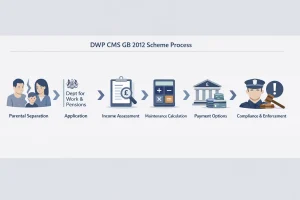
The Child Maintenance Service (CMS), part of the Department for Work and Pensions (DWP), operates the 2012 statutory child maintenance scheme across Great Britain.
The DWP CMS GB 2012 scheme was introduced to simplify and streamline the child maintenance process after criticism of the earlier Child Support Agency (CSA) systems from 1993 and 2003.
These legacy systems were often regarded as complex, inefficient, and lacking in enforcement capability.
The 2012 scheme was designed to provide a modern approach to child maintenance. It encourages separated parents to make private, family-based arrangements wherever possible.
If that fails, the CMS provides statutory support through calculated assessments and enforcement mechanisms.
The CMS 2012 scheme works by assessing the Paying Parent’s gross income, establishing the amount due, and facilitating or enforcing payments based on the service type chosen.
Payments are either made directly between parents or collected through the CMS and distributed to the Receiving Parent.
The scheme aims to promote fairness, reduce conflict, and ensure children receive financial support from both parents.
Who Is Responsible For Managing Child Maintenance Under The 2012 Scheme?
The Department for Work and Pensions (DWP) oversees the child maintenance framework.
Within the DWP, the Child Maintenance Group (CMG) is tasked with administering client funds, ensuring accurate assessments, and supporting the delivery of statutory services.
The main stakeholders involved include:
- Paying Parent (PP): Responsible for making regular payments
- Receiving Parent (RP): Receives the payments for the child’s upbringing
- CMS (via CMG): Provides calculation, collection, and enforcement services
The CMG operates as a custodian of client funds, ensuring accuracy, compliance, and transparency in financial operations. Annual reports are submitted and audited to confirm that all child maintenance receipts and payments are properly managed and recorded.
What Are The Main Service Types Under The CMS 2012 Scheme?
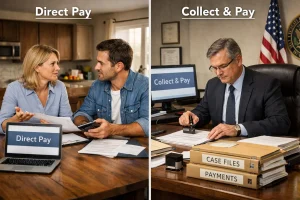
The CMS 2012 scheme is structured to offer flexibility while enforcing responsibility. There are two distinct service types:
Direct Pay
Direct Pay is the preferred option where cooperation between parents is possible. CMS assesses the amount of maintenance due and shares this with both parents.
However, the actual transfer of money is arranged between them without CMS intervention.
This model avoids additional service fees and is often quicker. It also promotes responsibility and communication between parents.
CMS does not track payments in Direct Pay cases unless the Receiving Parent reports non-payment.
Collect And Pay
This service is used when the Paying Parent is unwilling or unable to comply voluntarily. CMS intervenes by collecting maintenance payments directly and transferring them to the Receiving Parent. This method includes additional charges:
- The Paying Parent pays an extra 20% of the maintenance amount
- The Receiving Parent loses 4% of the amount collected
CMS actively monitors payments under this service, and failure to comply results in enforcement action.
Below is a comparison of both services:
| Feature | Direct Pay | Collect and Pay |
| CMS Calculates Amount | Yes | Yes |
| CMS Handles Payments | No | Yes |
| Extra Charges | No | Yes (PP: +20%, RP: -4%) |
| Enforcement Action | Only if RP reports non-payment | Automatic |
| Monitoring | Not by default | Active monitoring |
Are Direct Pay And Collect And Pay Changing?
Direct Pay and Collect and Pay remain the two CMS service types operating in 2026. However, the Government confirmed in June 2025 that it intends to reform the system by removing Direct Pay from statutory CMS arrangements and introducing a single service through which CMS would monitor and transfer payments.
Under the proposed structure, collection fees would also change. Receiving Parents would pay 2%, compliant Paying Parents would pay 2%, while non-compliant Paying Parents could continue to face a 20% charge.
These changes are not currently in force. DWP has indicated that implementation is expected in 2027/28, subject to legislation and Parliamentary time.
How Are Child Maintenance Payments Calculated Under The DWP CMS GB 2012 Scheme?
The calculation of child maintenance is primarily based on the Paying Parent’s gross weekly income. This income is verified through data supplied by HM Revenue & Customs (HMRC).
There are five main calculation rates:
- Nil Rate: Applies where the Paying Parent’s gross weekly income is less than £7, as well as in certain other specified circumstances
- Flat Rate: Applies where gross weekly income is between £7 and £100, or where the Paying Parent receives certain benefits. The standard Flat Rate is £7 per week
- Reduced Rate: Applies where gross weekly income is £100.01 to £199.99
- Basic Rate: Applies where gross weekly income is £200 to £800
- Basic Plus Rate: Applies to income from £800.01 up to £3,000 per week, with the Basic Rate applying to the first £800
Adjustments are made depending on:
- Number of children involved
- Shared care arrangements (overnight stays)
- Any other children the Paying Parent supports
Calculation Process
CMS uses an automated system to retrieve income details and apply the appropriate rate. Parents can request a variation if they believe the reported income does not reflect the Paying Parent’s actual financial situation.
Variations can be considered for unearned income, property, or if the Paying Parent is deliberately underreporting earnings.
What Were The Key Changes Introduced During The Covid-19 Pandemic?
The pandemic had a significant operational impact on the CMS. Many staff were redeployed to support the surge in Universal Credit applications.
During this period, CMS maintained a minimal level of service to continue providing essential child maintenance functions.
Key temporary adjustments included:
- Accepting new applications only through the online portal
- Reducing the threshold for reassessing income changes from 12 weeks to 2 weeks
- Suspending enforcement actions and CSA case closures
- Accepting verbal evidence for changes in circumstances
- Prioritising provisional calculations to speed up payments
From July 2020, CMS began reinstating its full service levels. By September 2020, most staff had returned to their CMS roles.
Enforcement activities resumed, with court hearings for over 90% of previously suspended cases being successfully scheduled between September and December.
CMS also encouraged greater use of digital tools such as the online account portal and My Child Maintenance Case dashboard to minimise telephone service usage during the recovery phase.
How Does The CMS Enforce Unpaid Child Maintenance?

CMS possesses a wide range of enforcement powers to ensure child maintenance is paid. If a parent fails to pay under either service type, various actions can be taken.
Enforcement Actions Include:
- Deduction from Earnings Orders (DEOs): Employers deduct money directly from wages
- Deduction from Bank Accounts: Direct withdrawal from bank or building society accounts
- Liability Orders: Legal orders enabling further enforcement such as:
- Use of Enforcement Agents (bailiffs)
- Application of charging orders on property
- Disqualification from driving or holding a passport
- Imprisonment in extreme cases
Financial Investigations
CMS refers complex or suspicious cases to its Financial Investigations Unit (FIU). This team investigates:
- Self-employed individuals hiding income
- Business owners misreporting revenue
- Situations where DEOs are repeatedly unsuccessful
The goal is to ensure maintenance assessments reflect the true financial capacity of the Paying Parent.
What Is The Role Of The Client Funds Account In The CMS 2012 Scheme?
The Client Funds Account is an independently reported financial record that details all receipts and payments made under the Collect and Pay service. It does not include Direct Pay transactions as those are not handled by the CMS.
This account is required under the Government Resources and Accounts Act 2000 and is audited annually.
It provides a breakdown of funds received, fees collected, refunds issued, and outstanding balances.
Key Figures From 2020/21:
- Receipts from Paying Parents: £170.4 million
- Payments to Receiving Parents: £165.4 million
- Unpaid Maintenance: £408.5 million
- Cash Balance at Year-End: £11.3 million
These figures are reviewed by the Comptroller and Auditor General, who issued an unmodified opinion, indicating a high standard of financial control and reporting.
How Effective Has The CMS 2012 Scheme Been In Improving Compliance?
The latest DWP figures show that the Child Maintenance Service is now supporting substantially more children and arrangements than it was in 2021.
In the quarter ending March 2026:
- 1.1 million children were covered by CMS arrangements
- CMS was managing approximately 810,000 arrangements
- 55% of arrangements were using Direct Pay
- 43% were using Collect and Pay
- 77% of Paying Parents due to pay through Collect and Pay paid some maintenance
- 54% paid more than 90% of the maintenance due during the quarter
Maintenance Due And Paid In The Quarter Ending March 2026:
| Category | Amount |
|---|---|
| Total Maintenance Due | £405.1 million |
| Arranged Through Direct Pay | £292.3 million |
| Arranged Through Collect and Pay | £112.8 million |
| Collect and Pay Amount Paid | £86.5 million |
| Collect and Pay Amount Unpaid | £26.3 million |
DWP does not directly measure whether all maintenance arranged through Direct Pay is actually paid because those payments are transferred privately between parents rather than through CMS.
How Are Outstanding Arrears And Write-Offs Managed Under The Scheme?
Unpaid maintenance is a growing concern, although CMS continues to address this through enforcement and surveillance.
As of March 2021:
- Total arrears stood at £408.5 million
- 51% of this amount was actively pursued through enforcement
- 6.9% was under surveillance due to inability to pay
- Remaining amounts were either pending action or not yet due
In 2020/21:
- £9.3 million was written off as part of routine operations (e.g. death of PP, RP decision not to pursue)
- A further £10.6 million was projected to be written off in 2021/22
Some older cases, particularly those over 12 months with no recovery, were reviewed for potential classification as uncollectable. These were assessed by third-party investigators to evaluate collection feasibility.
What Are The Statutory Fees And Charges Associated With The Scheme?
The CMS no longer charges an application fee. The previous £20 application fee was abolished from 26 February 2024, meaning it is now free to apply to the Child Maintenance Service.
Charges can still apply when parents use the Collect and Pay service:
- No application fee is charged for starting a CMS case
- 20% collection fee is added to the amount the Paying Parent has to pay through Collect and Pay
- 4% collection fee is deducted from the amount passed to the Receiving Parent through Collect and Pay
- Additional enforcement charges may apply when certain enforcement measures are required
-
In 2024/25, the 2012 scheme recorded £70.8 million in fees, charges and other recoveries collected on behalf of the Secretary of State.
How Has Digital Transformation Improved CMS Operations?
Digital transformation has significantly improved the efficiency and accessibility of CMS services. Recognising a shift in customer preferences, CMS invested in new technologies and online platforms to reduce reliance on traditional communication.
Key Developments:
- My Child Maintenance Case: An online portal for reporting changes, checking case status, and making payments
- Online Application Services: Streamlined application process with quicker assessments
- Children Analytical Data Service (ChADS): A powerful data and analytics platform for internal performance monitoring
The shift to digital was accelerated during the pandemic, and these systems are now a core part of CMS’s customer engagement strategy. The ability to submit changes online and communicate through secure portals has reduced call volumes and increased responsiveness.
What Governance And Compliance Measures Support The CMS 2012 Scheme?
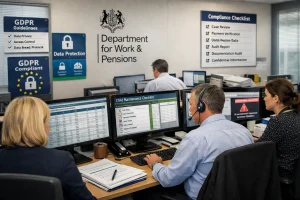
CMS governance is embedded within DWP’s broader compliance and accountability framework. These measures include:
- Annual audits by the National Audit Office
- Adherence to HM Treasury’s financial reporting guidelines
- Internal monitoring systems to detect and prevent fraud
To maintain data protection standards, CMS follows the UK GDPR, and data retention policies have been updated to ensure relevant financial records are kept for audit purposes.
In 2020/21:
- 15 data breaches relating to CMG were reported to the Information Commissioner’s Office
- All breaches were investigated, and corrective training was provided to staff
- Audit trails and internal monitoring tools were improved to enhance transparency
Conclusion
The CMS 2012 Scheme, under the DWP, has made considerable progress in delivering an effective, enforceable, and transparent child maintenance system.
Compliance has improved, debt recovery remains strong, and digital transformation continues to streamline services.
While challenges remain particularly in addressing long-term arrears and maintaining service during external disruptions the system demonstrates resilience, with governance structures and audit standards providing accountability.
The DWP’s commitment to continual improvement suggests the scheme is on track to fulfil its objectives: ensuring children receive the financial support they are owed.
Frequently Asked Questions
What is the difference between Direct Pay and Collect and Pay?
Direct Pay involves parents handling payment arrangements directly, while Collect and Pay is used when the CMS steps in to collect payments from the Paying Parent and deliver them to the Receiving Parent, with additional fees involved.
Can CMS take money directly from a bank account?
Yes, CMS can issue a Deduction Order to take money directly from a bank or building society account if the Paying Parent fails to meet their obligations.
How does CMS handle child maintenance arrears?
Arrears are managed through enforcement actions, payment plans, or write-offs if legally justified. CMS uses tools like court orders, wage deductions, and even passport confiscation to recover unpaid maintenance.
Are Direct Pay payments monitored by CMS?
CMS assumes Direct Pay payments are made on time unless the Receiving Parent reports missed payments. If confirmed, the case may shift to Collect and Pay for enforcement.
Is child maintenance taxable income?
No, child maintenance payments are not considered taxable income for the Receiving Parent, nor are they tax-deductible for the Paying Parent.
What should I do if my income changes significantly?
You should inform CMS immediately. The service can reassess your payments based on new income information, especially if your income changes by 25% or more.
How long does CMS keep client data?
Under GDPR, client data is retained for 14 months after a case closes. However, this has been updated to ensure audit requirements are met without compromising data protection laws.

Leave a Reply