

In the world of Python development, unique identifiers like 54axhg5 often appear in data-driven workflows, particularly in scientific computing and file management.
While not a standard Python feature, such strings serve essential roles in organising datasets, maintaining data integrity, and enabling efficient processing.
This article explores what Python 54axhg5 represents, how it functions within tools like HDF5 and h5py, and why understanding these identifiers is crucial for modern data management and analysis.
What Is Python 54axhg5 And Why Is It Used?
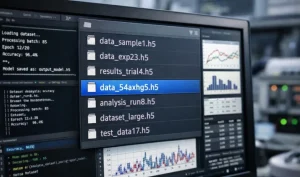
The identifier 54axhg5 is not a built-in module or feature within Python. It is most likely a unique string used to represent a specific element within a project or dataset.
In practice, this type of identifier can be seen in scientific computing, where managing and identifying complex data structures efficiently is vital.
In such environments, identifiers are commonly used for:
- Labelling datasets or experimental runs
- Naming files for version tracking
- Referencing specific data subsets in large storage systems
They are particularly useful when dealing with file formats like HDF5, which support structured data storage and access.
A string like 54axhg5 could represent a key used to store and retrieve a specific dataset or file chunk in such a format.
How Does Python Handle Identifiers Like 54axhg5?
Python provides a robust ecosystem to handle identifiers efficiently in both simple and complex data workflows. Identifiers like 54axhg5 can appear in a variety of applications across a project.
These may include:
- Serving as dataset keys in hierarchical file systems like HDF5
- Acting as session or transaction IDs in applications
- Labeling data points or experiment outputs
Python allows the generation, storage, and usage of these identifiers using standard or third-party libraries designed for secure and consistent data management.
These identifiers often operate in background processes, helping ensure that every piece of data or user session remains unique and traceable across multiple systems.
What Role Does H5py Play In Working With HDF5 Files?

The h5py library is essential in managing HDF5 files in Python. HDF5, a format specifically designed for handling large amounts of numerical data, benefits from the structured approach that h5py provides.
Each file can contain datasets, groups, and attributes, much like folders and files in a file system.
An identifier such as 54axhg5 can serve as a dataset key within the file, helping differentiate between multiple entries.
This structure enables efficient storage, retrieval, and analysis of large-scale data across various scientific domains including astronomy, physics, and machine learning.
Below is a comparative table of how h5py and other formats manage identifiers:
| Format | Identifier Support | Best Use Case | Supports Hierarchy |
|---|---|---|---|
| CSV | Limited | Flat, simple tabular data | No |
| JSON | Yes | Nested, lightweight configurations | Yes |
| HDF5 (with h5py) | Extensive | Complex scientific datasets | Yes |
| SQLite | Yes | Structured relational data | No |
How Can 54axhg5 Function As A Hash Or Checksum In Python?
Identifiers like 54axhg5 are often used as shortened representations of hashes or checksums, especially when tracking data versions, ensuring file integrity, or managing datasets in scientific and enterprise applications.
These compact strings provide a powerful way to uniquely reference a specific file, data block, or process outcome.
What Is A Hash Or Checksum?
A hash is a fixed-length string generated by a mathematical algorithm, used to represent the content of data.
A checksum serves a similar purpose, confirming whether data has been modified or corrupted. Both are commonly used in software development and data storage to maintain accuracy.
Why Use Shortened Hashes Like 54axhg5?
Long hash strings can be difficult to work with in practical scenarios. Shortened versions, such as 54axhg5, provide a balance between uniqueness and usability.
These are typically created by truncating longer hashes (e.g. from MD5, SHA256) for easier file naming or referencing.
Benefits of using shortened hashes:
- Easier to display in file names or logs
- Still retains enough uniqueness for small- to medium-scale use
- Useful for quick lookups and debugging
When Are These Identifiers Typically Generated?
They are usually generated when:
- Creating data files and saving them to disk
- Caching results in memory or storage systems
- Tagging dataset versions during experimentation
- Indexing files in data pipelines for retrieval
Such identifiers ensure that each dataset or file version can be uniquely referenced and recovered when needed.
Where Do You Find Identifiers Like 54axhg5 In Python Projects?

In Python-based systems, identifiers like 54axhg5 often appear in environments that require efficient file naming, dataset referencing, or version control.
These identifiers are embedded within file paths, metadata structures, and data tracking logs to ensure smooth operation in complex workflows.
Common Locations For Unique Identifiers
These identifiers can be found in several places throughout a typical Python project, including:
- File names: Often used to name .h5, .json, or .csv files for uniqueness.
- Dataset keys: Especially in HDF5 files, where they serve as internal paths to data.
- Logs and reports: Appearing as reference points in execution logs.
- Session and cache folders: To maintain uniqueness and avoid overwriting during runtime.
- Database fields: Used as record IDs or internal references.
Use In Scientific And Data Science Workflows
In scientific research and machine learning projects, identifiers such as 54axhg5 help maintain structure within large volumes of data.
Typical use cases include:
- Assigning IDs to experimental runs or simulations
- Mapping identifiers to metadata entries for traceability
- Referencing models, parameters, and outputs in structured directories
These systems rely heavily on consistent and unique identifiers to maintain reproducibility and clarity.
Tracking And Managing These Identifiers
- To maintain control over identifiers like 54axhg5, developers often:
- Maintain lookup tables or mapping files linking IDs to descriptions
- Use logging mechanisms to record identifier creation and access
- Implement automated naming conventions within scripts
Proper identifier management prevents confusion, especially in collaborative environments where multiple developers or researchers are contributing to the same project or dataset.
What Are The Benefits Of Using Unique Identifiers In Python Data Workflows?
Using unique identifiers in data-intensive Python workflows offers several operational benefits. These identifiers help create a reliable, organised, and secure structure that supports the growth and scale of any project.
Key benefits include:
- Ensuring data consistency across systems
- Reducing the chance of overwriting or losing files
- Improving traceability and auditability
- Simplifying the automation of data processing tasks
Here is a summary table highlighting how unique identifiers impact key data management aspects:
| Benefit Area | Impact of Using Unique Identifiers |
|---|---|
| Data Integrity | Prevents duplication and enables validation |
| Workflow Automation | Simplifies batch processing and conditional logic |
| Collaboration | Avoids conflicts and promotes clean data handling |
| Troubleshooting | Enhances the ability to trace data issues quickly |
How Can You Manage And Read HDF5 Files With H5py In Python?

Reading and managing HDF5 files is a fundamental skill in data-heavy Python applications.
h5py allows developers and data scientists to interact with HDF5 files similarly to working with folders and files. Each dataset is accessed using a string key, which can be an identifier like 54axhg5.
The main tasks often involve:
- Opening files in read or write mode
- Accessing datasets by their unique identifier keys
- Extracting or modifying specific datasets
- Reviewing metadata stored within files
- This process ensures efficient memory usage and enables the handling of large datasets without loading everything into memory.
Why Does Python Rely On Unique Strings In Version Control And Session Handling?
In software development and data management, Python often utilises unique strings for tracking changes, managing sessions, and ensuring uniqueness across systems.
These identifiers, which may look like 54axhg5, provide a lightweight method for referencing and controlling state across distributed processes.
They are essential in:
- Version control systems, where each commit or change is assigned a unique hash
- Web applications, where session identifiers maintain user context
- Caching mechanisms, where the cache key must remain consistent with the data
- This form of referencing enables safer concurrency, better performance, and simplified recovery processes when working with dynamic or evolving datasets.
How Can Developers Inspect Or Debug Identifiers Like 54axhg5?
Debugging or inspecting identifiers in Python projects requires a methodical approach, especially when these identifiers are not human-readable.
Developers must trace their origin and understand their context to resolve issues or verify data.
Common practices include:
- Searching across the codebase for occurrences of the identifier
- Reviewing logs that contain identifier references
- Exploring HDF5 files or structured logs to locate associated data
- Cross-referencing with documentation or lookup tables maintained by the team
- By integrating these approaches, developers can efficiently identify the role of strings like 54axhg5 and troubleshoot problems related to data access or integrity.
What Are The Best Practices When Using Data Identifiers In Python?
Effective use of data identifiers helps ensure clarity, reliability, and scalability within Python projects. Although random strings like 54axhg5 are useful, best practices must be followed to avoid confusion or data loss.
Some best practices include:
- Document the meaning or source of each identifier in the code or accompanying documentation
- Use consistent naming conventions for files and datasets
- Avoid reusing identifiers unless intentional and traceable
- Log the creation and usage of each identifier during processing
- Ensure identifiers are not too short to avoid accidental duplication
- Following these guidelines ensures that projects remain maintainable and scalable, even as the volume of data and collaborators increases.
Conclusion
While Python 54axhg5 is not a formal feature or module in the Python ecosystem, it represents a common and critical concept in data handling: the use of unique identifiers.
These strings serve essential roles in managing, tracking, and securing data in Python projects, especially in domains like scientific computing, machine learning, and web development.
Understanding how such identifiers are created, stored, and accessed particularly in tools like h5py for HDF5 files — is vital for any developer or data scientist working with complex data systems.
FAQs
What does the string 54axhg5 represent in a Python project?
It likely represents a unique identifier used in file naming, data tagging, or session tracking. It can serve as a key in datasets or metadata for data integrity.
Is 54axhg5 a built-in Python feature?
No, it’s not a built-in feature. It’s most probably a randomly generated or hashed string used for specific purposes like version control or file tracking.
How can I generate a unique identifier like 54axhg5 in Python?
You can use libraries like uuid or hashlib to generate unique strings. For example, slicing a hash to 7 characters can produce similar outputs.
Can I use 54axhg5 as a dataset name in an HDF5 file?
Yes, HDF5 files allow dataset names to be arbitrary strings. Tools like h5py let you create or access datasets using such names.
Is there a risk in using random strings for identifiers?
Not if they are properly managed. However, without documentation or mapping, random identifiers can become difficult to trace or interpret.
How do I inspect an HDF5 file to see identifiers like 54axhg5?
Use Python’s h5py library or GUI tools like HDFView to browse the structure and see all dataset names and associated metadata.
What are some best practices for using identifiers in scientific Python workflows?
Maintain consistency in naming, document their purpose, avoid duplication, and use logging for traceability.

Leave a Reply