

Music is deeply embedded in human culture, serving as a source of expression, emotion, and reflection across centuries. Yet in Islam, the question “Is music haram?” continues to stir passionate discourse among scholars, students, and everyday Muslims.
Unlike clearly defined prohibitions in Islamic law, such as the consumption of alcohol or theft, music occupies a more nuanced space.
With no explicit verse in the Qur’an banning it, but with hadith that seem to warn against its dangers, Islamic opinions range from full prohibition to conditional permissibility.
This blog aims to unpack the complexities of this topic through the lens of Qur’anic interpretation, hadith analysis, classical jurisprudence, and modern cultural context.
We’ll also explore how Islamic views compare across denominations and religious traditions, while grounding the discussion in practical examples.
What Does Islam Actually Say About Music and Why Is the Debate So Divided?

The controversy surrounding music in Islam arises from the interplay between ambiguous scriptural references, varied hadith, and scholarly interpretation. Over time, cultural practices and differing schools of Islamic thought have contributed to a wide spectrum of views.
For example:
- Some scholars cite prophetic narrations that group music with sinful acts like adultery and drinking.
- Others argue that the Qur’an’s silence on the issue implies neutrality and that context should guide rulings.
Why the Confusion Exists?
- Lack of direct verses in the Qur’an banning music
- Diverse interpretation of hadith (some weak or context-dependent)
- Jurisprudential differences across Sunni and Shia schools
- Cultural traditions and generational shifts in understanding
Hence, music in Islam is not merely a matter of religious law but also cultural influence, historical precedent, and spiritual perspective.
How Do Quranic Interpretations Shape the Question: Is Music Haram?
Unlike some religious texts that offer clear prohibitions, the Qur’an does not explicitly mention music. This ambiguity has opened the door to a spectrum of scholarly interpretation. One frequently cited verse is Surah Luqman (31:6):
“And of the people is he who buys idle talk to mislead [others] from the way of Allah without knowledge and who takes it in ridicule. Those will have a humiliating punishment.”
Some classical scholars, such as Ibn Mas’ud and Al-Hasan al-Basri, interpreted “idle talk” (lahw al-hadith) as a reference to music and singing. This interpretation formed the foundation of many conservative rulings against music.
However, others argue that this interpretation is not conclusive. Prominent modern scholars like Yusuf al-Qaradawi and Mahmud Shaltut highlight that the verse condemns behaviour that leads to misguidance and sin, not music itself.
Therefore, they suggest, if music carries positive messages or brings one closer to ethical conduct, it may not be haram.
What Do Hadith Say About Music and Are They Considered Authentic?

The hadith literature contains both critical and tolerant views of music, which has led to considerable scholarly debate. Some hadiths, such as the one narrated in Sahih al-Bukhari, appear to condemn musical instruments:
“There will be among my ummah people who will regard as permissible adultery, silk, alcohol and musical instruments…”
This narration is frequently cited by scholars who oppose music, arguing that its placement alongside major sins suggests its impermissibility.
However, the authenticity and interpretation of such hadiths are not unanimously accepted. Islamic jurists like Ibn Hazm, Al-Ghazali, and Abu Bakr ibn al-Arabi have questioned their chains of narration and context. Imam al-Ghazali notably stated:
“All these Ahadith are reported by al-Bukhari, and singing and playing are not haram.”
Moreover, there are hadiths that show tolerance toward music, especially in specific contexts. A notable example is the incident narrated by Aisha (RA), where the Prophet (PBUH) permitted two young girls to sing with a tambourine during Eid:
Leave them, Abu Bakr, for every nation has a festival, and this is ours.
Such instances suggest that music is not inherently forbidden but must be judged within its specific context.
How Do Sunni, Hanafi and Other Islamic Schools of Thought View Music?
Music has been debated for centuries within Sunni Islam, with scholars offering diverse interpretations shaped by culture, context, and jurisprudence. While some schools take a stricter stance, others allow room for nuance and intention.
Overview of Sunni Jurisprudential Opinions
All four major Sunni schools of thought, Hanafi, Maliki, Shafi’i, and Hanbali, have discussed music extensively, but their conclusions vary:
- Hanafi School: Generally conservative, often citing classical scholars like Abu Hanifa who discouraged music, yet some later Hanafi jurists made room for exceptions, especially in non-sinful contexts.
- Maliki and Shafi’i Schools: Mixed approaches; some early jurists permitted music if it lacked immoral themes.
- Hanbali School: Traditionally the strictest, often aligning with the view that music, particularly instrumental, is haram.
The IslamQA and Salafi Perspective
Websites like IslamQA adopt a Salafi-influenced view, often issuing blanket rulings against music, relying heavily on conservative interpretations of hadith. Their position is that music is a distraction from faith and encourages immoral behaviour.
Alternative Views Within Sunni Thought
Despite these conservative stances, many contemporary Sunni scholars have adopted contextual frameworks. They argue that music should not be judged solely on instruments or rhythm, but on:
- The message of the lyrics
- The emotional or behavioural impact on the listener
- Whether it promotes or distracts from Islamic values
Is There Punishment for Listening to Music in Islam According to Classical and Modern Scholars?

There is no explicit or defined worldly punishment in Islamic law for simply listening to music. Classical scholars who discouraged music generally focused on its potential spiritual effects rather than legal penalties.
They argued that music could encourage hypocrisy in the heart, distract believers from prayer, and gradually desensitise the soul toward sinful behaviour. These views were largely cautionary rather than punitive.
In contrast, many modern scholars take a more nuanced approach. Scholars like Sheikh Ahmad Kutty and Dr. Shabir Ally argue that declaring all music haram contradicts core Islamic legal principles, especially when the music does not promote immoral actions.
As Sheikh Kutty states, “If a thing leads to haram, it becomes haram,” meaning music itself cannot be universally forbidden. Contemporary perspectives therefore favour balance, context, and intention over blanket prohibition.
What Types of Music Are Considered Haram, Makruh, or Halal in Islamic Scholarship?
Islamic rulings on music are often contextual rather than absolute. Scholars categorise music based on content, effect, and purpose.
Generally Considered Haram
- Songs promoting alcohol, drug use, fornication
- Music that leads to missing prayers or religious obligations
- Performances involving sexually suggestive dances or mixed-gender parties
Considered Makruh (discouraged)
- Music that is emotionally overwhelming or consumes too much time
- Songs with ambiguous or secular themes, depending on interpretation
Considered Halal
- Nasheeds (vocal-only religious songs)
- Songs promoting positive values (e.g., charity, justice)
- Instrumental music used for therapeutic or cultural reasons (drums, tambourine)
- Sufi music or devotional chants used for spiritual reflection
Types of Music and Their Islamic Rulings:
| Type of Music | Ruling | Conditions |
|---|---|---|
| Nasheed (Vocal-only) | Halal | Must not include immoral content |
| Classical/Instrumental | Makruh/Halal | Permissible if not promoting haram acts |
| Pop/Rap with explicit content | Haram | Promotes sin, distracts from worship |
| Sufi or devotional (e.g. Qawwali) | Halal/Contested | Accepted in many Sufi traditions |
| Music at Islamic celebrations | Halal | If culturally appropriate and avoids mixed dancing |
How Do Muslims Today Interpret the Question on Social Platforms Like Reddit and Quora?
On platforms such as Reddit, Quora, and Islamic discussion forums, the question “Is music haram?” draws a variety of perspectives.
Users often share:
- Personal experiences: Some say music helped them through depression or brought them closer to God.
- Cultural considerations: Converted Muslims or Muslims from non-Arab cultures often express confusion over rigid rulings.
- Critical views: Some challenge hadith authenticity or the socio-political reasons behind historical bans.
For example, a Reddit user in r/religion remarked:
“The Quran doesn’t say music is haram. It’s scholars with differing views who interpret it that way.”
This growing discourse reflects a shift in how young Muslims engage with religious teachings, emphasising personal reflection alongside scholarly interpretation.
How Does the Islamic Perspective on Music Compare with Christianity and Other Faiths?
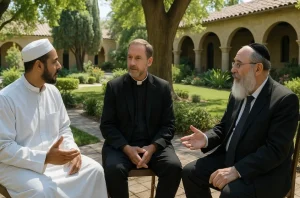
In Christianity, music plays a central role in worship and spiritual life. Many churches embrace instruments and choirs as forms of glorifying God. However, conservative sects may oppose certain genres or lyrics, similar to Islamic concerns over content.
In Hinduism and Buddhism, music is deeply embedded in religious rituals and meditation practices. It is generally seen as a sacred expression rather than a moral threat.
| Religion | General View on Music | Restrictions Applied |
|---|---|---|
| Islam | Varies: from haram to permissible | Content, context, effect on worship |
| Christianity | Encouraged in worship | Lyrics must align with Christian morals |
| Judaism | Used in prayers and festivals | Some sects restrict during mourning or Shabbat |
| Hinduism | Spiritual and ritual use celebrated | Rarely restricted unless content is offensive |
| Buddhism | Used in chanting and meditation | No known universal prohibitions |
Is Music Haram in Practice or Is It More About Its Effects on the Listener?
Many Islamic scholars argue that music itself is not inherently haram; rather, what truly matters is its effect on the listener’s mind, behaviour, and spiritual state.
From this perspective, music that inspires reflection, gratitude, emotional calmness, or a stronger connection to God is viewed as acceptable, even spiritually uplifting. Likewise, melodies that help with focus, relaxation, or emotional well-being are generally seen as permissible as long as they avoid themes that promote immorality, sin, or heedlessness.
As Sheikh Ahmad Kutty emphasises, stating that all music is haram oversimplifies a much more nuanced issue. This balanced view suggests that intention, content, and impact carry more weight in Islamic ethics than the mere presence of instruments or melodies.
Conclusion
The question of whether music is haram in Islam cannot be answered with a simple yes or no. It requires understanding scripture, scholarly interpretations, and individual intention.
Islam does not provide one universal ruling that bans all music. Instead, the judgement depends on the type of music, its message, the listener’s spiritual state, and the context in which it is used.
In today’s world, where music is everywhere, Muslims are encouraged to approach it thoughtfully and ethically, ensuring it supports their values and strengthens their faith.
Frequently Asked Questions
Does modern pop music fall under the category of haram according to scholars?
Many scholars consider pop music haram if it contains lyrics that promote sin, such as drinking or sexual immorality. However, the ruling may differ if the content is neutral or positive.
Are musical instruments treated differently from vocals in Islamic law?
Yes. Instruments are often viewed with greater scrutiny. While vocals (e.g., nasheeds) are generally accepted, some scholars allow percussion instruments like the daf or tambourine.
Is it permissible to listen to music if it helps with mental health or relaxation?
Some modern scholars argue that therapeutic or calming music can be permissible, provided it doesn’t distract from religious duties or contain haram content.
Do all Islamic countries apply the same rules regarding music?
No. The implementation of music-related rulings varies widely by country. For instance, Iran had strict bans in the past, while countries like Egypt and Turkey have more lenient cultural practices.
How do Sufi traditions justify their use of music in spiritual practice?
Sufi orders often use music (e.g., Qawwali) as a tool for dhikr (remembrance of God). They argue that music, when spiritually driven, brings the soul closer to the Divine.
Can children listen to educational songs that contain musical elements?
Educational or moral songs for children are widely accepted by scholars, especially if they teach good values and avoid inappropriate themes.
Did early Muslim civilisations historically embrace musical culture?
Yes. During the Islamic Golden Age, music was studied and developed scientifically, particularly in Andalusia, Persia, and the Ottoman Empire.

Leave a Reply