
Paul Walker, best known for his role as Brian O’Conner in the Fast & Furious franchise, met an untimely and tragic end on 30 November 2013.
His death at just 40 years old shocked fans across the globe and left an unfillable void in both Hollywood and his personal community. While he had taken a short break from filming Furious 7, a casual visit to a charity event turned into a fatal car crash that took his life and that of his friend, Roger Rodas.
What Were the Events Leading Up to Paul Walker’s Death?

Thanksgiving 2013: A Grateful Moment
On 28 November 2013, Paul Walker shared a Thanksgiving message on Twitter. At that point in his life, everything appeared to be going well. The sixth Fast & Furious film had become a box office hit, and his personal life was stable.
Walker was excited about his production projects, his involvement in philanthropy, and spending time with his daughter, Meadow.
The Charity Event for Reach Out Worldwide
Two days later, Walker attended a charity event in Santa Clarita for Reach Out Worldwide, a disaster relief organisation he had founded.
The event aimed to support victims of Typhoon Haiyan in the Philippines and was hosted at Always Evolving, a high-performance car shop co-owned by Walker and his friend Roger Rodas.
Walker was reportedly cheerful and relaxed, enjoying the opportunity to interact with fans and raise awareness for the cause. Before the event concluded, he and Rodas decided to take a short drive in one of the shop’s sports cars.
Where Did the Paul Walker Car Crash Happen?
The Streets of Santa Clarita
The fatal crash occurred on a quiet street in the Valencia area of Santa Clarita. This part of the city, with its wide and relatively empty roads, was often used informally for high-performance test drives.
Walker and Rodas left the charity event in a 2005 Porsche Carrera GT and travelled only a few hundred yards before tragedy struck.
Inside the High-Performance Car Shop
Always Evolving was more than a car showroom it was a hub for enthusiasts, collectors, and racers. The Porsche Carrera GT they took out was a powerful but notoriously difficult car to control.
With over 600 horsepower and no electronic stability control, it demanded expert handling even under the best conditions.
What Caused the Fatal Crash That Killed Paul Walker?

The crash that killed Paul Walker on 30 November 2013 shocked the world not just because of his fame, but because of how quickly it happened. A combination of factors led to the fatal impact speed, vehicle condition, and design limitations all played a role.
The Speed and Sequence of the Crash
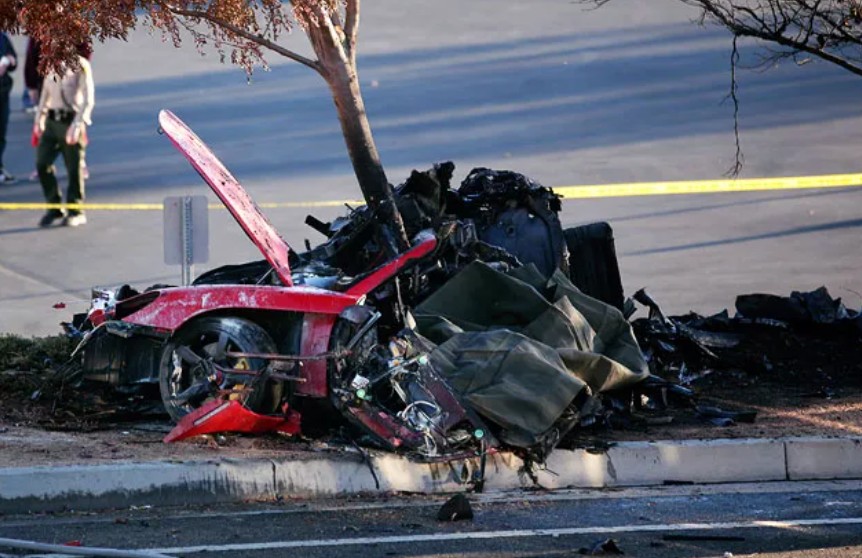
Authorities later determined that the 2005 Porsche Carrera GT was travelling at approximately 100 miles per hour when it lost control on a relatively quiet road in Santa Clarita. The car struck a curb, then a tree, followed by a light pole, before spinning and hitting another tree.
The impact caused the car to split almost in half, and the fuel system ignited, leading to an intense fire that engulfed the vehicle within seconds. The crash occurred just a few hundred yards from the charity event where Walker and Rodas had been moments earlier.
The Nature of the Porsche Carrera GT
The Porsche Carrera GT is considered one of the most challenging cars to handle among supercars of its era. It was built with raw racing technology and lacked many of the modern electronic aids that make high-performance cars more stable today.
Key design characteristics included:
- No electronic stability control, making it easy to lose control at high speeds
- A V10 engine producing 612 horsepower
- A lightweight carbon-fibre chassis, offering minimal protection in severe crashes
- High sensitivity to road conditions, especially at racing speeds
Even for experienced drivers, this model demanded precision and restraint.
The Condition of the Tyres
During the investigation, it was found that the Porsche’s tyres were over nine years old. Although not visibly damaged, rubber compounds degrade over time, reducing grip and traction. This may have caused the vehicle to lose stability during acceleration.
Environmental and Road Factors
At the time of the crash, the weather was clear and the road was dry. The stretch of road where the accident occurred was known locally as a site where enthusiasts occasionally tested vehicles due to its wide lanes and lack of heavy traffic. However, it was not designed for high-speed driving.
The combination of:
- Excessive speed
- Ageing tyres
- Lack of stability control
- Sudden steering inputs
proved catastrophic, leaving little room for recovery once the car began to slide.
The coroner’s report and crash reconstruction concluded that speed was the dominant cause, but the lack of modern safety features amplified the consequences.
How Did Paul Walker and Roger Rodas Die in the Crash?
The deaths of Paul Walker and Roger Rodas were both immediate and devastating, the result of extreme impact forces and fire. Despite their experience and safety precautions, neither could survive the magnitude of the crash.
The Moments Immediately After Impact
Witnesses at the nearby charity event reported hearing a loud explosion followed by black smoke. Within moments, bystanders rushed to the scene and found the Porsche fully ablaze. Several employees and friends of the men tried desperately to help, but the fire was too intense.
According to reports:
- The crash occurred at around 3:30 p.m.
- The fire engulfed the car within less than one minute
- The flames reached several metres high, fuelled by the ruptured fuel system
Roger Rodas’ Fatal Injuries
Roger Rodas, who was driving, suffered multiple traumatic injuries upon impact. The coroner determined that he died instantly from blunt force trauma to the head, neck, and chest.
The autopsy revealed:
- Severe head and chest trauma
- Immediate loss of consciousness
- Death before the fire ignited
Rodas’ seatbelt was fastened, and his airbag deployed correctly, but the impact forces were beyond survivable limits.
Paul Walker’s Final Moments
Paul Walker, seated in the passenger seat, initially survived the collision but was trapped by the crumpled frame of the car. As the flames spread, he became unable to escape.
The autopsy report indicated that he died from a combination of traumatic and thermal injuries, meaning that the fire contributed to his death after the initial impact.
His injuries included:
- Fractures to the jaw, ribs, pelvis, and spine
- Severe burns across the body
- Traces of soot in the trachea, suggesting brief breathing after impact
Although bystanders attempted to extinguish the flames using fire extinguishers, they could not get close enough to rescue either man.
Efforts to Rescue the Victims
Those present at the event, including employees and Rodas’ young son, immediately ran toward the crash site. One witness described the scene as “engulfed in flames,” while others tried repeatedly to open the doors and use multiple fire extinguishers.
Despite these heroic efforts:
- The fire was too intense to control
- Emergency services arrived within minutes but found both men deceased
- The car was reduced to a burned-out shell by the time firefighters subdued the blaze
Coroner’s Findings and Aftermath
The Los Angeles County Coroner’s Office concluded that:
- Roger Rodas died from multiple traumatic injuries
- Paul Walker died from combined traumatic and thermal injuries
- Both deaths were classified as accidental
- No alcohol or drugs were present in their systems
These findings helped put to rest rumours of reckless behaviour or impairment, focusing instead on the tragic combination of speed, vehicle design, and circumstance.
What Did the Investigation Reveal About Paul Walker’s Death?
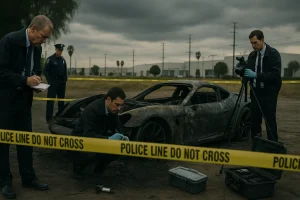
The Los Angeles County Sheriff’s Department and the California Highway Patrol led a thorough investigation. Their findings pointed to excessive speed as the primary cause.
There was:
- No mechanical failure in the car
- No indication of drug or alcohol use
- No other vehicles involved in the crash
A surveillance video from a nearby building helped confirm that the vehicle was travelling at extreme speed when it lost control. Although the tyres were not bald, their age significantly compromised their performance.
The coroner’s final report described the sequence of the crash in detail, noting that the driver lost control, struck multiple fixed objects, and the vehicle spun before catching fire.
Did Porsche Face Any Legal Action After Paul Walker’s Death?
Meadow Walker’s Wrongful Death Lawsuit
In 2015, Meadow Walker filed a wrongful death lawsuit against Porsche. The complaint alleged that:
- The Carrera GT lacked adequate safety features
- The seatbelt design caused internal injuries by trapping Walker
- The car’s structure made it more prone to catching fire after a crash
Her legal team described the car as a dangerous product that shouldn’t have been street legal.
Porsche’s Defence and Findings
Porsche strongly contested these claims. Their defence stated:
- The car had been improperly modified and driven at unsafe speeds
- It was designed for skilled drivers and not intended for standard road use
- Walker and Rodas accepted the risks associated with driving a high-performance vehicle
Eventually, the case was settled out of court in 2017, and the terms of the agreement were kept confidential.
How Did the World React to Paul Walker’s Sudden Death?
News of Paul Walker’s passing spread quickly and led to widespread mourning. Fans gathered at the crash site, leaving behind flowers, candles, and personal tributes. Car enthusiasts organised tribute drives and memorial meets in cities across the globe.
His Fast & Furious co-stars, particularly Vin Diesel, expressed their heartbreak publicly. Diesel posted a heartfelt tribute, calling Walker his “brother” and highlighting the bond they had developed over years of working together.
Universal Pictures paused production of Furious 7 to allow the cast and crew to grieve and to consult with Walker’s family on how best to proceed with the film.
What Was Paul Walker’s Legacy Beyond Fast & Furious?
Paul Walker’s career spanned much more than street racing films. While he rose to global fame with Fast & Furious, he had also appeared in dramas, comedies, and independent films. He brought a grounded and authentic energy to his performances that resonated with audiences.
Beyond the screen, he was passionate about:
- Ocean conservation and marine biology
- Volunteer disaster relief work
- Supporting underprivileged communities
He established Reach Out Worldwide after witnessing the devastation caused by the 2010 earthquake in Haiti. The charity has since provided aid in disaster-stricken areas around the world and continues to operate in his memory.
His daughter Meadow Rain Walker now manages the Paul Walker Foundation, promoting his core values and charitable work.
How Was Furious 7 Completed After Paul Walker’s Passing?
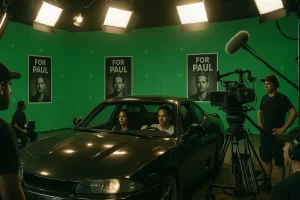
After Walker’s death, production on Furious 7 was suspended while filmmakers rewrote the script and planned a respectful way to complete the film. His brothers, Cody and Caleb Walker, stepped in as body doubles for some of the remaining scenes.
Visual effects technology allowed the filmmakers to digitally recreate Walker’s face for certain moments. The final result was seamless and allowed the story to close with dignity.
The film ended with a now-iconic farewell scene where Brian O’Conner drives into the sunset, a symbolic goodbye to both the character and the actor. A tribute card reading “For Paul” appears on-screen just before the credits roll.
The emotional conclusion of Furious 7 was met with critical acclaim and audience praise, making it one of the most heartfelt moments in the franchise.
Conclusion
Paul Walker’s death serves as a sobering reminder of the dangers of high-speed driving, even among skilled professionals. It also highlights how fleeting life can be, no matter one’s fame or fortune.
More than being a Hollywood movie star, Walker left behind a legacy of compassion, generosity, and dedication to humanitarian causes. His death shocked the world, but his life continues to inspire.
FAQs About Paul Walker’s Death
How fast was the car going when Paul Walker died?
The Porsche Carrera GT was travelling at approximately 100 miles per hour at the time of the crash, significantly over the speed limit for that area.
Was Paul Walker driving when the crash happened?
No, Paul Walker was in the passenger seat. The car was being driven by his friend and business partner, Roger Rodas.
Were drugs or alcohol involved in the crash?
Toxicology reports confirmed that neither Paul Walker nor Roger Rodas had consumed alcohol or drugs prior to the crash.
Did any mechanical failure cause the crash?
Investigators found no signs of mechanical failure. However, the vehicle’s tyres were over nine years old, which may have contributed to the crash.
What did Paul Walker’s autopsy report reveal?
The autopsy concluded that Walker died from traumatic and thermal injuries. His body was severely burned, and he had multiple fractures.
Where is Paul Walker buried?
Paul Walker was cremated and laid to rest at Forest Lawn Memorial Park in Los Angeles, California.
What is Paul Walker’s daughter doing now?
Meadow Walker is a model and philanthropist. She manages the Paul Walker Foundation and is actively involved in charitable work, especially around ocean conservation.
Featured Image – Source

Leave a Reply