
Last Updated on AUG 20, 2026
In the UK, the law does not single out just one part of a car. Drivers are responsible for ensuring their vehicle remains roadworthy whenever it is used on the road.
This means safety-critical components such as tyres, brakes, steering, lights, mirrors, windscreens, wipers and seat belts must be maintained in a safe and serviceable condition.
Having a valid MOT does not guarantee that a vehicle is currently roadworthy, as faults can develop between tests. Driving a vehicle in a dangerous condition can lead to a fine of up to £2,500, three penalty points and a possible driving ban.
Drivers should therefore carry out basic safety checks regularly, particularly before setting off, and repair defects as soon as they appear. Keeping the vehicle roadworthy is both a legal responsibility and an essential part of protecting everyone using the road.
Why Is It a Legal Requirement to Maintain Certain Car Parts?
The legal requirement is broader than simply maintaining individual car parts. A vehicle used on the road must remain roadworthy, and many Highway Code rules marked “MUST” or “MUST NOT” reflect requirements contained in road traffic legislation.
Safety-critical equipment such as tyres, brakes, steering, lights and visibility equipment must therefore meet the relevant legal standards.
A valid MOT does not remove this responsibility. A vehicle can become unsafe after passing its test, and the driver is still responsible for ensuring it is roadworthy whenever it is driven.
Authorities enforce these requirements through regular MOT tests and random roadside inspections. If a vehicle is found to be unsafe or non-compliant, the driver may receive a fine or points on their licence.
Key reasons the law mandates maintenance:
- To reduce the risk of road accidents
- To control harmful emissions and environmental impact
- To maintain clear identification through number plates
- To ensure safe vision and signalling through mirrors and lights
By complying, you contribute to safer roads and avoid legal complications.
What Happens If You Drive a Car That Isn’t Legally Roadworthy?

Driving a car that isn’t legally roadworthy is a direct violation of UK traffic laws. If your car is deemed unsafe, you could face an on-the-spot fine, points on your driving licence, and even a court appearance for severe breaches. Your insurance might also be invalidated.
The legal consequences depend on the specific fault and whether it has already been flagged, such as during an MOT failure.
The more critical the part, like tyres or brakes, the more severe the penalty. A small crack in your windscreen might earn a warning, while bald tyres could cost you hundreds of pounds.
| Vehicle Problem | Current Position |
|---|---|
| Dangerous vehicle condition | Up to £2,500 fine, 3 penalty points and possible driving ban |
| Illegal tyre | Up to £2,500 fine and 3 penalty points per tyre |
| Broken light or similar defect | Police may issue a vehicle defect rectification notice requiring the fault to be repaired and proof provided |
| Incorrectly displayed number plate | Up to £1,000 fine and the vehicle can fail its MOT |
| Dangerous MOT defect | The vehicle must not normally be driven until the dangerous defect has been repaired |
How Do You Know Which Car Parts Are Legally Required to Be Maintained?
Understanding which aspects of your vehicle must be legally maintained can be unclear, especially for those new to driving.
However, UK driving laws outline clear safety standards that every roadworthy vehicle must meet. These requirements are not optional, they are enforced to ensure public safety and minimise risks on the road.
As a driver, you are expected to know which components are monitored during MOTs and routine checks. Non-compliance with these legal standards could lead to fines, licence points, or even prosecution in severe cases.
General indicators that something falls under legal maintenance:
- The part affects your visibility, control, or communication on the road
- It’s checked during an annual MOT inspection
- Failure could lead to immediate danger or a breakdown
- It’s essential for identifying your vehicle clearly
- There are specific government-set standards for its performance
Familiarity with these criteria helps you stay legally compliant and road safe.
What Part of the Car Does the Law Require You to Keep in Good Condition?
Understanding exactly which parts of your vehicle must be kept in good condition by law is essential for avoiding penalties and ensuring safety. Below is a comprehensive breakdown of each legally required component and why it’s crucial to keep them properly maintained.
1. Tyres

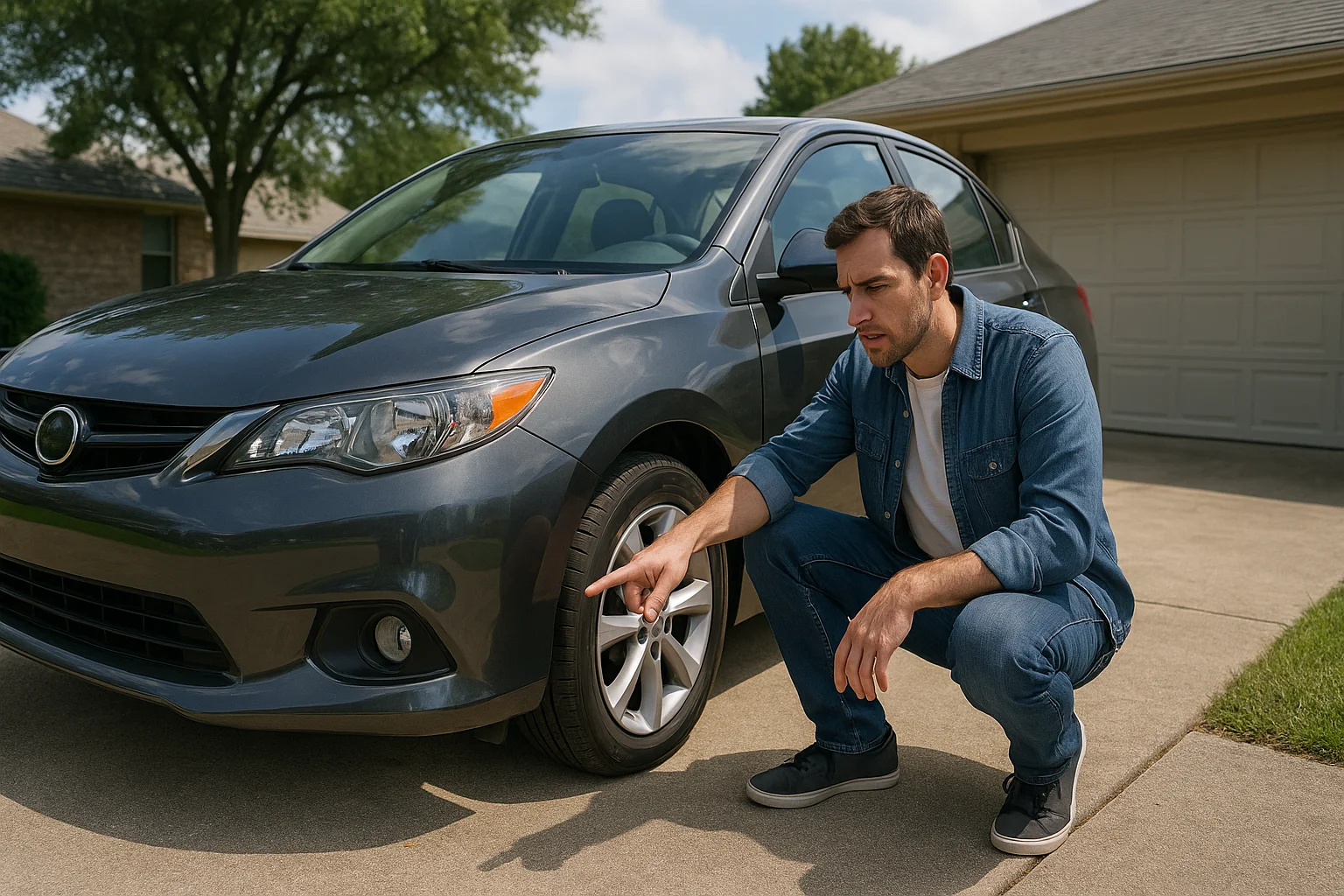
Tyres are among the most critical components of your vehicle when it comes to road safety and legal compliance. They directly affect your grip on the road, steering response, and braking distance, especially in adverse weather conditions.
UK law is clear: tyres must meet a minimum tread depth requirement and be free of visible damage. Driving with illegal tyres not only increases your risk of losing control but can also lead to hefty penalties.
- Legal tread depth: 1.6mm across the central three-quarters
- Must be inflated according to the vehicle’s specification
- Tyres must be free from deep cuts, bulges, and exposed cords
- Penalty: Up to £2,500 fine and 3 penalty points per tyre
2. Brakes and Steering
Brakes and steering are fundamental roadworthiness components and must remain in safe working condition. Government vehicle-safety guidance specifically advises drivers to make sure their brakes work before driving, while brake and steering defects are also assessed during the MOT.
Problems such as ineffective braking, serious brake imbalance, excessive steering play, damaged steering components or faults that significantly affect vehicle control can be classified as major or dangerous MOT defects.
- Brakes must operate effectively and safely
- Brake components should not have dangerous wear, leaks or damage
- Steering should operate correctly without unsafe levels of play
- Steering components must remain secure and free from serious defects
- Warning signs affecting braking or steering should be investigated promptly
3. Lights and Indicators

Your vehicle’s lighting system ensures you can see and be seen. Properly working lights are essential for safe driving at night, during poor weather, and when signalling to other road users.
If any of your external lights are not working, you are breaking the law. This includes not only headlights but also indicators, brake lights, fog lights, and even number plate lights.
- All bulbs must be fully functional and bright
- Replace cracked or foggy lenses immediately
- Test your lights weekly or before long journeys
- Failing lights can result in MOT failure or on-the-spot fines
4. Windscreen and Wipers

A clean, crack-free windscreen is vital for clear visibility. Even small chips or cracks can impair your vision, especially when hit by direct sunlight or headlights at night.
Wiper blades also play a significant role in keeping your windscreen clear during rain, snow, or road spray.
If they leave streaks or make noise, they may not be working effectively:
- Windscreen damage larger than 10mm in MOT Zone A or larger than 40mm elsewhere in the swept area must be assessed, but an MOT failure depends on whether the damage significantly affects the driver’s view
- Wipers must operate correctly and provide an adequate clear view through the windscreen
- Windscreen washers must supply enough fluid for the wipers to clear the screen effectively
- Obstructions or serious windscreen damage that significantly restrict the driver’s view can result in an MOT failure and may make the vehicle unsafe to drive
5. Seat Belts

Seat belts are legally required in almost all driving scenarios and significantly reduce the risk of injury during a crash. It is the driver’s responsibility to ensure all passengers are buckled, particularly those under 14.
Belts must lock on impact, retract smoothly, and not be frayed or cut. Damaged or malfunctioning belts can fail your MOT and result in legal action if discovered by police.
- Seat belts must be functional for all passengers
- Children under 3 must use a proper child restraint
- Children aged 3–13 must be secured by the driver
- Medical exemptions require certified documentation
6. Mirrors

Mirrors are a key part of your ability to observe and respond to your surroundings while driving. A missing or damaged mirror severely restricts your ability to drive safely and legally.
The number and position of mirrors legally required depend on the vehicle’s type and when it was first used.
For most modern passenger cars first used on or after 26 January 2010, the required rear-view equipment normally includes the driver-side exterior mirror, passenger-side exterior mirror and an interior rear-view mirror.
However, an interior mirror is not required where it cannot provide an adequate view to the rear.
All obligatory mirrors or approved indirect-vision devices must be secure and provide the driver with an adequate view. Missing, excessively damaged or ineffective obligatory mirrors can result in an MOT failure.
- Must provide a full, unobstructed view of the rear and side areas
- Cracks, loose fittings, or poor visibility can result in MOT failure
- Clean mirrors regularly to avoid distorted views
- Adjust before every journey for optimal visibility
7. Number Plates

Your number plates are how your vehicle is identified legally on the road. They must be clearly readable at all times, without obstruction from dirt, damage, or decorative frames.
Plates must also follow specific formatting rules, including font size, spacing, and reflective materials. Driving with illegible or improperly formatted plates is a legal offence.
- Number plates must be clean and fully visible
- Should be securely fastened, no hanging or broken plates
- Must use UK-standard font, colour, and spacing
- Dirty or damaged plates can result in a fine or MOT failure
8. Exhaust and Emissions

The exhaust system controls harmful emissions and noise levels from your vehicle. A damaged or worn-out exhaust can release excessive pollutants or noise, both of which are illegal under UK law.
Your car must also meet specific emissions standards, which are tested during your MOT. Failing to meet these limits is one of the most common reasons vehicles fail their MOT.
- Check for loud engine noise or smoke from the tailpipe
- Ensure your catalytic converter and DPF (if applicable) are functioning
- Emissions must fall within legal environmental limits
- Faulty exhaust systems often lead to MOT failure and fines
How Often Should You Check Your Car to Stay Compliant?
To remain safe and roadworthy, some basic checks should be made more frequently than every few weeks. GOV.UK advises drivers to check before driving that the windscreen, windows and mirrors are clean, all lights are working and the brakes operate correctly.
Other items, including tyre condition and tread depth, engine oil, brake fluid, battery and washer-fluid levels, should be checked at the intervals recommended in the vehicle handbook.
Tyres should also be checked before important or long journeys, particularly when carrying additional passengers or luggage because the correct pressure can depend on the load.
An MOT only confirms that the vehicle met the required test standards at the time it was inspected. It does not guarantee roadworthiness for the following year, so defects that develop afterwards still need to be identified and repaired.
It’s especially important to inspect your vehicle before long journeys or during seasonal changes such as winter or heavy rain.
While the MOT test covers legal requirements once a year, many faults can develop between those checks.
That’s why regular maintenance plays a critical role in road safety. Think of it as preventative care, the sooner you notice a potential issue, the easier (and often cheaper) it is to fix.
If in doubt, consult your vehicle handbook for recommended intervals, or ask a qualified mechanic for advice. Regular checks aren’t just good practice, they’re part of your responsibility as a driver.
Who Is Responsible for Ensuring Vehicle Compliance?

The responsibility for keeping a vehicle legally compliant rests squarely with the driver. Whether you own the car or are simply using it temporarily, you’re expected to ensure it’s in a roadworthy condition every time you drive. This legal obligation applies regardless of who last serviced or maintained the vehicle.
Failing to ensure compliance can result in on-the-spot fines, MOT failures, or even invalidated insurance. It’s not enough to assume everything is fine, as the driver, you’re the final checkpoint before the vehicle hits the road.
Key responsibilities include:
- Checking for visible signs of damage or wear before driving
- Keeping essential components clean and functional
- Booking regular services and MOTs within legal timeframes
- Ensuring other occupants (especially children) follow legal safety measures
When it comes to seat belts?
- Drivers must ensure passengers under 14 are properly secured
- Passengers aged 14 and above are responsible for themselves
- Children under 3 must be in legally approved child restraints
Even if the vehicle is part of a fleet or company-owned, the person behind the wheel is still responsible for conducting pre-drive checks. Compliance starts with the individual operating the vehicle.
How Can Technology Help You Keep Your Car Roadworthy?
Modern technology has made it much easier to keep your car in line with UK legal standards. Many vehicles today come with built-in systems that monitor performance and safety components, giving you alerts if something needs attention.
For example, dashboard warning lights can notify you about tyre pressure, low fluids, or light malfunctions before they become a legal issue.
There are also mobile apps and online tools that can help you stay organised.
You can receive MOT reminders, track your vehicle’s service history, and create customised checklists for regular inspections.
Digital tools offer extra peace of mind, especially for busy drivers who might forget essential dates or maintenance tasks.
Even something as simple as a tyre tread gauge or a home diagnostics scanner can be useful. These small tech tools help you detect issues early and avoid surprises at MOT time. Embracing technology isn’t just convenient, it’s a smart way to stay safe and compliant.
What Steps Should New Drivers Take to Stay Legally Compliant?

New drivers often focus on mastering the rules of the road, but learning how to keep a car legally compliant is just as important.
Legal responsibility starts from the moment you get your licence, and a lack of knowledge is no excuse in the eyes of the law.
Fortunately, building a few good habits early on can make car maintenance straightforward and stress-free.
Understand Your Responsibilities
Learn which safety features are legally required and how to identify signs of wear or damage. Use DVLA guidance and trusted resources to educate yourself.
Build a Maintenance Routine
Following a regular routine helps keep your car roadworthy between services. Use reminders or checklists to stay consistent.
- Inspect key components weekly
- Clean your vehicle regularly, especially the number plate and mirrors
- Listen for unfamiliar sounds or warning lights
- Don’t ignore minor issues, they often get worse
Use This Quick-Reference Table:
| Item | When to Check | Legal Focus |
|---|---|---|
| Visibility | Weekly | Clear view of road |
| Identification | As needed | Legible number plate |
| Road Safety Items | Monthly | Must be operational |
| Comfort Features | Optional | Not legally required |
| MOT Due Date | Annually | Must not be overdue |
By staying alert and proactive, new drivers can avoid legal pitfalls and develop safe, responsible habits for life.
Conclusion
Keeping a car legally roadworthy involves much more than simply passing its annual MOT. Tyres, brakes, steering, lights, mirrors, windscreen and wipers, seat belts, number plates and exhaust or emissions systems all need to remain safe and compliant while the vehicle is being used.
Drivers should carry out basic checks before setting off, follow the vehicle manufacturer’s maintenance guidance and deal with faults promptly. A valid MOT does not provide a defence for driving a vehicle that has subsequently become dangerous or unroadworthy.
Regular checks therefore help motorists avoid MOT failures and penalties while, most importantly, reducing the risk posed by unsafe vehicle defects.
Frequently Asked Questions
Are there exemptions for classic or vintage vehicles?
Yes, some vehicles over 40 years old may be exempt from MOTs, but still must be kept in roadworthy condition.
What should I do if my car becomes unroadworthy between MOTs?
You must get it repaired immediately; driving a known unsafe vehicle is illegal, even with a valid MOT.
Can I drive short distances with minor issues like a faulty bulb?
No. Even short trips can result in fines if you’re stopped or caught on camera with a safety defect.
Do electric vehicles have different legal maintenance standards?
While their powertrain differs, the legal safety requirements (lights, tyres, brakes, etc.) remain the same.
Is it illegal to drive without washer fluid if everything else works?
Yes. If you can’t clear your windscreen, it’s considered a visibility risk and you can be penalised.
How do police determine if a car is roadworthy during roadside checks?
They inspect visible components like tyres, lights, and windscreen, and may issue a defect notice or fine.
Are child seats and restraints checked during the MOT?
No, but their use and condition are still legally required and the driver is responsible for compliance.

Leave a Reply