
Running a business in London means juggling rent, staff, stock and a dozen other pressures.
Fire safety often ends up near the bottom of the list, treated as a box to tick rather than a legal duty. That’s a mistake, and recent court cases show exactly why.
What Is the Cost of Fire Safety Non-Compliance for London Businesses?

The Rules Haven’t Gone Away, and Neither Has Enforcement
Every commercial premises in England and Wales falls under the Regulatory Reform (Fire Safety) Order 2005.
Whoever has control of the building, usually the employer or building owner, is the “responsible person” and carries legal liability for keeping it fire safe.
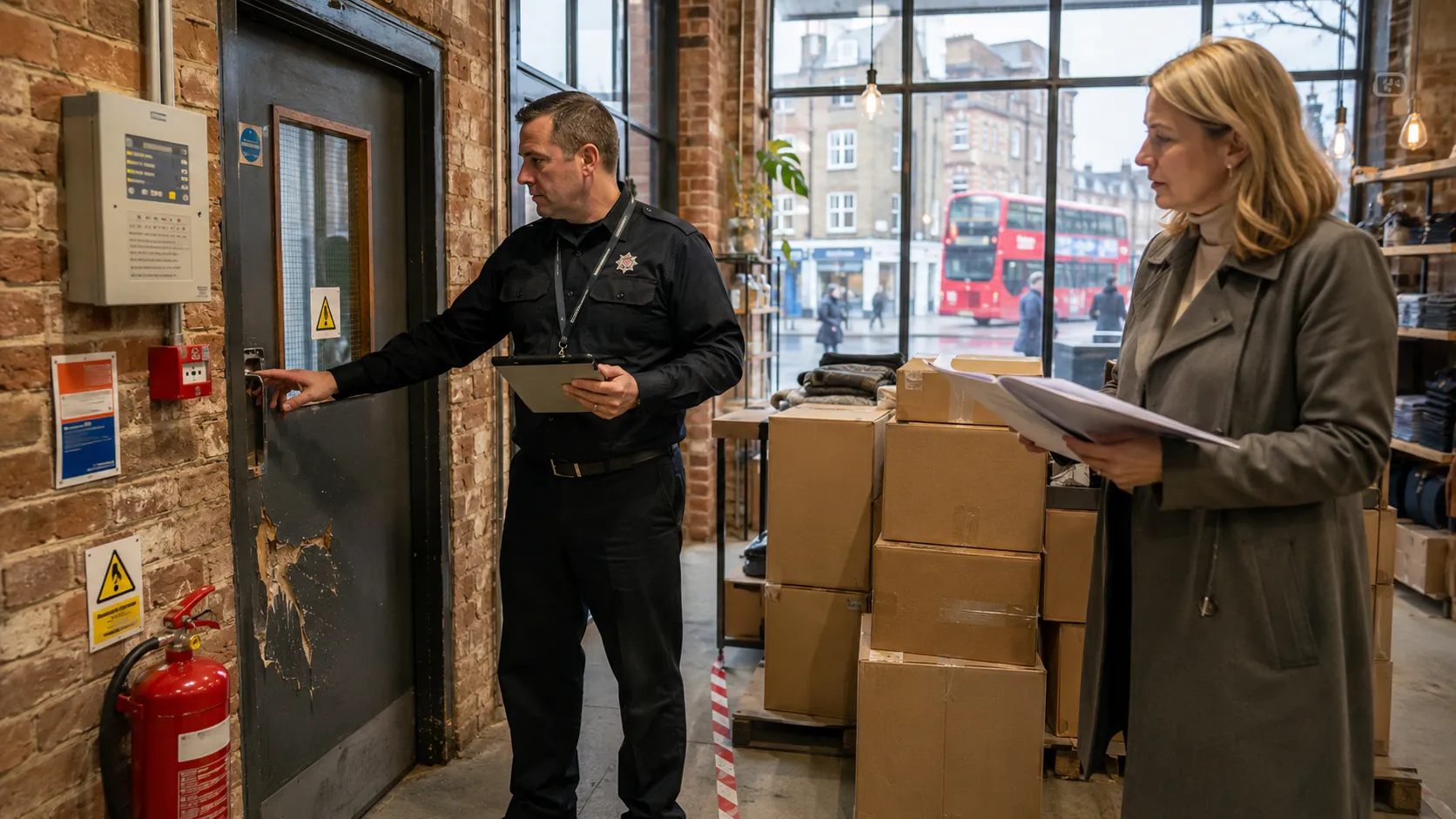
That means a current fire risk assessment, working alarms, clear escape routes, properly maintained fire doors and the right Fire Extinguishers in the right places.
Since October 2023, fines for the most serious breaches have moved from a fixed cap to unlimited.
Courts can also hand down prison sentences of up to two years where negligence is judged severe enough.
This isn’t a theoretical threat. Fire and rescue authorities do inspect premises, and they do prosecute.
It’s a pattern Safelincs sees often when advising businesses on compliance: a fire risk assessment gets written once, filed away, and never revisited even as the way the building is actually used moves on.
Recent Cases Show What Non-Compliance Actually Costs

Two cases from summer 2026 illustrate the point. Prestleigh Inn B&B Limited was fined £26,000 at Taunton Magistrates’ Court after pleading guilty to four offences under the Fire Safety Order.
Inspectors found no fire risk assessment in place, a fire alarm with nine separate faults, defective fire doors and inadequate emergency lighting.
On top of the fine, the company was ordered to pay a £2,000 victim surcharge and £5,700 in costs.
A week earlier, an Isle of Wight landlord was ordered to pay a £5,000 fine plus more than £6,000 in surcharges and costs after failing to act on an improvement notice.
The property had been found to contain Category 1 fire risks alongside structural and electrical problems.
Neither case is London specific, but the pattern applies just as much here. Enforcement doesn’t only target obvious high-risk sites like factories and warehouses.
Guesthouses, small landlords and ordinary commercial premises are all fair game, and the fines add up fast once legal costs and surcharges are included.
That’s before any damage to reputation, lost trading time or increased insurance premiums that follow a prosecution.
What London Business Owners Should Check Now?
A fire risk assessment isn’t a one-off document you file away. It needs reviewing regularly and updating whenever your premises or use of the building changes.
Safelincs’ own advice for business owners starts with the same few basics, and they’re worth checking today.
Make sure your fire risk assessment is current and reflects how the building is actually used, not how it was laid out when you moved in.
Check that fire extinguishers are the correct type for the risks on site, properly serviced and clearly signed, since a kitchen fire needs a different extinguisher to an electrical one.
Safelincs publishes straightforward guides on matching extinguisher types to different fire classes, which is worth a look if you’re not confident on this point.
And confirm that escape routes and fire doors are kept clear and in working order, not propped open or blocked by stock.
None of this needs to be expensive or complicated. It just needs doing, and doing properly, before an inspector or an incident forces the issue.
The cases above show what happens when fire safety gets treated as an afterthought. A £26,000 fine, plus costs and surcharges, is a serious hit for any small or medium business, and it’s entirely avoidable.
Getting the basics right, a proper risk assessment, working alarms, the correct fire extinguishers and clear escape routes, costs a fraction of what non-compliance can cost if things go wrong.
If you’re not sure where your business stands, it’s worth checking your fire extinguishers against the risks actually present on site before an inspector does it for you.

Leave a Reply