
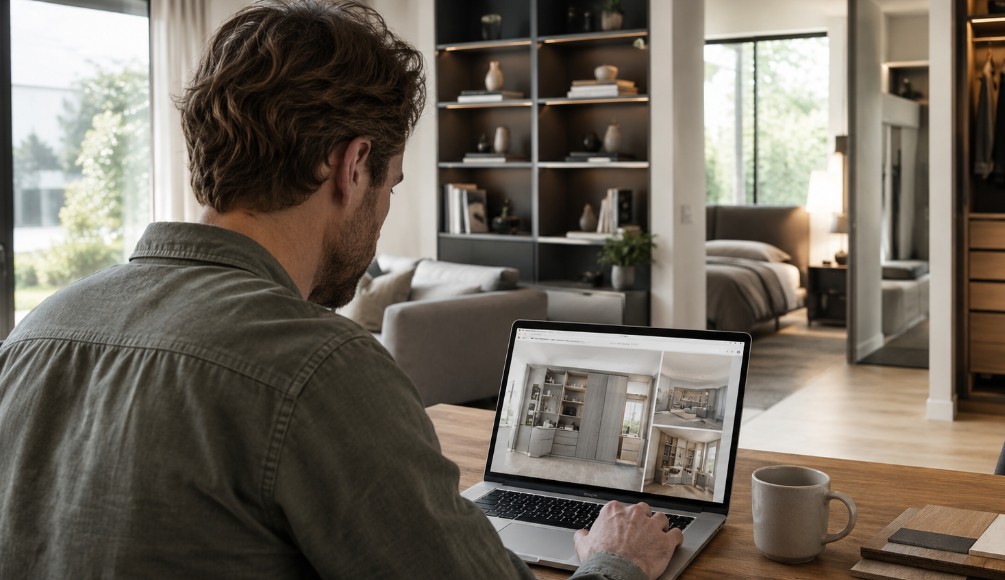
The UK home improvement market has undergone a major transformation in the last decade. What was once dominated by in-person showroom visits, printed catalogues, and manual quoting processes has now shifted rapidly toward digital-first experiences.
Today, customers expect to design, configure, and purchase home improvement products online with the same ease they shop for clothing or electronics.
This shift has opened the door for a new generation of brands that specialize in made-to-measure ecommerce. These businesses are not just selling products, they are selling precision, convenience, and personalization at scale.
From fitted wardrobes and custom shelving to bespoke doors, kitchens, and storage systems, the demand for tailored home solutions continues to grow across the UK.
The Shift From Standard Products to Personalised Living Spaces

Modern UK homes are diverse in layout, age, and structure. Victorian terraces, new-build apartments, suburban houses, and converted lofts all come with unique spatial challenges.
Off-the-shelf furniture often fails to make the most of these spaces, leading homeowners to seek custom solutions. This is where made-to-measure ecommerce has become a game changer.
Instead of adapting their homes to fit standard products, customers now expect products that adapt to their homes. This shift in mindset has fundamentally changed how home improvement brands design their digital and production systems.
Key drivers behind this trend include:
- Rising property prices, leading to smaller and more optimised living spaces
- Increased interest in interior design and home aesthetics
- Better digital tools for visualization and measurement
- Faster expectations around delivery and installation
Brands that succeed in this space are those that can balance design flexibility with operational efficiency.
Digital-First Experience Is Now the Default Expectation
One of the biggest changes in the industry is the expectation of a fully digital buying journey. Customers no longer want to book multiple in-person consultations just to get a price estimate.
Instead, they expect:
- Instant online pricing based on dimensions
- Interactive product configurators
- Real-time design previews
- Transparent delivery timelines
- Easy ordering without back-and-forth communication
This shift has pushed home improvement brands to invest heavily in UX design and backend automation.
The brands winning in this space are those that treat their website not just as a catalogue, but as a full sales and design tool.
Why Made-to-Measure Ecommerce Works So Well in This Sector?
Unlike many retail categories, home improvement products naturally lend themselves to customization. A wardrobe needs to fit a specific wall. A shelving unit must align with ceiling height.
A kitchen layout must match plumbing and electrical constraints. This makes made-to-measure ecommerce a perfect fit for the industry.
The value proposition is strong for both sides:
For customers:
- Better use of space
- Higher quality fit and finish
- More design control
- Longer-lasting results
For brands:
- Higher average order values
- Reduced price competition compared to standard retail
- Stronger customer loyalty
- Better differentiation in a crowded market
Technology as the Backbone of Growth

Behind every successful made-to-measure ecommerce brand is a complex technology stack. What appears simple to the customer is often the result of highly sophisticated systems working behind the scenes.
These systems typically include:
- Product configurators that translate user inputs into valid designs
- Automated pricing engines based on dimensions and materials
- Manufacturing integration tools that convert orders into production specs
- Inventory and supply chain tracking systems
- Logistics coordination platforms
Without this level of automation, scaling made-to-measure products would be nearly impossible.
Brands that fail in this space often struggle because they rely too heavily on manual processes. Successful companies invest early in digital infrastructure that can handle complexity without slowing down the customer experience.
The Role of UX in Driving Conversions
User experience is one of the most important factors in the success of home improvement ecommerce platforms.
Unlike simple products, made-to-measure items require users to make multiple decisions. If the process feels confusing or overwhelming, customers abandon the journey.
Winning brands simplify this by:
- Breaking configuration into clear steps
- Using visual guides instead of technical jargon
- Providing instant feedback when dimensions are entered
- Offering recommended presets for beginners
- Keeping the interface clean and distraction-free
A smooth UX directly translates into higher conversion rates, especially for first-time customers who may be unfamiliar with custom ordering.
How CWorkshop Style Businesses Are Changing the Market?
A growing number of UK businesses are now adopting hybrid models that combine craftsmanship with ecommerce automation.
One example of this evolution can be seen in companies operating in the same space as c workshop, where the focus is on merging traditional woodworking or manufacturing expertise with modern digital tools.
These businesses typically start with a strong foundation in craftsmanship and then layer ecommerce systems on top to scale their offering nationwide.
What makes this model effective is the balance between:
- Human expertise in design and manufacturing
- Automated systems for ordering and pricing
- Scalable production methods that maintain quality
- Customer-friendly digital interfaces
This combination allows smaller workshop-based businesses to compete with larger national retailers.
SEO and Content Strategy in a Competitive Market

Search engine visibility plays a crucial role in the growth of made-to-measure home improvement brands.
Customers often begin their journey with highly specific searches such as:
- “Custom fitted wardrobes UK”
- “Made to measure shelving units”
- “Bespoke storage solutions for small rooms”
These are high-intent searches, meaning users are already close to making a purchase decision.
Successful brands invest in:
- Detailed product landing pages
- Educational blog content about measurements and design
- Case studies showing real installations
- Before-and-after project galleries
- Local SEO targeting UK regions
Content marketing helps build trust while also improving organic visibility in a highly competitive niche.
Operational Challenges and How Brands Solve Them
Despite its advantages, made-to-measure ecommerce comes with operational complexity. Every order is different, which makes forecasting and production planning more challenging than standard retail.
Common challenges include:
- Managing variable production timelines
- Avoiding measurement errors from customers
- Coordinating suppliers and materials
- Handling customer expectations around delivery
To solve these issues, successful brands introduce structured customization limits. Instead of offering unlimited options, they provide controlled configuration ranges that ensure manufacturability.
This approach reduces errors while still giving customers meaningful personalization.
The Future of UK Home Improvement Ecommerce
The future of the industry is clearly moving toward even greater automation and personalization. Emerging technologies such as AI-driven design recommendations, augmented reality room planning, and fully automated manufacturing systems are already beginning to reshape the market.
In the near future, customers may be able to scan their rooms with a smartphone and generate fully customized product designs instantly.
Brands that embrace these technologies early will have a significant competitive advantage.
Conclusion
The rise of made-to-measure ecommerce is fundamentally reshaping the UK home improvement industry.
Customers now expect speed, precision, and personalization in a digital-first experience, and brands are responding with increasingly sophisticated systems that combine design, technology, and manufacturing.
Businesses operating in the same space as CWorkshop demonstrate how powerful this model can be when craftsmanship is paired with scalable ecommerce infrastructure.
As the industry continues to evolve, the brands that succeed will be those that can deliver true customization without sacrificing simplicity, efficiency, or user experience.

Leave a Reply