
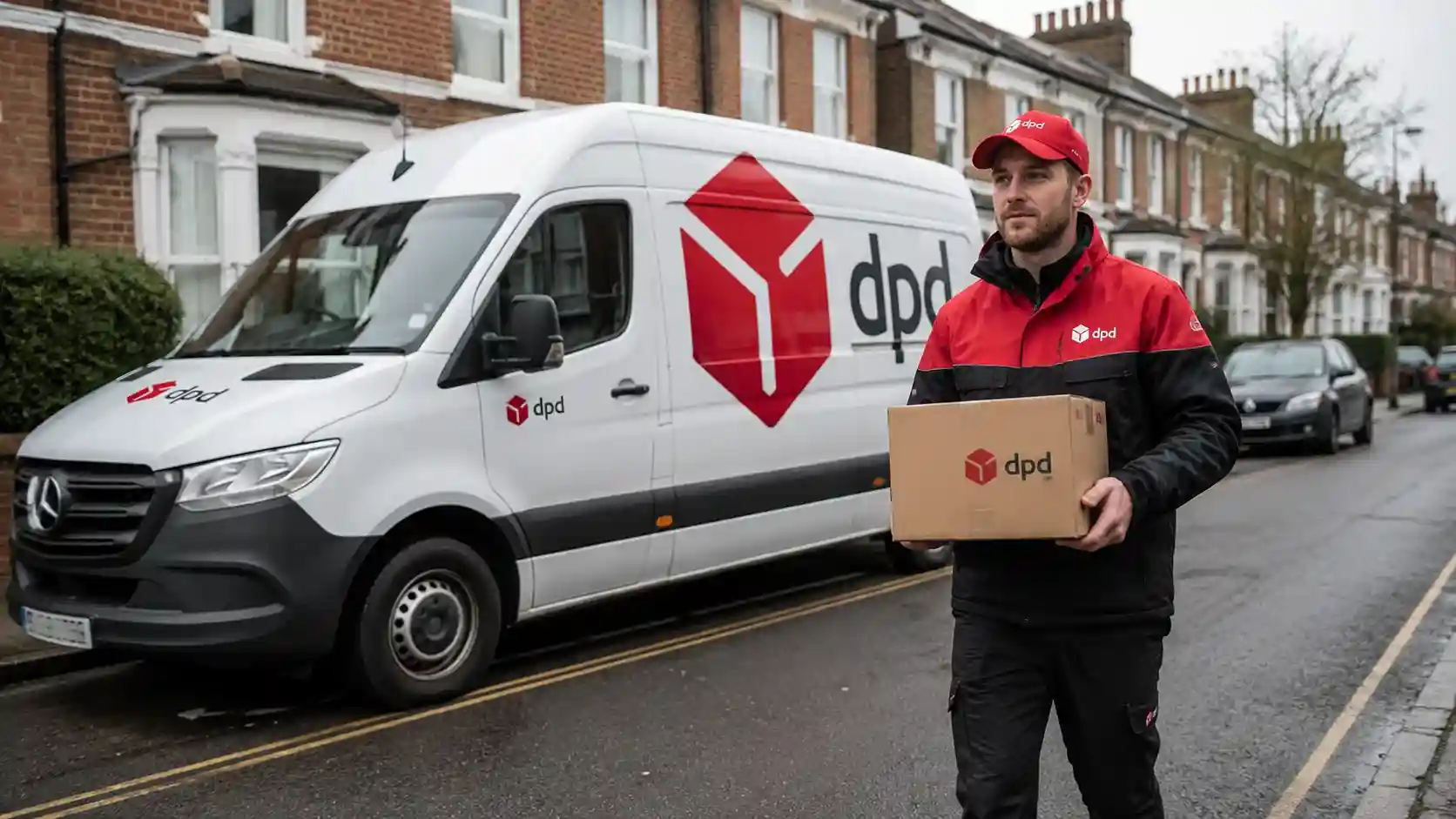
Many people see the DPD name on parcel tracking pages, delivery vans and online shopping emails, but they may not know what the initials mean. In parcel delivery, DPD originally stood for Dynamic Parcel Distribution. Today, it is one of the most recognised courier brands in the UK and across Europe.
What Is the Meaning of DPD in Parcel Delivery?
DPD stands for Dynamic Parcel Distribution. The name describes the company’s original purpose: moving parcels through an organised delivery network in a fast, flexible and structured way.
In simple terms, DPD is a parcel courier company. It collects parcels from senders, moves them through depots and transport networks, then delivers them to homes, workplaces, shops or collection points.
Term Explanation
DPD Dynamic Parcel Distribution
Main role Parcel delivery and courier services
Common users Businesses, retailers and consumers
Key feature Tracking-led parcel delivery
The Origin of Dynamic Parcel Distribution
The words “Dynamic Parcel Distribution” show how the company was built around movement and parcel handling. “Dynamic” suggests a flexible and responsive delivery network. “Parcel” refers to the packages being moved, while “Distribution” refers to the process of getting those parcels to the right destination.
This meaning is important because DPD is not only a delivery driver arriving at a door. It is a wider system involving parcel labels, scanning, sorting centres, delivery routes, depots, drivers and customer updates.
Why the Brand Is Now Known Simply as DPD
Most people now use the initials DPD instead of the full name Dynamic Parcel Distribution. This is common with large courier and logistics brands because short names are easier to remember, easier to print on vans and easier to use in tracking emails.
For UK customers, the DPD name is now strongly linked with parcel tracking, delivery windows and ecommerce orders.
How Did DPD Become a Major Courier Company?
DPD became a major courier company by focusing on parcel delivery at a time when consumer expectations were changing. As online shopping grew, customers began expecting faster delivery, clearer tracking and better communication from couriers.
DPD developed services that matched these expectations. Its delivery model became popular with businesses because customers could receive delivery notifications and follow the movement of their parcels.
A logistics operations consultant explained the value of this clearly:
“When I explain DPD to business owners, I do not describe it as just a courier. I describe it as a parcel network where every scan, depot and delivery update plays a part in customer confidence.”
This insight helps explain why DPD is widely used by ecommerce companies. The delivery experience is often the final stage of an online purchase.
If a parcel arrives on time and the customer is kept informed, the retailer benefits as well as the courier.
Who Owns DPD and How Is It Connected to Geopost?
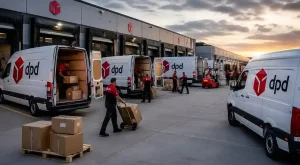
DPD is part of Geopost, an international parcel delivery group. Geopost is owned by La Poste Group, the French postal organisation. This means DPD is connected to a larger international delivery network.
This structure allows DPD to operate across different countries and support international parcel movement. It also connects DPD with other courier brands in the wider Geopost network.
Organisation Role
DPD Parcel delivery brand
Geopost International parcel delivery group
La Poste Group Parent organisation of Geopost
Related brands Chronopost, SEUR, BRT and others
For UK customers, this ownership structure may not affect everyday parcel delivery directly. However, it matters for businesses that send parcels internationally because DPD can use a wider network of connections to move goods across borders.
Why Is DPD Popular for UK Parcel Delivery?
DPD is popular in the UK because it supports the way people now expect parcels to be delivered. Customers do not only want a parcel to arrive. They want to know where it is, when it will arrive and what options are available if they are not at home.
DPD is commonly associated with:
- Real-time parcel tracking
- Predictive delivery time slots
- Business and consumer parcel delivery
- Domestic and international shipping
- Shop drop-off and collection options
For businesses, DPD can help reduce uncertainty after an order has been dispatched. Customers who receive tracking links and delivery windows are less likely to contact the seller asking where their parcel is.
For consumers, the main benefit is convenience. A delivery time slot can help someone plan their day more easily than a vague all-day delivery window.
How Does DPD Delivery Work from Collection to Drop-Off?
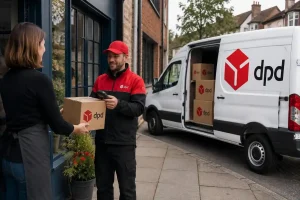
DPD delivery works through a network of collection points, drivers, depots, sorting centres and final delivery routes. Each parcel is usually scanned at different stages so that tracking information can be updated.
The journey often begins when a sender creates a parcel label. This label includes information such as the delivery address, barcode and tracking number. Once the parcel enters the DPD system, it can be scanned and moved through the network.
Parcel Collection and Drop-Off
A parcel may enter the DPD network in different ways. A business may have parcels collected from its warehouse or office. A consumer may drop off a parcel at a local shop or parcel point. Some services may also involve delivery from shop to shop or door to door.
This first stage is important because the parcel needs a correct label, suitable packaging and accurate delivery details. Incorrect addresses or poor packaging can cause delays.
Sorting, Routing and Local Depot Handling
After collection or drop-off, the parcel is taken to a depot or sorting facility. At this point, the parcel is scanned and routed towards the correct destination area.
Sorting is a major part of courier delivery. Parcels need to be grouped by region, postcode and delivery route. Once a parcel reaches the local depot nearest to the recipient, it is usually prepared for final delivery.
Tracking Updates and Delivery Notifications
Tracking updates are one of DPD’s best-known features. Customers may receive notifications when the parcel is received, processed, out for delivery or delivered.
Tracking Update Meaning
Parcel details received The shipment has been created in the system
Parcel received by DPD The parcel has entered the delivery network
At depot The parcel is being handled at a local or regional depot
In transit The parcel is moving between locations
Out for delivery The driver is delivering the parcel that day
Delivered The parcel has reached the recipient
A fulfilment manager described the customer benefit in simple terms:
“From my experience, tracking is often what customers value most. Even if the parcel takes the expected time, people feel more comfortable when they can see each stage of the journey.”
What Delivery Services Does DPD Offer in the UK?
DPD offers different delivery services depending on how the sender wants to send the parcel and how the recipient wants to receive it. These services are useful for online retailers, small businesses, marketplace sellers and individuals.
Shop to Shop Delivery
Shop to Shop delivery allows parcels to move between participating drop-off and collection locations. It can be useful when the sender and recipient both prefer not to use home addresses.
This service is convenient for people who are not at home during normal delivery hours. The recipient can collect the parcel from a local shop when suitable.
Drop Off at Shop
Drop Off at Shop allows the sender to take a parcel to a local drop-off point. DPD then handles the onward delivery to the recipient.
This is useful for people who do not want to wait for a courier collection. It can also help small sellers who send parcels occasionally and prefer a simple local drop-off process.
Door-to-Door Delivery
Door-to-door delivery is one of the most convenient options. The parcel is collected from the sender and delivered directly to the recipient’s address.
This type of delivery is often used by businesses that send regular parcels. It can save time because staff do not need to travel to a drop-off point.
UK Delivery Option Suitable For Main Benefit
Shop to Shop Flexible collection Recipient can collect locally
Drop Off at Shop Occasional senders No need to wait for collection
Door to Door Businesses and home users Convenient collection and delivery
Next-day services Urgent UK parcels Faster delivery
What International Shipping Options Are Available with DPD?
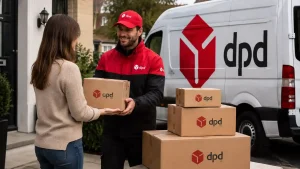
DPD also provides international shipping options through its wider network. These services are designed for parcels moving outside the UK, especially across Europe and other supported destinations.
International delivery usually involves more steps than domestic delivery. Parcels may need customs details, export information and additional checks depending on the destination.
DPD Classic
DPD Classic is commonly used for international road-based delivery, especially within Europe. It is suitable for parcels that do not need the fastest possible delivery but still need reliable movement through a courier network.
Businesses may use DPD Classic for regular European shipping because it balances cost and delivery coverage.
DPD Air Classic
DPD Air Classic is generally used for parcels travelling beyond the road network. It can be suitable for non-perishable goods and standard international shipments.
This option may be chosen when the parcel needs to travel further than mainland European routes can support efficiently.
DPD Air Express
DPD Air Express is designed for faster international delivery. It is more suitable for urgent shipments where speed is important.
International Service Typical Use Delivery Method
DPD Classic European parcel delivery Road network
DPD Air Classic Standard international parcels Air transport
DPD Air Express Urgent international parcels Faster air delivery
Domestic DPD UK deliveries UK courier network
When sending internationally, businesses should always check the latest restrictions, customs requirements and parcel limits before dispatch.
How Long Does DPD Take to Deliver a Parcel?
DPD delivery time depends on the selected service, parcel destination and external conditions. UK deliveries are often faster than international deliveries because they do not usually involve customs processing.
For many UK services, delivery may be next day or within one to two working days. International parcels can take longer, especially when customs clearance is involved.
Delivery Type Typical Timeframe
UK next-day delivery Often the next working day, depending on the service
Standard UK delivery Often one to two working days
European delivery Usually several working days
International air delivery Varies by destination and service
Peak season delivery May take longer due to demand
Delivery times may be affected by bank holidays, weather disruption, incorrect address details, customs checks and high parcel volumes during Christmas or major sales events.
For businesses, the best approach is to communicate estimated delivery times clearly at checkout. This helps avoid confusion and improves customer trust.
How Much Does DPD Delivery Cost?
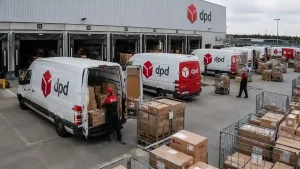
DPD delivery cost varies depending on parcel details and the service selected. There is no single price that applies to every parcel because the cost depends on weight, size, destination and speed.
A small domestic parcel will usually cost less than a large international parcel. Express delivery will normally cost more than standard delivery.
Pricing Factor How It Influences Cost
Parcel weight Heavier parcels may cost more
Parcel size Larger parcels can increase the price
Destination International shipping usually costs more
Service speed Faster delivery often costs more
Collection method Collection and drop-off options may differ in price
Insurance or cover Extra cover may increase the cost
Businesses that send parcels regularly may have account pricing or negotiated rates. Occasional senders may use online booking tools or parcel comparison services to check prices.
The safest approach is to get a direct quote before sending. This ensures that the price reflects the parcel’s actual size, weight and destination.
What Makes DPD Different from Other Courier Services?
DPD stands out because it has built a strong reputation around tracking, delivery communication and customer convenience. While many couriers move parcels effectively, DPD is often recognised for making the delivery journey more visible to the customer.
Predictive Delivery Time Slots
Predictive delivery time slots are one of the key reasons customers notice DPD. Instead of giving only a broad delivery day, DPD may provide a narrower delivery window.
This helps customers plan around the delivery and reduces the chance of missed parcels.
Real-Time Parcel Tracking
Real-time tracking gives customers more confidence. They can see where the parcel is in the journey and receive updates when the status changes.
Tracking is also useful for businesses. It reduces customer service pressure because customers can check progress themselves.
Innovation and Sustainable Delivery
DPD has also invested in innovation across delivery technology, route planning and sustainability. Like many courier companies, it has had to adapt to growing parcel volumes, urban delivery challenges and environmental expectations.
More efficient routing can reduce wasted travel, while cleaner vehicle strategies can support lower-emission delivery in busy towns and cities.
How Does DPD Compare with DHL?
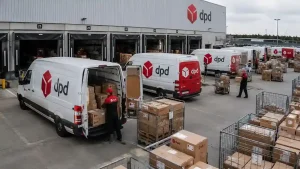
DPD and DHL are both major courier brands, but they are often chosen for different reasons.
DHL is widely known for global express shipping, international logistics and business delivery solutions. It has a strong worldwide presence and is often used by companies sending parcels, documents and freight across borders.
DPD is especially strong in the UK and European parcel delivery market. It is often chosen for ecommerce deliveries, tracked parcels and customer-friendly delivery notifications.
Comparison Area DPD DHL
Strong market UK and Europe Global logistics
Common use Ecommerce parcel delivery International express and freight
Tracking Strong parcel tracking features Strong global tracking
Business fit UK and European retailers Global shippers and exporters
The right courier depends on the destination, delivery speed, parcel type and business needs.
How Does DPD Compare with UPS?
UPS is another major courier company with a strong international network. It is especially well known in the United States and global shipping markets.
DPD is more closely associated with European parcel delivery and UK ecommerce services. For businesses that mainly ship within the UK and Europe, DPD may be a practical option. For companies with a large number of US shipments, UPS may also be considered.
Comparison Area DPD UPS
Main strength European parcel network US and global logistics network
Common users UK and European retailers Global businesses and exporters
Delivery focus Parcels and ecommerce Parcels, business shipping and logistics
Best suited for UK and Europe-focused shipping Wider international shipping needs
A business should compare couriers based on customer location, parcel size, delivery speed and return handling.
Is DPD a Good Choice for Businesses and Consumers?
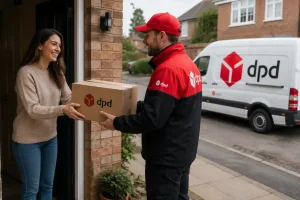
DPD can be a good choice for both businesses and consumers when tracking, communication and delivery convenience are important.
For businesses, DPD can support a smoother post-purchase experience. Customers can receive tracking updates and delivery windows, which helps reduce uncertainty after dispatch.
For consumers, DPD can be useful because it offers visibility and flexible delivery options. A customer can often follow the parcel journey and plan around the expected delivery time.
However, the best courier choice always depends on the specific situation. A small local delivery, an urgent international shipment and a high-volume ecommerce operation may all need different courier solutions.
Conclusion
DPD originally stood for Dynamic Parcel Distribution. Today, it is a major parcel delivery brand known for UK and international shipping, parcel tracking, predictive delivery slots and courier services for businesses and consumers.
Understanding what DPD means helps customers see that the name represents more than a delivery van. It represents a wider parcel network designed to move goods from sender to recipient efficiently.
FAQs
Is DPD the same as Dynamic Parcel Distribution?
Yes, DPD originally stood for Dynamic Parcel Distribution. The initials are now more commonly used than the full name.
Is DPD a UK company?
DPD UK operates in the United Kingdom, but the wider DPD brand is part of Geopost, which is owned by La Poste Group.
Does DPD deliver parcels internationally?
Yes, DPD offers international delivery services through its wider parcel network.
Can customers track a DPD parcel in real time?
DPD provides tracking updates that allow customers to follow the progress of their parcel.
What is DPD Classic used for?
DPD Classic is commonly used for European road-based parcel delivery.
Does DPD offer next-day delivery in the UK?
DPD offers next-day delivery options in many UK areas, depending on the service selected.
Why do many businesses use DPD for parcel delivery?
Many businesses use DPD because it offers tracking, delivery notifications, UK coverage and flexible delivery options.

Leave a Reply